Seasonal color analysis sorts natural coloring into 12 seasons by three qualities: whether it reads warm or cool, light or deep, and soft or bright. Your hair, eyes, skin and the colors people compliment you in are the main clues. The closest season points to a palette of colors that tend to look harmonious on you.
Seasonal Color Analysis Quiz
This seasonal color analysis quiz asks nine questions about your natural coloring and matches your answers to the closest of 12 seasons, with no photo needed.
You’ll see your best match, the next closest season, and plain words for how your answers added up, plus a link to an original palette for each. If you want, you can also frame a photo of yourself in your colors, right here on your device.
Find your color season
Nine quick questions about your natural coloring. No photo needed. You’ll see your closest season, the next closest, and how your answers added up.
Choose a photo taken in daylight with no filter. It is drawn on this page only and is never uploaded or saved. Lighting and screen settings change what you see, so use this as a rough check.
Your privacy: Everything you enter stays on your device. This tool does not send, save, or share your answers, and you do not need an account or an email address. If you copy a share link, your answers are stored inside the link, so only share it with people you trust.
Treat these results as a starting point, not a verdict. Lighting, your screen settings, and your own answers all shape what you see, and an in-person consultation with a trained artist is the best way to confirm what flatters you.
This tool is general beauty education. It is not styling, cosmetic, dermatological, or medical advice.
How the seasonal color analysis quiz works
Every color can be described by three qualities, an idea that goes back to the Munsell color system: its hue, how light or dark it is, and how strong or muted it is. The quiz uses the same three ideas for your coloring, which we call temperature, depth and chroma. Each answer nudges one or more of them a little, from minus one to plus one. Golden hair and gold jewelry push temperature toward warm. Very dark hair and eyes push depth toward deep. Soft, blended eyes and low contrast push chroma toward soft.
When you’ve answered everything, the quiz averages each dimension and finds the season point that sits closest. The table below shows exactly where all 12 seasons sit. There are no hidden weights beyond one: skin depth counts a little less than hair and eyes, because skin depth alone tells you less about your season than people often expect.
| Season | Temperature | Depth | Chroma |
|---|---|---|---|
| Light Spring | warm (0.5) | light (-1) | leans bright (0.3) |
| Warm Spring | warm (1) | leans light (-0.3) | bright (0.5) |
| Bright Spring | warm (0.5) | leans light (-0.2) | bright (1) |
| Light Summer | cool (-0.5) | light (-1) | leans soft (-0.3) |
| Cool Summer | cool (-1) | leans light (-0.3) | leans soft (-0.4) |
| Soft Summer | cool (-0.5) | medium (0) | soft (-1) |
| Soft Autumn | warm (0.5) | medium (0) | soft (-1) |
| Warm Autumn | warm (1) | leans deep (0.4) | leans soft (-0.4) |
| Deep Autumn | warm (0.5) | deep (1) | leans soft (-0.3) |
| Deep Winter | cool (-0.5) | deep (1) | leans bright (0.3) |
| Cool Winter | cool (-1) | leans deep (0.3) | bright (0.5) |
| Bright Winter | cool (-0.5) | leans deep (0.2) | bright (1) |
The 12 seasons in plain words
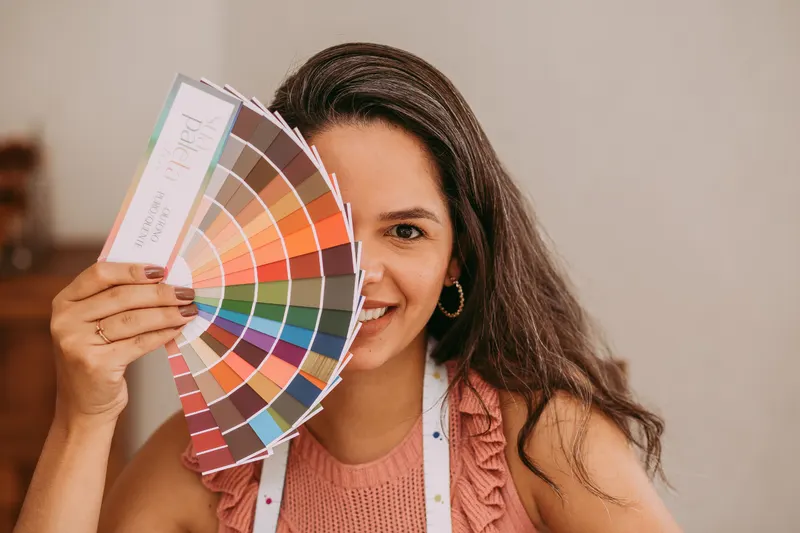
The seasons come in four families. Springs are warm and clear, Summers are cool and soft, Autumns are warm and muted, and Winters are cool and clear. Each family then splits three ways, by whichever quality stands out most. A Light Spring is mostly light, a Warm Spring is mostly warm, and a Bright Spring is mostly vivid. The same pattern runs through the other families, with Soft, Cool and Deep versions.
That split is why two people in the same family can look so different. A Light Summer and a Soft Summer are both cool and gentle, but one is pale and airy while the other is dusty and blended. Each of the 12 palette pages explains its season in detail, with makeup, hair and wedding ideas.
Why you see a runner-up season
Real coloring rarely sits exactly on one season point. Many people are a mix, like warm but soft, or deep but fairly neutral. So the quiz always shows the next closest season too, and it tells you whether your result is a strong match or a possible match. A strong match means your answers sit clearly closer to one season. A possible match means two seasons are close, and it’s worth trying colors from both.
This is more honest than a single verdict. If your result is a possible match, look at both palettes in daylight with a mirror. The one that makes your skin look even and your eyes look brighter, without you needing extra makeup, is usually the one to lean on.
Trying colors on your photo
The optional photo check frames a picture of you in a few colors from your palette, plus one color to be careful with, so you can compare them side by side. Your photo is drawn on this page only. It is never uploaded, sent or saved, and it disappears when you leave or press Start over.
Photos are tricky for color, though. Indoor lighting, phone filters and screen settings all shift what you see. For the best check, use a photo taken near a window in daylight with no filter or makeup, and take the result as a rough guide rather than proof.
How to read your seasonal color analysis quiz result
The big line is your closest season, with a short description and six of its core colors, each with a name and hex code. Under that you’ll see the next closest season and a sentence that describes your coloring in plain words, like “leans warm, medium in depth and soft in chroma.” Those words matter more than the season name, because they tell you what to look for in any color.
Follow the link to your palette page for the full set of core colors, neutrals, accents and colors to be careful with, plus makeup and hair ideas for that season. Copy the link to save your result or share it with a friend who’s curious about theirs.
Using your season for bridal makeup and hair
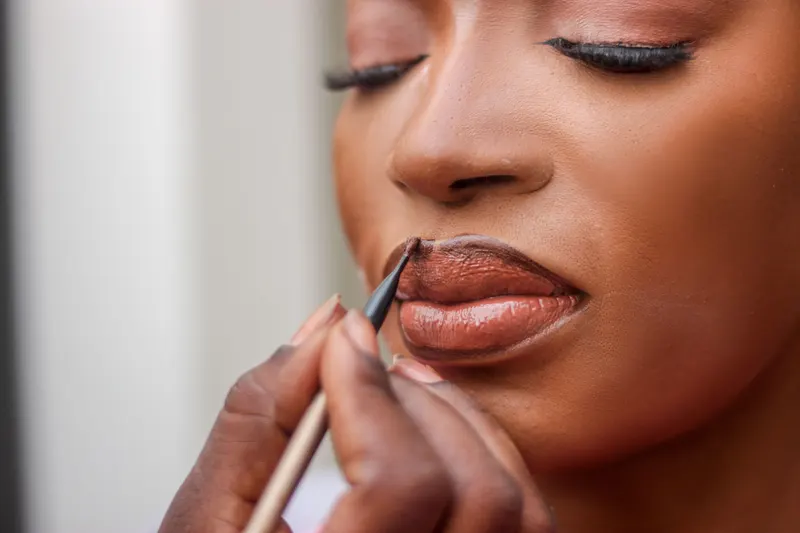
Your season is a great shortcut for wedding beauty. Warm seasons often glow in peach, coral and bronze tones, while cool seasons often shine in rose, berry and soft mauve. Soft seasons usually suit blended, diffused looks, and bright or deep seasons can carry more definition. Bring your result to your trial so your artist can see the direction you like.
Our bridal makeup service and our bridal hair and makeup page show how we build looks around each bride’s own coloring, and a hair and makeup trial run is the best place to test colors on your actual skin in real light.
What color analysis can’t tell you
Seasonal color analysis became popular in the 1980s, and it’s still a useful way to think about color. It isn’t a science test, though, and it can’t see your skin the way a trained eye can in person. It also can’t account for personal taste. If you love a color outside your palette, wear it. Pairing it with a flattering color near your face is often enough to make it work.
Mistakes that throw off a color quiz
The biggest one is answering with your current hair color instead of your natural one. Highlights, balayage and box dye can all make you look warmer or cooler than you are. Another is judging metals or whites under warm indoor bulbs, which make almost everyone look warmer. Check in daylight near a window if you can.
It also helps to answer for how colors make your face look, not which colors you like to wear. Those are often different, and both are valid. If you’re unsure about a question, pick the in-between answer rather than guessing, because a wrong strong answer moves the result more than a cautious one.
Frequently asked questions
How accurate is a seasonal color analysis quiz?
A quiz is a good starting point, especially when it shows a runner-up instead of a single answer. An in-person look in daylight with a trained eye is more reliable, because it can see things a self-report quiz can’t.
What if I’m between two seasons?
That’s very common, and it’s why the quiz shows the next closest season. Try colors from both palettes in daylight and lean on whichever makes your skin look even and your eyes look brighter.
Do I need to upload a photo?
No. The quiz works from your answers alone, and the photo check is optional. If you use it, your photo stays on your device and is never uploaded or saved.
Does dyed or gray hair change my season?
Answer with your natural hair color, or the color it was before graying. Your current hair color does change how colors look on you day to day, so it’s worth keeping in mind when you choose clothes and makeup.
Can my season change over time?
Many people find their coloring softens a little with age or changes with a tan, so a result can shift. Retake the quiz if your hair or skin has changed a lot since the last time.
Can Reign Beauty Collective use my season for my wedding makeup?
Yes. Share your result with Reign Beauty Collective before your trial, and our artists will use it as a starting point for your foundation, blush, eye and lip colors, then fine-tune everything on your skin.
Sources
The scoring borrows the three dimensions of color from the Munsell system. The season points, quiz values and palettes are our own, and every one of them is shown on this page.
- How to Read a Munsell Color Chart, Munsell Color. munsell.com/about-munsell-color/how-color-notation-works/how-to-read-color-chart (retrieved 2026-10-06)
- Carole Jackson, Wikipedia. en.wikipedia.org/wiki/Carole_Jackson (retrieved 2026-10-06)
- Seasonal Color Analysis, HunterLab. www.hunterlab.com/en/blog/seasonal-color-analysis (retrieved 2026-10-06)
Last reviewed October 6, 2026 by the Reign Beauty Collective artist team, Tampa, Florida.
This tool and page are general educational content from Reign Beauty Collective in Tampa, Florida. They are not professional, medical, or financial advice, and results vary. Please talk with a licensed professional about your own situation.