A skin tone chart describes skin in two separate ways: depth, which is how light or deep the skin is, and undertone, which is the color that sits beneath the surface. The four common undertones are cool, neutral, warm and olive, and any depth can have any undertone. Knowing both helps you choose foundation, blush, lip and hair colors.
Skin Tone Chart: Depth and Undertone
This skin tone chart crosses 12 depths with four undertones, so you can find the swatch that looks closest to your skin and see what it means for makeup and hair.
Every swatch shows a plain name and a hex code. Choose one and you’ll get foundation, blush, lip, highlighter and hair pointers for that depth and undertone, plus a link to the seasonal color analysis quiz if you want to go further.
Find your spot on the chart
Pick the depth that looks closest to your skin, then the undertone. Each swatch shows its name and hex code. Screens vary, so these are illustrative.
Your privacy: Everything you enter stays on your device. This tool does not send, save, or share your answers, and you do not need an account or an email address. If you copy a share link, your answers are stored inside the link, so only share it with people you trust.
Treat these results as a starting point, not a verdict. Lighting, your screen settings, and your own answers all shape what you see, and an in-person consultation with a trained artist is the best way to confirm what flatters you.
This tool is general beauty education. It is not styling, cosmetic, dermatological, or medical advice.
How to use this skin tone chart
Start with depth. Look down the rows and pick the one that seems closest to the skin along your jaw, not your hands or arms, which often catch more sun. Then choose the column that matches your undertone. If you aren’t sure about undertone yet, the section below explains a few easy checks.
The swatches are illustrative. Screens show color differently, and real skin has texture, freckles and variation that no flat swatch can capture. Use the chart to narrow things down, then confirm in daylight with a mirror or with real foundation shades on your jawline. The full chart with every name and hex code is in the table below, so you can read it without the interactive version.
| Depth | Cool | Neutral | Warm | Olive |
|---|---|---|---|---|
| 1. Very fair | #EBDBD6 | #EBDDD6 | #ECDFD5 | #E9E1D8 |
| 2. Fair | #E3CCC4 | #E3CFC4 | #E5D2C3 | #E0D5C7 |
| 3. Light | #DDC0B6 | #DDC4B6 | #DFC7B4 | #D9CBBA |
| 4. Light medium | #D2AB9D | #D2B09D | #D5B59A | #CDBAA2 |
| 5. Medium | #C79585 | #C79C85 | #CBA281 | #C1A88A |
| 6. Medium tan | #BC806C | #BC886C | #C18F67 | #B59773 |
| 7. Tan | #B16B53 | #B17453 | #B67D4E | #A8865C |
| 8. Deep tan | #9A5B47 | #9A6447 | #9F6C42 | #92744E |
| 9. Deep | #814D3C | #81543C | #855A38 | #7B6142 |
| 10. Deeper | #683F31 | #684431 | #6B492E | #634F36 |
| 11. Very deep | #533328 | #533728 | #553B25 | #4F3F2C |
| 12. Deepest | #3E261E | #3E291E | #3F2C1C | #3B2F21 |
Depth and undertone are two different things
Depth is how light or deep your skin is, and it can change a little with the seasons and the sun. Undertone is the color that sits underneath, and it usually stays the same your whole life. Two people can share the same depth with completely different undertones, or share an undertone at very different depths.
Mixing the two up is the most common reason a foundation looks wrong. A shade can be the right depth and still look pink, orange or gray because the undertone doesn’t match. That’s why this chart keeps depth and undertone as two separate choices, and why every depth has all four undertones.
How to find your undertone
There are a few simple checks, and they work best together. Hold pure white and soft cream fabric near your face in daylight. If pure white looks cleaner, you may lean cool. If cream looks kinder, you may lean warm. If both look fine, neutral is likely. Jewelry works the same way: silver tends to suit cool undertones, gold tends to suit warm ones, and both often look good on neutral skin.
You’ll often hear about checking the color of the veins on your wrist. Many artists find that test unreliable, because lighting and skin depth change what you see, so we’d take it as a hint rather than an answer. Your undertone is about your skin, not your veins. The most reliable check of all is foundation. If shades marked pink look ruddy on you and golden shades look natural, you probably lean warm, and the other way around for cool.
What olive skin looks like on the chart
Olive is the undertone people most often miss. It has a muted green-gray or green-gold cast, and it can appear at almost any depth. A common sign is that many foundations look either too pink or too orange, and nothing seems to match. Olive skin also tends to look a little gray in cool, pink-based shades.
On this chart, the olive column is slightly more muted than the warm one, which mirrors how olive skin often reads in real life. If you’ve always felt in between warm and neutral, try the olive swatches at your depth and see if they feel closer. Our guide to wedding makeup for olive skin goes deeper on this.
Using the skin tone chart for foundation
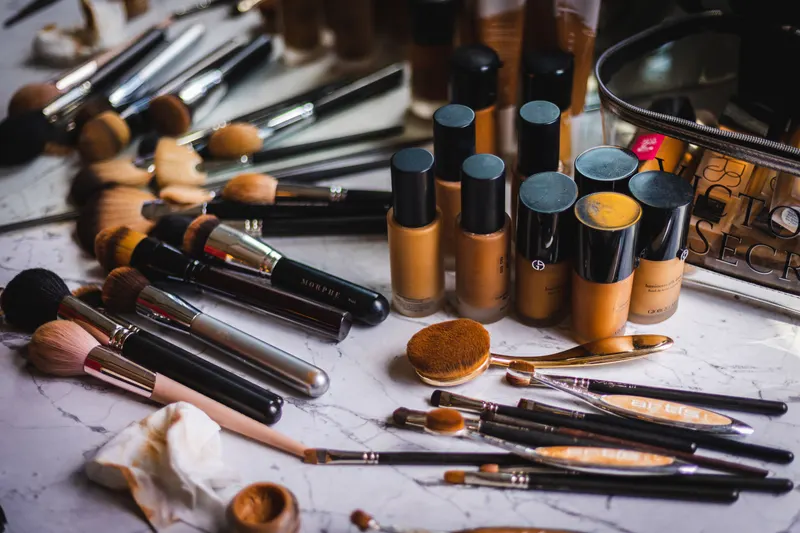
Once you know your depth and undertone, look for foundation shades labelled to match, often with a letter like C, N, W or O. Then swatch two or three close shades along your jawline and check them in daylight after a few minutes, because some formulas darken slightly as they settle. The right shade seems to disappear into your skin and your neck.
For events in Florida heat, longwear and transfer-resistant formulas help, and so does a good primer. Airbrush foundation is another option many brides like. Our airbrush makeup page explains how it works, and we offer airbrush or traditional at no extra charge in our bridal packages.
Blush, lips and highlighter by depth and undertone
Undertone guides the color family, while depth guides the strength. Cool undertones often suit rose and berry, warm undertones often suit peach and coral, neutral undertones suit soft versions of both, and olive undertones often suit terracotta, brick and rosewood. Lighter depths usually need only sheer layers, while deeper depths often look best with richer pigment, since very pale shades can look ashy.
Highlighter follows depth most of all. Pearl and champagne tend to suit lighter skin, soft gold suits medium depths, and gold, bronze and copper suit deeper skin. Choose a swatch on the chart to see the pointers for your exact combination.
Hair color and your skin tone
Hair color sits right next to your face, so undertone matters here too. Cool undertones often blend well with ash, cool brown and espresso tones, while warm undertones often glow with honey, caramel, copper and golden brown. Neutral undertones can wear most shades, and olive undertones often suit rich browns, mocha and soft caramel.
Depth matters as well. A very light hair color on deep skin, or a very dark color on very fair skin, creates high contrast, which can look striking or harsh depending on your features. A colorist can help you find the balance that suits you.
What a skin tone chart can’t tell you
No chart can see your skin in person. Freckles, redness, sun and the light you’re standing in all change how skin looks from day to day. The chart also can’t tell you which colors you’ll love wearing, and personal taste matters as much as any rule.
If you want to go further, the seasonal color analysis quiz adds hair, eyes and contrast to the picture, and points you to a full color palette.
Frequently asked questions
How do I know if my skin tone is warm or cool?
Compare pure white and cream fabric near your face in daylight, and notice whether silver or gold jewelry looks better. If foundation shades labelled golden look natural and pink ones look ruddy, you likely lean warm.
What is the difference between skin tone and undertone?
Skin tone usually means depth, how light or deep your skin is. Undertone is the color beneath the surface, such as cool, warm, neutral or olive, and it stays the same even when your skin tans.
Can deep skin have a cool undertone?
Yes. Any depth can have any undertone, which is why this chart shows all four undertones at every depth.
Why do foundations look gray or orange on me?
That usually means the undertone isn’t quite right, even if the depth is close. Olive undertones in particular often look gray in pink shades and orange in very yellow ones.
Does Reign Beauty Collective match foundation for every skin tone?
Yes. Reign Beauty Collective’s artists carry a wide range of shades and undertones and mix to match, so every bride and bridal party member gets a foundation that looks like their own skin.
Sources
The depth scale and swatches are our own, built from documented rules, and no published scale was reused. Separating depth from undertone follows the Munsell idea that how light or dark a color is stays independent of its hue.
- How to Read a Munsell Color Chart, Munsell Color. munsell.com/about-munsell-color/how-color-notation-works/how-to-read-color-chart (retrieved 2026-10-06)
Last reviewed October 6, 2026 by the Reign Beauty Collective artist team, Tampa, Florida.
This tool and page are general educational content from Reign Beauty Collective in Tampa, Florida. They are not professional, medical, or financial advice, and results vary. Please talk with a licensed professional about your own situation.