The usual order of makeup application is sunscreen and primer, then color corrector, foundation and concealer, then cream products, powder, brows, eyes, cheeks, mascara and lips, finishing with setting spray. The general rule is liquids and creams before powders, so each layer blends smoothly. Many artists do eye makeup first when using a lot of eyeshadow, so fallout can be cleaned up before the base.
Order of Makeup Application, Step by Step
This tool turns the order of makeup application into a step-by-step plan for the products you actually use, with a short reason for every step.
Tick your products, choose whether you like to do your eyes first, and switch on bridal or photo day tips if you’re getting ready for a big event. You can move any step up or down, then copy or print your routine.
Put your makeup in order
Tick the products you use and get a step-by-step order with a reason for each step. You can move any step up or down to match how you like to work.
Your privacy: Everything you enter stays on your device. This tool does not send, save, or share your answers, and you do not need an account or an email address. If you copy a share link, your answers are stored inside the link, so only share it with people you trust.
This tool is general beauty education. It is not styling, cosmetic, dermatological, or medical advice.
The order of makeup application, step by step
Most makeup routines follow the same simple logic: prepare the skin, even it out, add shape and color, then set everything so it lasts. Within that, liquids and creams usually go on before powders, because a cream product dragged over powder tends to look patchy. Fine details like mascara and lips come near the end, so they don’t get smudged while you work on the rest of your face.
The table below shows the full face-first order with a reason for each step. You won’t use every product every day, and that’s fine. The tool above keeps only the steps you tick and puts them in the right sequence.
| Step | Product | Why it goes here |
|---|---|---|
| 1 | Sunscreen | Sunscreen goes on before makeup so it forms an even layer on your skin. |
| 2 | Primer | Primer smooths the surface and helps everything after it stay put. |
| 3 | Color corrector | Corrector neutralizes redness or darkness so you need less foundation on top. |
| 4 | Foundation | Foundation evens out the whole face and sets the base for everything else. |
| 5 | Concealer | Concealer after foundation covers only what still shows, so you use less. |
| 6 | Cream contour | Cream products blend best on a base that hasn’t been powdered yet. |
| 7 | Setting powder | Powder sets the liquid and cream layers so powder products blend smoothly over them. |
| 8 | Brows | Brows frame the face, and filling them after the base keeps product from smudging into foundation. |
| 9 | Eyeshadow | Shadow builds color and depth on the lids. |
| 10 | Eyeliner | Liner defines the lash line once the shadow is in place. |
| 11 | Blush | Blush goes on once the base is set, so the color looks soft rather than patchy. |
| 12 | Highlighter | Highlighter comes after blush so it catches the light on top of everything. |
| 13 | Mascara | Mascara near the end avoids smudges while you work on the rest of the face. |
| 14 | False lashes | Lashes go on after mascara so your natural lashes blend with them. |
| 15 | Lip liner and lipstick | Lips come last so you can balance the color against the rest of the face. |
| 16 | Setting spray | Setting spray goes on last to melt the layers together and help them last. |
Why the order of each layer matters
Every layer changes the surface for the next one. Primer smooths skin so foundation glides on. Foundation evens things out, so concealer only needs to cover what still shows. Powder sets the creams underneath, giving blush and bronzer a smooth surface to blend over. Setting spray goes last to melt the layers together.
When the order goes wrong, you usually see it. Powder before cream products can make them streaky. Concealer under a heavy foundation can get moved around and need redoing. Mascara too early can transfer to your brow bone while you blend shadow. Getting the sequence right is often the easiest way to make the same products look better.
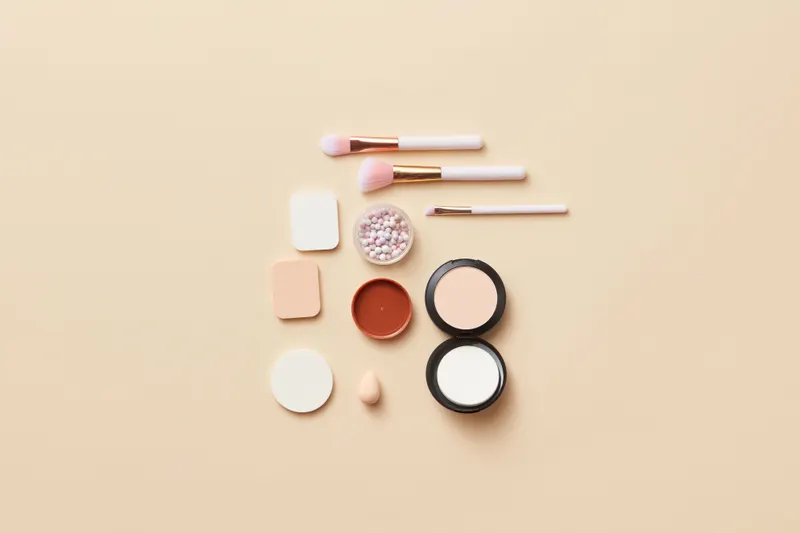
Eyes first or face first?
Both work, and plenty of artists switch depending on the look. Face first is the classic order and suits light eye makeup, because a little stray shadow is easy to dust away. Eyes first is popular for dramatic shadow, glitter or a smoky eye, because fallout can land on bare skin and be wiped off cleanly before foundation goes on.
Tick the eyes first option in the tool to see how the order changes. Shadow and liner move up to just after primer, and the rest of the face follows. Mascara and lashes still stay near the end, so your lashes don’t get clumped or smudged while you work on your base.
Where skincare and sunscreen fit
Skincare comes before makeup, and sunscreen is the last skincare step. Cleveland Clinic notes that sunscreen goes on before makeup rather than relying on the small amount of SPF in foundation. Give it a few minutes to settle so the next layers grip rather than slide.
Primer follows sunscreen. If your skin feels dry, a light moisturizer before sunscreen helps foundation look smoother, and if it gets oily, a mattifying primer in the T-zone can help. Our skin tone chart can help you choose a foundation shade once your base is ready.
Concealer before or after foundation?
For most people, concealer after foundation works best. Foundation covers a lot on its own, so you need less concealer once it’s on, and the result looks more like skin. Color corrector is the exception. It goes before foundation to cancel out redness, dark circles or discoloration, so the foundation on top can stay thin.
Some artists apply concealer first under the eyes and then tap foundation around it, especially with very full coverage looks. If that works for you, use the move buttons to put concealer before foundation and save your own order.
The order of makeup application for a wedding or photo day
On a wedding day, makeup needs to last for twelve hours or more, through heat, hugs and happy tears, and it needs to look good in person and in photos. The order stays the same, but small choices matter more: a grip primer, thin layers of foundation, powder only where you shine, a waterproof mascara, and lip liner under lipstick. Switch on the bridal tips in the tool to see a note for each step.
Our bridal artists build every wedding look in layers like this, matched to your skin and the day’s timeline. You can see how on our bridal hair and makeup page, and the hair and makeup trial run is a great place to test long-wear products before the day.
A quick everyday routine
On busy mornings, you don’t need every step. A simple five-step routine of sunscreen, a tinted base or foundation, concealer where you need it, mascara and a lip color covers most days in a few minutes. Tick just those products in the tool to see them in order, then add blush or brows when you have an extra minute.
The same logic still applies at any length: base before color, creams before powders, and lashes and lips near the end. Once that clicks, it’s easy to add or drop steps without starting over or second-guessing your routine.
Mistakes that make makeup look heavy
The most common one is using too much of each layer. Several thin layers almost always look more natural than one heavy one. Another is skipping primer and powder in hot weather, which can make even great foundation slide by the afternoon. In Florida humidity, setting the base well really matters.
Blending matters at every step too. Harsh edges on foundation, contour or blush show up quickly in flash photography. And finally, waiting a moment between layers lets each one settle, which helps the next layer blend instead of lifting what’s underneath.
Keeping eye makeup clean and safe
The FDA advises against sharing eye makeup and suggests keeping products clean and closed when you’re not using them. Replacing mascara regularly and washing brushes help too. If a product irritates your eyes, stop using it, and talk with a doctor if the irritation doesn’t go away. Always do a patch test before trying new lash glue.
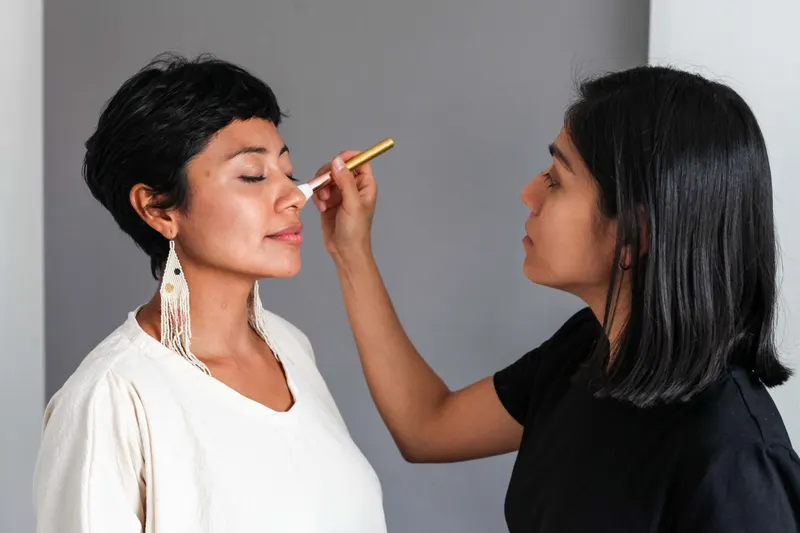
Frequently asked questions
What is the correct order of makeup application?
A common order is sunscreen, primer, color corrector, foundation, concealer, cream products, powder, brows, eyes, blush, highlighter, mascara, lips and setting spray. The main rule is liquids and creams before powders, and you can skip any step you don’t use.
Do you put foundation or concealer on first?
Most people get the most natural result with foundation first and concealer after, because you need less concealer that way. Color corrector is the exception, since it goes on before foundation.
Should I do my eyes before my foundation?
If you’re wearing a lot of eyeshadow, glitter or a smoky eye, doing your eyes first makes it easy to wipe away fallout. For light eye makeup, face first works just as well.
When does setting spray go on?
Setting spray goes on last, after lips. Some people also mist a little between layers on long days, but the final spray is what helps everything melt together and last.
Does Reign Beauty Collective use a set order for bridal makeup?
Every artist has their own preferences, and Reign Beauty Collective’s team adjusts the order to each bride’s look, skin and timeline. What stays the same is thin, well-blended layers built to last all day.
Sources
The order follows widely used makeup conventions, and the reasons are written in our own words. These sources cover where sunscreen fits and how to keep eye products safe.
- Is the Sunscreen in Your Makeup Enough?, Cleveland Clinic. health.clevelandclinic.org/is-the-sunscreen-in-your-makeup-enough (retrieved 2026-10-06)
- Eye Cosmetic Safety, U.S. Food and Drug Administration. www.fda.gov/cosmetics/cosmetic-products/eye-cosmetic-safety (retrieved 2026-10-06)
Last reviewed October 6, 2026 by the Reign Beauty Collective artist team, Tampa, Florida.
This tool and page are general educational content from Reign Beauty Collective in Tampa, Florida. They are not professional, medical, or financial advice, and results vary. Please talk with a licensed professional about your own situation.