Quick Answer
Foundation makeup is a skin colored base product that evens out your skin tone and creates a smooth canvas for the rest of your makeup, like blush, bronzer, and powder. It comes in liquid, cream, powder, stick, and airbrush formulas, with coverage ranging from sheer to full. The right foundation matches both your skin’s depth and its undertone, so it disappears into your skin instead of sitting on top of it.
If you’ve ever stood in front of a wall of foundation bottles feeling completely lost, you’re not alone. Foundation makeup is one of the most common products people wear and one of the most confusing to shop for. As a Tampa bridal hair and makeup team, we explain foundation basics all the time, often to brides who rarely wear makeup and want to understand what’s going on their skin on the wedding day.
This is a friendly, no jargon explainer. We’ll cover what foundation actually does, the main types, how to find your shade and formula, how it compares to similar products like tinted moisturizer and concealer, and why the foundation you’d wear to the office is often different from the one you’d wear in front of a wedding photographer.
What Foundation Makeup Actually Does
At its simplest, foundation evens out the color of your skin. Most skin has natural variation, a little redness around the nose, darker areas under the eyes, freckles, sun spots, or blemishes. Foundation blends those differences together so the face looks more uniform. How much it hides depends on coverage. Sheer foundation evens things slightly and lets freckles show, while full coverage can hide almost everything.
Foundation also works as a base, which is where the name comes from. Blush, bronzer, highlighter, and powder all tend to blend more smoothly and last longer on top of foundation than on bare skin. Some formulas also offer extras like SPF, a hydrating feel, or oil control, though those are bonuses rather than the main job. What foundation doesn’t do is change your skin itself. It sits on the surface and washes off at the end of the day.
The Main Types Of Foundation Makeup
Liquid foundation is the most common type. It comes in a huge range of finishes and coverage levels, blends easily with a brush, sponge, or fingers, and suits most skin types. Beginners often find a buildable liquid the easiest place to start because you can add a little more exactly where you need it.
Powder foundation comes pressed or loose. It’s quick to apply, tends to control shine, and suits oily skin well, though it can look dry on flaky or mature skin. Cream and stick foundations are richer and often give more coverage, which makes them useful for spot coverage or drier skin. They can feel heavier on oily skin in humid weather.
Airbrush foundation is sprayed on with a small compressor and airbrush gun, creating a very thin, even layer. It’s popular for weddings and events because it can look smooth on camera and last a long time. You can learn more in our guide to what airbrush makeup is.
How To Find Your Foundation Shade And Formula
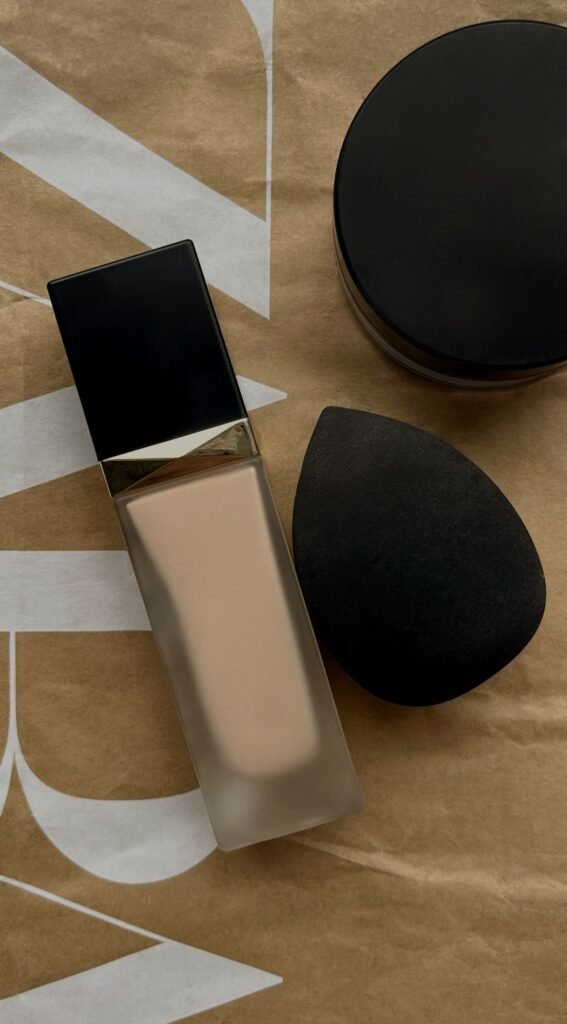
Shade has two parts: depth, meaning how light or deep your skin is, and undertone, meaning the subtle warm, cool, or neutral cast beneath the surface. A foundation that matches depth but not undertone can look orange, pink, or gray. Test shades on your jawline, not your hand or wrist, and choose the one that seems to disappear where your face meets your neck. Then check it in daylight, since store lighting can be misleading. Our free chart can help you find your depth and undertone before you start swatching.
Formula comes down to skin type and the finish you like. Dry skin usually prefers hydrating or satin formulas. Oily skin often does better with matte or oil controlling formulas. Combination skin may like a natural finish with powder only where it gets shiny. Coverage is personal. Many people are happiest with a light to medium coverage foundation plus concealer on specific spots, rather than full coverage everywhere.
Give any new foundation a real test before buying the full size if you can. Wear a sample for a full day, check it at lunchtime and in the evening, and notice whether it gets darker, looks patchy, or starts to separate. Some foundations oxidize, meaning they darken slightly as they react with the air and your skin’s oils, which is why a shade can look perfect in the store and a touch too deep an hour later.
Foundation Makeup Versus Tinted Moisturizer, Skin Tint, And Concealer
Here’s the part most beginner guides skip, and it’s one of the most common questions we hear. Tinted moisturizer is a moisturizer with a little pigment. It gives very sheer coverage and a fresh look, but it won’t hide much. Skin tints sit in between tinted moisturizer and foundation, offering light coverage with a skin like finish. Foundation covers more and lasts longer, and it’s designed to be a true base for the rest of your makeup.
Concealer is different again. It’s thicker and more pigmented, designed to cover small areas like under eye darkness or a blemish, not the whole face. Most polished looks use both: a thin layer of foundation for evenness, plus concealer exactly where you need extra help. That combination usually looks more natural than a heavy layer of foundation alone.
How To Apply Foundation Makeup For A Natural Finish
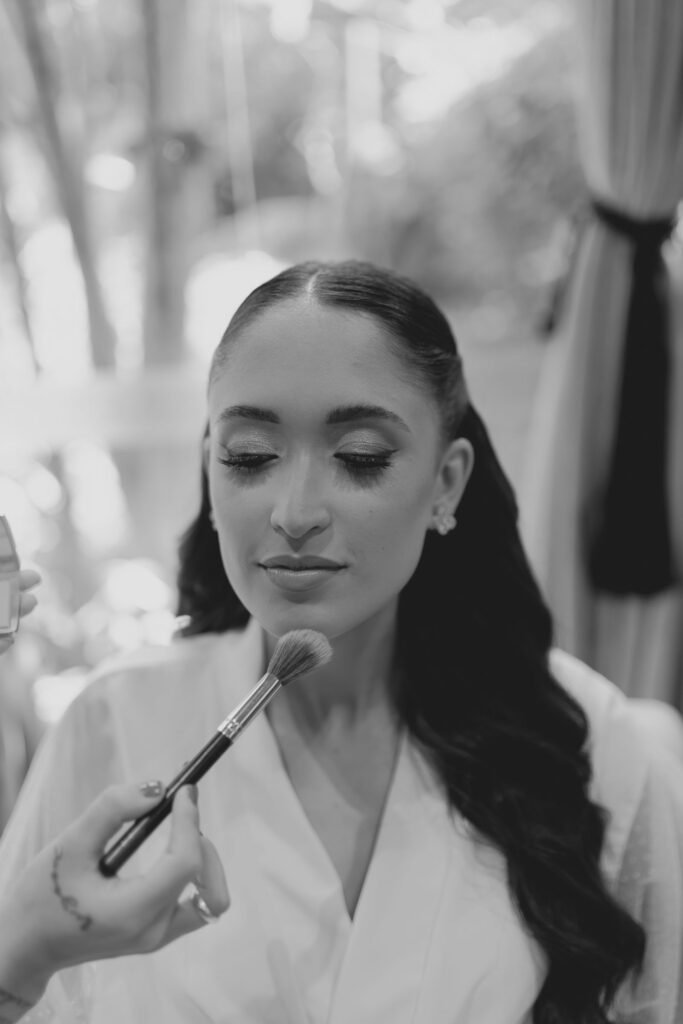
Start with clean, moisturized skin and give your skincare a few minutes to sink in. Then put a small amount of foundation on the back of your hand, which warms it slightly and lets you pick up just a little at a time. Apply to the center of the face first, where most redness and unevenness live, and blend outward toward the hairline and jaw. The edges of the face usually need very little product.
Your tool changes the finish. A damp sponge pressed into the skin gives a sheer, skin like result. A dense brush gives more coverage and a polished look. Fingers warm the product and work nicely with creamy formulas. There’s no wrong choice, just different results, so try each and see which you prefer.
Finish by checking the jawline, around the nostrils, and near the hairline for any visible edges, then set with a light dusting of powder only where you get shiny. Many beginners are surprised by how little product a natural finish really needs.
Foundation For Photos Versus Everyday Wear
Everyday foundation is chosen for comfort and a natural look in person. Event foundation, especially for weddings, also has to hold up for twelve or more hours, survive hugs and tears, handle Tampa humidity, and look good in flash photography and high resolution close ups. That changes the priorities.
For photos, many artists choose longer wearing formulas, build coverage strategically where the camera will notice it, and use careful setting so the skin doesn’t turn shiny by the reception. They also watch out for flashback, the whitish cast some high SPF and heavily reflective powders can create under flash. That’s why we test the complete look, including flash photos, at your bridal trial. Our bridal makeup service uses professional formulas selected for your skin and your venue, so you don’t need to buy a special foundation just for the day.
Common Foundation Makeup Mistakes Beginners Make
Using too much is the big one. Start with a small amount and build only where you need it, because a thick layer everywhere is what makes foundation look heavy and cakey. Skipping skin prep is the second. Foundation clings to dry patches and slides on oily skin, so a moisturizer, and a primer if needed, makes a real difference.
Choosing a shade on your hand, in store lighting, is the third. And the fourth is forgetting to blend at the edges, around the jaw, hairline, and nose, where lines are most noticeable. None of these are hard to fix, and once you’ve got the basics, foundation becomes one of the easiest steps in your routine. If you’d like to see how natural a well matched base can look, browse our team portfolio.
Ready To Book?
Not sure which foundation is right for your wedding? Reign Beauty Collective’s Tampa team matches your shade, undertone, and skin type, then tests the full look on camera at your trial so you can relax on the day. Check availability for your date and tell us a little about your skin when you book.
Frequently Asked Questions
Do I really need foundation, or can I just use concealer?
If your skin is fairly even, concealer alone may be all you need for everyday wear. For weddings and photos, a thin layer of foundation usually helps the whole face look more even and helps other makeup last.
Why does my foundation look orange or gray?
That usually means the undertone isn’t right, even if the depth is close. Try testing a few shades on your jawline in daylight and choose the one that blends into your neck without a visible line.
Will foundation clog my pores or cause breakouts?
Some people are more prone to breakouts from certain formulas. Look for non comedogenic options if that’s a concern, remove makeup thoroughly each night, and talk to a dermatologist if breakouts persist.
Is airbrush foundation better for a wedding?
Many brides love it because it’s thin, even, and long wearing on camera, but traditional foundation can look just as beautiful. The Reign Beauty Collective team can help you decide at your trial based on your skin and preferences.
Should I buy the foundation my makeup artist uses?
Only if you’d like it for your own routine. Your artist brings professional products to your appointment, so there’s no need to buy anything special just for the wedding day.