Quick Answer
Face paint is a highly pigmented cosmetic made to cover larger areas of skin with bold, opaque color, usually built from cosmetic grade pigments mixed with water activated binders, creams, or oils. Everyday makeup is designed to enhance your natural features with sheer to medium coverage, while face paint is designed to create designs, characters, and full color effects. The most important thing is choosing a paint made and labeled for use on skin, never craft or acrylic paint.
Face paint isn’t something most people associate with weddings, but it shows up at more celebrations than you might think. Kids’ corners at receptions, themed engagement parties, photo booths, costume rehearsal dinners, and festival style weddings all bring out the brushes. As a Tampa bridal hair and makeup team, we get questions about face paint every year, usually from couples planning a family friendly reception or a themed event.
This guide covers what face paint is made of, how to choose a skin safe, cosmetic grade formula, how to apply and remove it gently, and when it makes sense at an event. We’ll also explain the label details that separate real face paint from products that should never touch skin, which is one of the most important safety points most guides skip.
What Face Paint Is Made Of
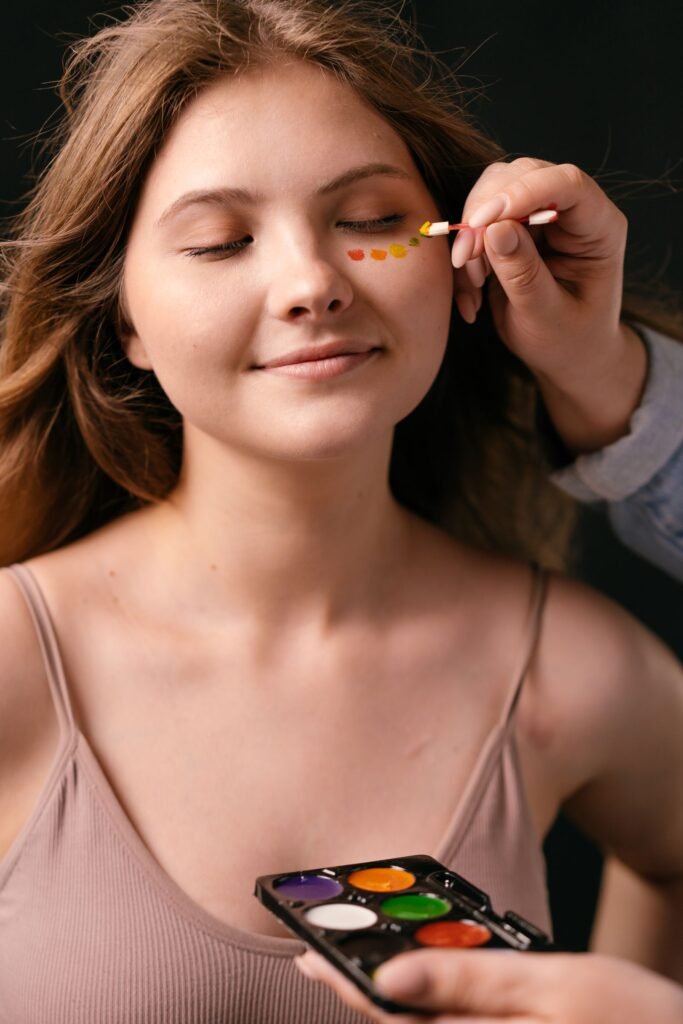
Water activated face paint is the most common type for events. It comes as a solid cake that you activate with a damp brush or sponge. It dries to a matte finish, layers well, and washes off with soap and water. Because it’s lightweight and quick drying, it’s a favorite for kids’ face painting and photo booth designs.
Cream face paint is richer and blends smoothly. It stays slightly soft on the skin and usually needs setting powder to reduce transfer. It’s often used for theatrical looks, blending colors, and covering larger areas. Oil based or grease style paints are the most opaque and water resistant. They’re common in theater and special effects, but they’re heavier, can feel warm on the skin, and need an oil based cleanser to remove.
All of these differ from everyday makeup, which is designed to look like skin. Face paint is designed to look like color, with far more pigment per layer.
Choosing A Skin Safe, Cosmetic Grade Face Paint
This is the most important part of the whole guide. Only use face paint that is made and labeled for use on skin by a reputable cosmetic manufacturer. In the United States, color additives used in cosmetics are regulated by the FDA, and some colors are approved only for certain uses. Reputable face paint brands state that their products use FDA compliant color additives and list ingredients on the label.
Never use craft paint, acrylic paint, markers, or anything labeled “non toxic” but not intended for skin. Non toxic simply means it won’t poison you if a child swallows a little. It doesn’t mean it’s safe or approved for your face. Some products are also not intended for use near the eyes, so check the label before painting around the eye area, and when in doubt, keep designs on the cheeks and forehead.
Finally, patch test. Even high quality paint can irritate sensitive skin. Apply a small amount on the inner arm or behind the ear a day ahead and check for redness or itching.
Reading Face Paint Labels Like A Pro
This is the gap in most face paint guides. A few label details tell you almost everything you need to know. Look for a full ingredient list, not just “non toxic.” Look for the manufacturer’s name and contact details, which suggest accountability. Look for statements about cosmetic compliance and intended use on skin. And check for warnings about use near the eyes, on children under a certain age, or on broken skin.
Be cautious with very cheap multipacks from unknown brands, glitter that doesn’t state it’s cosmetic grade, and neon or fluorescent colors, since only certain fluorescent color additives are permitted in cosmetics and some are not approved for use around the eyes. If a product doesn’t clearly say it’s meant for skin, leave it on the shelf.
Application And Removal Basics
Start with clean, moisturizer free skin, since oils can make water activated paint bead up. Lightly dampen your brush or sponge, activate the paint, and apply in thin layers. Build color gradually rather than applying one thick coat, which can crack as it dries. For cream paints, set lightly with a translucent powder to reduce smudging.
Keep all paint away from the eyes, nostrils, and mouth, and avoid painting over irritated, broken, or sunburned skin. Use clean brushes and sponges for each person, especially with kids at events, to avoid spreading bacteria.
Removal should be gentle. Water activated paint usually comes off with mild soap and warm water. Cream and oil based paints often need an oil based cleanser or makeup remover, followed by a gentle wash. Never scrub hard. Afterward, apply a light moisturizer. If redness, itching, or swelling appears, wash the area and check with a physician or dermatologist.
When Face Paint Makes Sense For An Event
Kids’ activities are one of the most popular uses. A face painting station at a family friendly reception keeps young guests happy while adults enjoy dinner and dancing. Keep designs small and simple, like hearts, stars, or butterflies on the cheek, and ask parents about allergies and sensitivities first.
Photo booths and themed parties are another fun option. Glitter accents, simple designs, and festival style looks can add personality to engagement parties, bachelorette weekends, and costume rehearsal dinners. For themed weddings, like Halloween or masquerade celebrations, face paint can transform a look for photos.
Humidity is worth planning around in Tampa. Water activated paint can soften and run with sweat at an outdoor summer event, so keep designs small, set cream paints with powder, and consider a skin safe setting spray made for face and body art. Keeping painted guests out of direct midday sun also helps designs last through the party.

Planning A Face Paint Station At A Reception
If you’re adding a face painting station for young guests, a little planning keeps it fun and safe. Book an experienced face painter who uses professional, cosmetic grade paints and can tell you which brands they use. Ask about their hygiene routine, such as fresh water, clean sponges for each child, and brush cleaning between guests. A good face painter will also ask about allergies and skip anyone with irritated skin or a cold sore.
Set up the station somewhere with good light, a little shade, and easy access for parents, ideally away from the dance floor and the cake table. Offer a simple menu of quick designs, since elaborate full face designs take much longer and can create a line. Small cheek designs usually take just a few minutes each, which keeps kids happy and moving.
Finally, plan for cleanup. Keep baby wipes, gentle cleanser, and paper towels nearby, and let parents know how to remove the paint at the end of the night. A thoughtful setup means kids go home with a fun memory and no irritated skin the next morning.
Face Paint And Bridal Makeup Are Different Services
It’s worth being clear about what face paint is and isn’t. Face paint is for designs, characters, and color effects. Bridal makeup is about enhancing your natural features so you look like yourself on your best day, with long wear and camera ready skin. Our bridal makeup service and airbrush makeup use professional cosmetic products designed for complexion and wear, not face paint.
If you’re planning a themed element, like a festival glitter look for the bridal party or a costume reception, mention it early. Your artist can suggest cosmetic grade options that work alongside your bridal look and test it at your bridal trial. For more on professional paint options, our guide to professional face paint goes deeper into the brands artists use.
Ready To Book?
Planning a themed celebration or a family friendly reception? Reign Beauty Collective’s Tampa team focuses on bridal hair and makeup, and we’re happy to talk through cosmetic grade glitter or themed accents that work with your wedding look. Check availability for your date and share your theme when you book.
Frequently Asked Questions
Is face paint safe for kids?
Cosmetic grade face paint made for skin is generally considered appropriate when used as directed. Patch test first, ask parents about allergies, and avoid broken or irritated skin.
Can I use acrylic or craft paint on my face?
No. Craft and acrylic paints aren’t made for skin, even if labeled non toxic, and can irritate or damage skin.
Can face paint go near the eyes?
Only if the product is labeled as safe for use around the eyes. Many face painters keep designs on the cheeks and forehead to be safe.
How do I remove oil based face paint?
Use an oil based cleanser or makeup remover, then wash gently with a mild cleanser. Avoid scrubbing, and moisturize afterward.
Does Reign Beauty Collective offer face painting at weddings?
Reign Beauty Collective focuses on bridal and event hair and makeup rather than face painting stations. We’re happy to discuss themed makeup accents that work with your overall look.