Quick Answer
Genuinely professional face paint is cosmetic-grade, formulated and tested specifically for skin use, distinct from craft or hobby paint that was never intended to touch the face. Many artists find cosmetic-grade formulas blend more smoothly, hold color better under studio lighting, and are far safer for prolonged skin contact. Only cosmetic-grade, skin-safe face paint should ever be used on skin, never a craft or non-cosmetic alternative.
Creative and editorial photoshoots sometimes call for bold, artistic color work, and professional face paint is exactly the tool built for that job, when it’s genuinely cosmetic-grade. As a Tampa team that does creative photoshoot makeup regularly, here’s a careful, practical guide to what makes face paint actually professional and safe.
Safety genuinely has to come first with any product going directly onto skin, which is why this guide leads with the cosmetic-grade distinction before getting into technique or creative application at all. No creative concept is worth compromising on that basic safety standard.
What Distinguishes Professional-Grade Face Paint From Craft Alternatives
Cosmetic-grade face paint is formulated, tested, and labeled specifically for use on skin, meeting cosmetic safety standards that craft or hobby paint was never designed to meet. Craft paint, even when marketed loosely as “face safe” by a non-cosmetic brand, has not gone through that same formulation and testing process, and should never be used on skin regardless of price or convenience.
Genuinely professional formulas also tend to blend more smoothly and layer more predictably, since they’re engineered with an artist’s actual working process in mind, not just a flat color application.
Price alone isn’t a reliable indicator of which category a product falls into either, since some budget-friendly cosmetic-grade lines exist alongside expensive craft or novelty products with no cosmetic testing behind them at all. Checking the label and the seller, not the price tag, remains the only reliable way to confirm what you’re actually buying.
Reading Ingredient Lists Before You Buy
A genuinely cosmetic-grade face paint will list its ingredients the way any other cosmetic product does, following standard cosmetic labeling conventions, and will typically be sold through a cosmetic or professional makeup supplier rather than a general craft or party store. If a product’s packaging doesn’t clearly state it’s intended for skin or face use, that’s a real red flag worth taking seriously rather than assuming it’s fine because it’s labeled non-toxic for children’s crafts.
Non-toxic, a label seen constantly on craft supplies, is not the same claim as cosmetic-grade or skin-safe. Non-toxic generally means a product is safe if accidentally swallowed in a small amount, which is a completely different safety standard than one formulated and tested for hours of direct skin contact.
How It’s Used In Creative Or Editorial Photoshoot Makeup
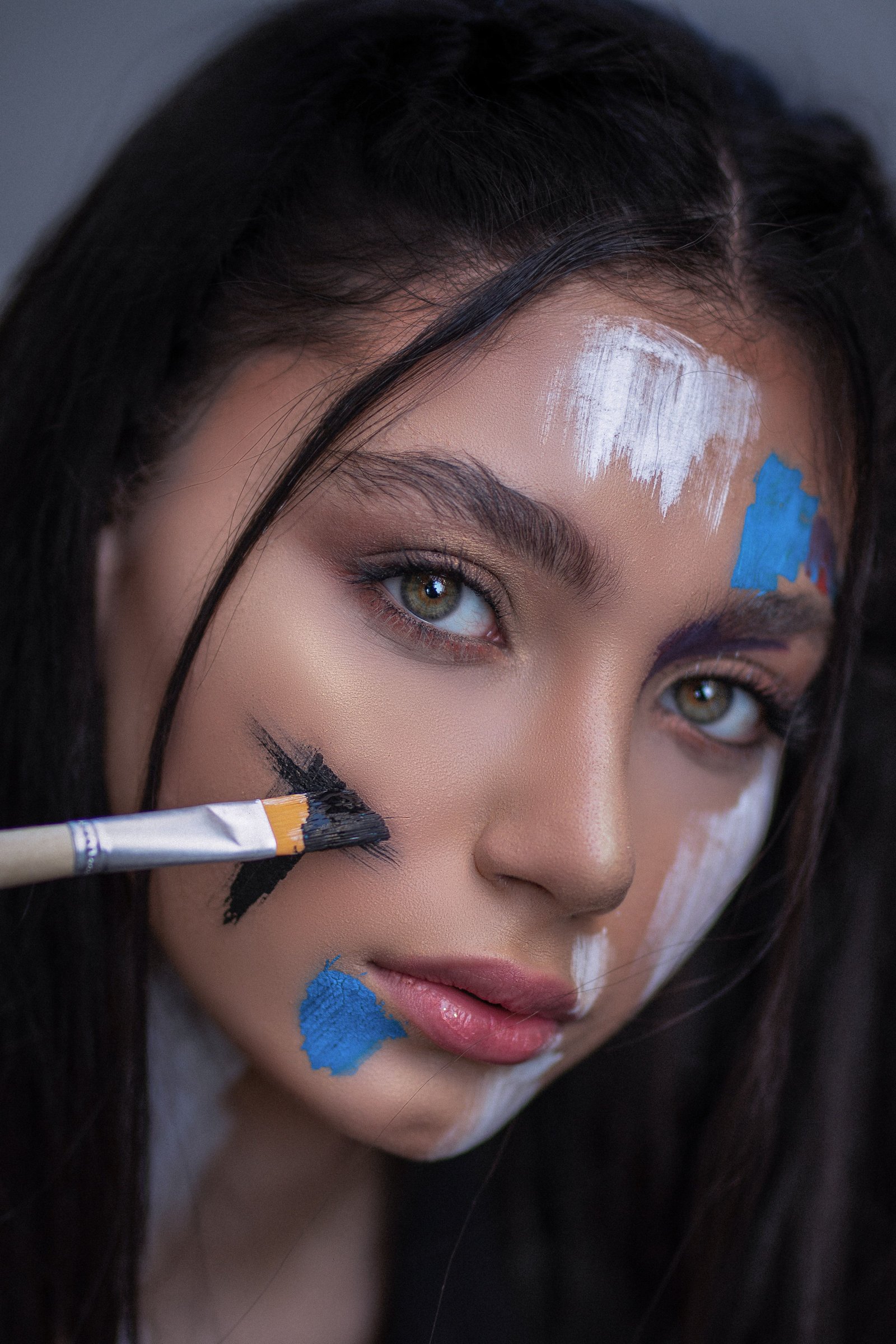
Professional face paint shows up in editorial work whenever a creative concept calls for bold, saturated color beyond what standard cosmetics achieve, whether that’s a striking graphic eye design, a full artistic color story, or a specific creative brief built entirely around color. Many artists layer it with standard cosmetics rather than using it in isolation, building a look that’s both vivid and wearable for the shoot’s actual duration.
Its high pigment concentration is genuinely useful under strong studio lighting specifically, where a less saturated product can wash out and lose the visual impact a concept is going for.
Water-Activated Versus Cream-Based Formulas
Cosmetic-grade face paint generally comes in two main formula types, and knowing the difference helps explain why two products marketed similarly can behave so differently on skin. Water-activated formulas, applied with a damp brush or sponge, tend to deliver more vivid, saturated color and dry to a matte finish that holds up well under strong lighting.
Cream-based formulas blend more like a traditional cosmetic and tend to feel more comfortable for longer wear, though they can be slightly less vivid at full saturation than a water-activated version. Many artists actually combine both within a single design, using a cream base for larger areas and a water-activated formula for crisp, saturated line work on top.
Application And Blending Technique For A Clean, Artistic Finish
Working in thin layers and letting each one set slightly before adding the next gives more control over color intensity and cleaner line work than applying too much product at once. A slightly damp sponge or brush, rather than a dry one, tends to help many cosmetic-grade formulas activate and blend more smoothly.
Sketching out a design lightly first, then building up saturation gradually, gives room to adjust before a mistake becomes difficult to correct within the shoot’s time window.
Working With Sensitive Or Reactive Skin
Even genuinely cosmetic-grade products can occasionally cause a reaction in someone with sensitive or reactive skin, since individual sensitivities vary and no product is universally reaction-free for every person. A patch test on the inner arm, done at least a day before a shoot rather than the morning of, is a reasonable precaution for anyone unsure how their skin will respond.
Fragrance-free and hypoallergenic-labeled cosmetic face paints exist specifically for this reason, and it’s worth flagging any known sensitivity to your artist ahead of time so the right formula can be chosen from the start, rather than discovering a mismatch mid-shoot.
Removal And Skin Care Afterward
A gentle, oil-based cleanser typically removes cosmetic-grade face paint more completely and comfortably than soap and water alone, since the oil helps break down pigment without over-scrubbing the skin. Following up with a normal moisturizer afterward helps skin recover from a longer-than-usual wear time.
UV And Blacklight-Reactive Face Paint, A Special Case
Some creative concepts call specifically for UV-reactive or blacklight-responsive face paint, a specialized category that glows under UV light for a striking photo or event effect. These formulas still need to be genuinely cosmetic-grade, and it’s worth being extra cautious here specifically, since UV-reactive pigments have historically had more inconsistent skin-safety formulation across brands than standard color cosmetics.
Sticking to a well-established, reputable cosmetic brand for this specific category, rather than an unfamiliar budget option, is worth the extra research time before a shoot that depends on this particular effect.
Common Mistakes People Make With Professional Face Paint
Using a non-cosmetic craft paint to save money is the most serious mistake, and one to avoid entirely regardless of the occasion. Skipping a patch test before a shoot, and scrubbing too hard during removal rather than using a proper cleanser, are two more common, avoidable issues.
Applying color directly over unprepped, unmoisturized skin is another common miss, since cosmetic-grade face paint genuinely performs better and lasts longer over a clean, lightly moisturized base than over dry or unprepped skin. Rushing the design under time pressure, rather than sketching a light guide first, is the last common mistake, and one of the easiest to prevent simply by building extra prep time into the shoot schedule from the start.
How Reign Beauty Collective Approaches Creative Photoshoot Makeup
We use only genuinely cosmetic-grade products for any creative or editorial concept, never a craft substitute, and always plan removal and skin care into the shoot timeline. If your project involves a related protective step, our companion review, What You Should Know About Paints For Face, is worth reading too.
Every creative concept starts with a genuine conversation about what the client actually wants to achieve, followed by product and technique recommendations built around that specific vision rather than a generic package applied to every shoot the same way. Whether that’s a subtle artistic accent or a fully immersive color concept, the same cosmetic-grade-only standard applies without exception.
Ready To Book?
Planning a creative photoshoot with bold color work? Reign Beauty Collective uses only genuine cosmetic-grade products for every concept in Tampa, FL. Take a look at our Price List, then Book Online to check availability.
Frequently Asked Questions
How can I tell which brands are actually cosmetic-grade?
Genuinely cosmetic-grade products are labeled for skin or face use and sold through cosmetic or professional makeup suppliers, not craft or hobby stores. When in doubt, check that the product is specifically marketed as a cosmetic, not a craft, paint.
Will it irritate my skin?
Cosmetic-grade formulas are generally formulated to be gentle, but a patch test beforehand is a reasonable precaution for anyone with sensitive skin, and reactions vary by individual.
How do I remove it without staining my skin?
A gentle oil-based cleanser typically removes cosmetic-grade face paint cleanly. Scrubbing hard with just soap and water can irritate skin without fully removing pigment.
Is craft paint ever an acceptable substitute?
No, craft or hobby paint should never be used on skin, regardless of cost. It has not been formulated or tested for skin safety the way genuine cosmetic products have.
Can Reign Beauty Collective help plan a creative concept using face paint?
Yes, we work with clients on the full creative concept, always using cosmetic-grade products and planning removal into the shoot timeline.