To make fake blood, stir 1 tablespoon of flour into 2 tablespoons of water until smooth, mix in 3 tablespoons of corn syrup, then add red food coloring a few drops at a time with the tiniest touch of blue. A little chocolate syrup makes it darker. It isn’t meant to be eaten, keep it away from the eyes, mouth and broken skin, and test it on fabric, because food coloring stains.
Fake Blood Recipe: How to Make Fake Stage Blood and Use It Safely
Good fake blood looks real because of two things: color and flow. Plain red coloring in water looks thin and pink, and plain syrup looks thick and shiny. The recipe here comes from a Science Buddies activity that tested both, and the winner was corn syrup thinned with a flour-and-water paste, which drips and spreads much like real blood, with a little blue and chocolate to take the color from cartoon red to something more convincing.
The calculator scales that recipe for your plans. Say how many people need fake blood and how big the effect is, and you’ll get how many batches to make, the ingredients, the method and the safety checks. The amount per person is an estimate you can change.
How much fake blood do you need?
Say how many people need it and how big the effect is. You’ll get how many batches to make, the ingredients scaled for you, the method and the safety checks. The amounts per person are estimates you can change.
Safety first: Use only face paint made for skin, with colors approved for use in cosmetics, never craft or acrylic paint or markers. Patch test a small amount on the arm 24 to 48 hours before the event, keep paint out of the eyes, and never use neon or glow-in-the-dark colors near the eyes. Wash it off if the skin feels itchy, hot or sore, and if a rash, swelling or eye irritation develops, stop and ask a doctor.
Your privacy: Everything you enter stays on your device. This page does not send, save, or share your answers, and you do not need an account or an email address. If you copy a share link, your answers are stored inside the link, so only share it with people you trust.
Use only face paint made for skin, with colors approved for use in cosmetics, never craft or acrylic paint or markers. Patch test a small amount on the arm 24 to 48 hours before the event, keep paint out of the eyes, and never use neon or glow-in-the-dark colors near the eyes. Wash it off if the skin feels itchy, hot or sore, and if a rash, swelling or eye irritation develops, stop and ask a doctor.
This page is general beauty education. It is not styling, cosmetic, dermatological, or medical advice.
How the fake blood calculator works
Each batch of the base recipe makes about six tablespoons. The calculator multiplies the number of people by an estimated amount per person for the effect you choose, a few drips, splatter or a big effect, then rounds up to whole batches with a little extra for testing and spills. These are estimates, not measurements, because nobody uses fake blood the same way twice; open “Change the estimate” to set your own amount.
The fake blood recipe
| Ingredient | Amount |
|---|---|
| Light corn syrup | 3 tbsp |
| All-purpose flour | 1 tbsp |
| Water | 2 tbsp |
| Red food coloring | a few drops per batch, more until the color looks right |
| Blue food coloring | the tiniest touch, added a little at a time |
| Chocolate syrup (optional) | a small squeeze for darker, older-looking blood |
Stir the flour and water together first until there are no lumps, then stir in the corn syrup until smooth. Add red food coloring a few drops at a time, then the tiniest touch of blue, which Science Buddies found makes it look more realistic. For darker, older-looking blood, stir in a little chocolate syrup, which also makes it less see-through. Test the color and flow on a paper plate or an old cloth before it goes near skin or clothes.

How to make fake stage blood thicker or thinner
For thicker, slower drips, add a little more corn syrup or a little more of the flour paste. For a thinner blood that runs and splatters, add water a teaspoon at a time. Fresh blood from a small cut looks brighter and thinner; blood meant to look older or dried looks darker and thicker, so add more chocolate syrup and let it set. Make a small test batch first and adjust, rather than mixing a big bowl you can’t change.
Fake blood safety
Fake blood is for effects on intact skin and costumes only. Keep it out of the eyes and away from the mouth and any broken skin. It isn’t meant to be eaten, so don’t swallow it, and keep it away from young children who might. Patch test a small amount on the arm a day or two before, as the FDA suggests for Halloween makeup, and wash it off at once if the skin itches, stings or turns red. Check for allergies too: the recipe contains flour, which has wheat, and chocolate syrup if you add it.
Fake blood stains: protect clothes and furniture
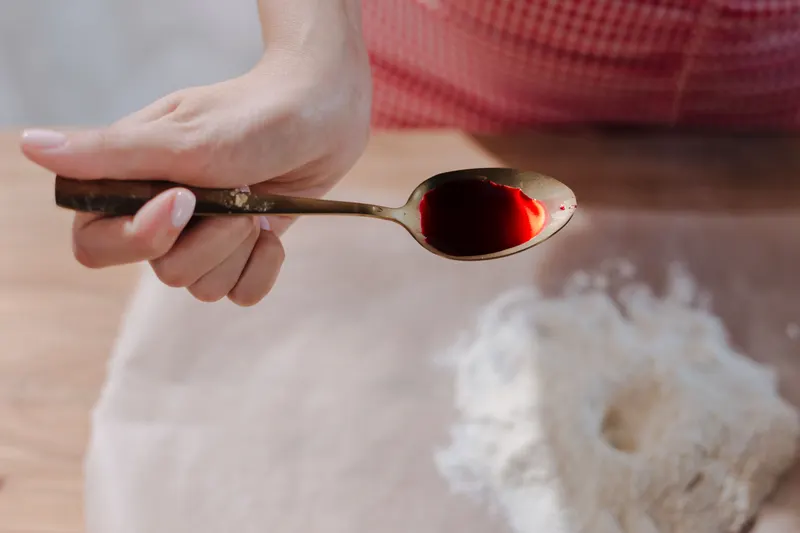
Food coloring stains. It can leave marks on skin for a day, and it may never come out of clothes, fabric, carpets, upholstery and grout. Wear clothes you don’t mind losing, put down old towels where you’re working, and test the blood on a hidden part of any costume first. Keep it away from car seats and light-colored furniture at a party.
Taking fake blood off
Wipe off what you can with a damp cloth, then wash the skin with warm water and a gentle cleanser. A faint pink tint can last a little while on skin, especially around nails. Rinse stained clothes in cold water as soon as you can and wash them as the care label says; some stains may not come out. Wash bowls and spoons with hot, soapy water.
Using fake blood with face paint
Fake blood goes on last, after any face paint has dried. For a zombie or a Halloween look, paint the base first, then add a few drips from a spoon or a brush, letting gravity do the work. Keep blood effects on the cheeks, chin, neck and hands, never near the eyes. Our face paint ideas picker has original zombie and skeleton designs with steps, and the face paint patch test guide covers testing and removal.
Fake blood for Halloween, school plays and short films
How you use fake blood depends on where it will be seen. For a Halloween party, a few drips along the jaw or down the neck read clearly across a room, so the small effect is usually plenty. On stage, the audience is far away and the lights are bright, so a slightly darker mix with more chocolate syrup shows up better than a bright red one. For a short film or photos, the camera sees every detail, so make a small test batch, take a photo under the same light and adjust the color before the shoot. Plan when the blood goes on, too. It is easiest to add it at the last moment, so it stays wet and shiny and doesn’t get on everything else first.
Making fake blood with kids
Making fake blood can be a fun kitchen project for older children, as long as an adult is in charge. Let them measure and stir, but keep the bottles of food coloring with the adult, because a spilled bottle stains fast. Cover the table, roll up sleeves and keep a damp cloth close. Remind children that it isn’t for drinking, even though it is made from kitchen ingredients, and keep it away from toddlers and pets. Younger children may be happier with face paint scratches or a painted bandage than with wet blood that drips.
Make it fresh and throw away leftovers
This recipe has no preservatives, so make it on the day you need it, or the evening before and keep it covered in the fridge. Stir it again before use, because the flour can settle. If it smells sour, changes color or grows anything, throw it away and make a new batch. Don’t pour a large amount down the sink; scrape leftovers into the trash and wash the bowl.
Frequently asked questions
How do you make fake blood?
Mix 1 tablespoon of flour with 2 tablespoons of water, then stir in 3 tablespoons of corn syrup. Add red food coloring a few drops at a time and a tiny touch of blue.
How do I make fake stage blood look real?
Add the tiniest touch of blue to the red, and a little chocolate syrup for darker blood. Thin it with water for splatter.
Is fake blood safe on skin?
On intact skin, after a patch test, used with care. Keep it away from the eyes, mouth and broken skin.
Can you eat this fake blood?
No. It isn’t meant to be eaten, so don’t swallow it. Keep it away from young children.
Does fake blood stain?
Yes. Food coloring can stain skin, clothes and fabrics. Test it on fabric first and protect furniture.
Does Reign Beauty Collective do special effects makeup?
No. Reign Beauty Collective offers hair and makeup for weddings, photoshoots, homecoming and prom.
Sources
The base recipe and the color and thickness tips follow the Science Buddies activity below, and the patch test timing follows the FDA. The amounts per person are estimates.
- Fake Blood Made Scientific, Science Buddies, published by Scientific American (October 29, 2015). www.scientificamerican.com/article/fake-blood-made-scientific (retrieved 2026-10-12)
- Halloween Safety Tips: Costumes, Candy and Colored Contact Lenses, U.S. Food and Drug Administration consumer update. www.fda.gov/consumers/consumer-updates/halloween-safety-tips-costumes-candy-and-colored-contact-lenses (retrieved 2026-10-10)
Last reviewed October 12, 2026 by the Reign Beauty Collective artist team, Tampa, Florida.
This page is general educational content from Reign Beauty Collective in Tampa, Florida. It is not professional, medical, or financial advice, and results vary. Please talk with a licensed professional about your own situation.