Quick Answer
The secret to flawless contouring is restraint, the best contouring makeup for a wedding day gently enhances your natural bone structure rather than visibly reshaping your face. Bridal contouring makeup is typically built softer than editorial contour, blended thoroughly, and chosen to hold up consistently across daylight, indoor lighting, and flash photography throughout one long day. Many brides find that a professional artist adjusting placement to their specific face shape matters more than any single product or technique.
If you’ve spent any time researching the best contouring makeup for weddings, you’ve probably noticed how differently it can look from one bride to the next, stunning and camera-friendly on some faces, and a little harsh or muddy on others. In our experience, the actual secret has less to do with a specific product and more to do with restraint, placement, and blending, the fundamentals of good bridal contouring makeup that generic beauty tutorials often skip past. This guide covers what contouring is actually meant to do, how cream and powder formulas perform differently, why bridal contour is typically softer than editorial contour, and how a professional adjusts it to your specific face shape.
What Contouring Is Actually Meant To Do In Bridal Makeup
Contouring is meant to subtly enhance the bone structure you already have, not reshape your face into a different one. A well-placed shadow along the hollows of the cheeks, the temples, or the jawline adds gentle dimension, the kind that shows up as soft definition in photos rather than an obvious line of darker product on the skin.
The confusion many brides run into comes from social media tutorials built for flash photography or heavy digital filters, where dramatic, sharply defined contour reads as striking on screen but can look noticeably harsh in person and in natural wedding photography. Many brides find that once they understand contouring is about enhancement rather than sculpture, the whole approach starts to make a lot more sense.
It helps to think of contour the way a photographer thinks about natural light and shadow. Your face already has areas that catch light and areas that fall into gentle shadow depending on the angle, and contour simply reinforces those natural shadows just enough to read clearly in photos, rather than inventing new ones that weren’t there to begin with. That distinction, working with your existing structure instead of overriding it, is really the whole secret behind why some contour looks effortless and some doesn’t.
Cream Vs Powder Bridal Contouring Makeup In Photos And Under Different Lighting
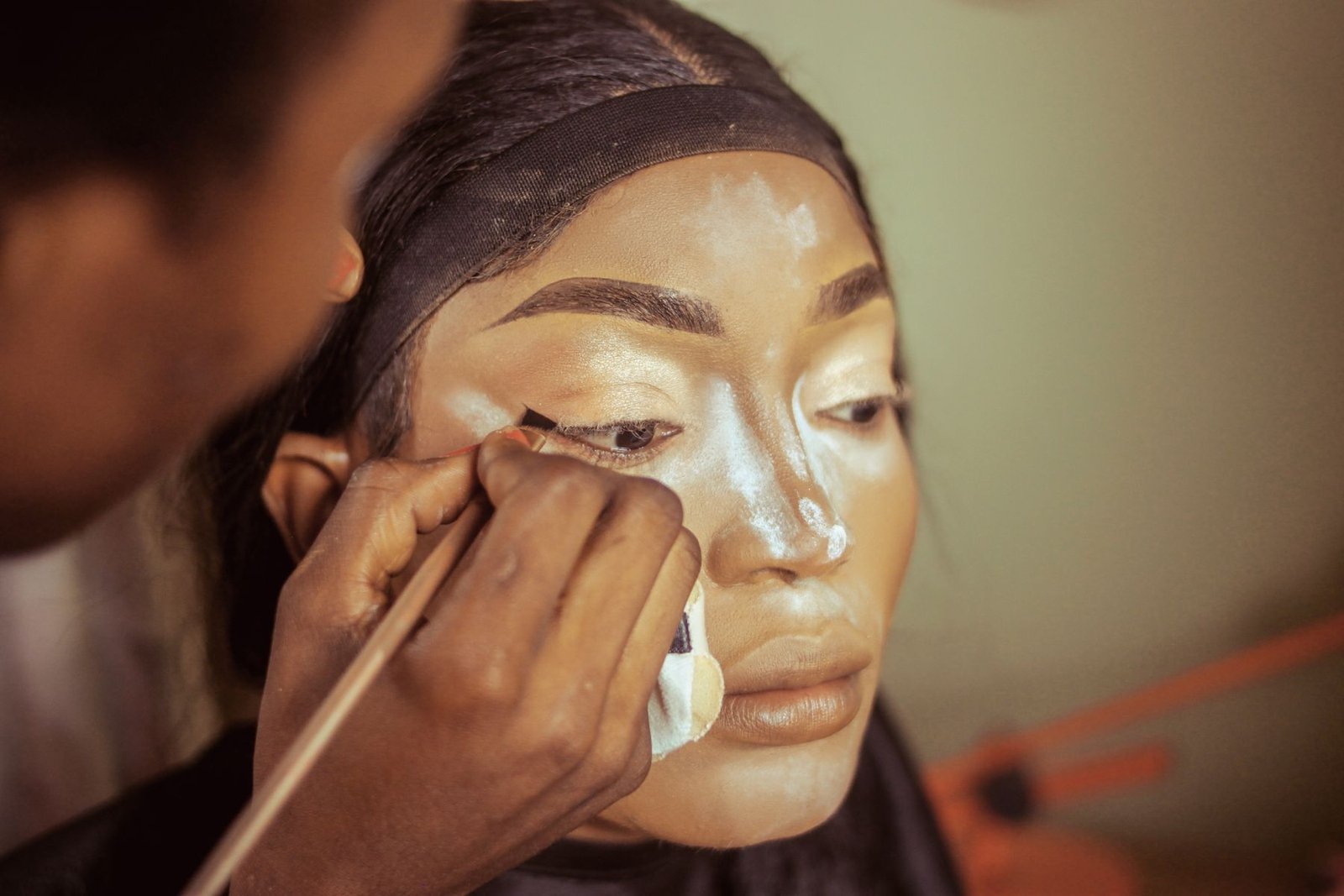
Cream contour blends directly into the skin and tends to look more natural in person, since it melts into foundation rather than sitting as a separate layer on top of it. It generally photographs with a soft, lived-in quality, which many brides prefer for a bridal look, though it can shift slightly over a long day if it isn’t set properly.
Powder contour tends to be easier to build up gradually and holds its shape a bit longer through heat and humidity, which matters for a Florida wedding day. It can look slightly more textured up close if applied too heavily, though a light hand and good blending largely solve this. Many experienced artists actually use both, cream underneath for a soft base and a touch of powder on top to help it hold, rather than treating the two as an either-or choice.
Neither formula is universally better, and the right choice often comes down to your skin type and the specific finish you’re after as much as anything else. Skin that runs oily tends to hold powder contour a little better through the day, while drier skin often looks more natural with a cream formula that won’t emphasize any dry patches. This is exactly the kind of decision a trial helps settle, since seeing both options on your own skin tells you far more than reading about them ever could.
Why Bridal Contouring Makeup Looks Softer Than Editorial Contour
Editorial contour is often designed for one shoot, one lighting setup, and one moment captured on camera. A wedding day is nothing like that, it moves through bright outdoor ceremony daylight, softer indoor reception lighting, and flash photography on the dance floor, sometimes all within the same few hours. Contour that’s built too sharp or too dark for one of those environments can look noticeably off in another, which is a big part of why experienced bridal artists build contour softer and more blended than an editorial look from the start.
This is one of the most overlooked parts of bridal contouring, most general contouring tutorials are written around a single lighting scenario, not a full day that shifts from natural sunlight to indoor ambient light to camera flash. A softer, more blended contour tends to translate acceptably across all of these, while a sharper, more dramatic version that looked great in one lighting condition can start to look inconsistent as the day and the light around you both change.
How A Professional Adjusts Contour Placement For Different Face Shapes
Contour placement isn’t one-size-fits-all, and an experienced artist adjusts where shadow and light go based on your specific bone structure. For a rounder face, contour is often placed to add gentle length along the sides, while for a longer face, it tends to focus more on the temples and jaw to add width rather than length.
For fuller or rounder faces specifically, many brides find contouring works beautifully when it’s about adding soft dimension rather than trying to make the face look like a different shape entirely. A skilled artist looks at your actual bone structure in person, not a generic chart, and adjusts placement accordingly, which is part of why an in-person trial matters so much more than trying to follow a tutorial built for someone else’s face.
It’s also worth remembering that most faces are some combination of shapes rather than a perfect textbook example of one category, which is exactly why a chart alone can only take you so far. Describing what you like and don’t like about how contour has looked on you in the past, if you have that experience, gives your artist a genuinely useful starting point beyond just identifying a face shape.
Common Contouring Mistakes That Ruin A Bridal Look
Using a contour shade that’s too warm or orange-toned is one of the most common mistakes, since it can read as bronzer rather than shadow and lose the dimensional effect contouring is meant to create. A cooler, more neutral toned shade tends to mimic a natural shadow far more convincingly.
Under-blending is another frequent issue, leaving a visible line where the contour ends rather than a soft gradient that fades into the rest of the skin. Applying too much product in one spot, rather than building gradually in thin layers, tends to create the muddy or heavy look many brides worry about. And skipping a trial to test how your contour actually photographs is a mistake worth avoiding entirely, since it’s genuinely hard to judge from a mirror alone how a look will read in real wedding photography.
Copying a contour placement straight from someone else’s tutorial without adjusting it to your own bone structure is another mistake worth naming. What creates beautiful, subtle dimension on one face can land in the wrong place entirely on another, simply because bone structure, skin texture, and even the natural way light falls across a face all vary from person to person. A tutorial can teach general principles, but it can’t replace an artist actually looking at your face in person.
What To Expect When You Book With Reign Beauty Collective
Reign Beauty Collective is a licensed, published on-location bridal makeup team based in Tampa, Florida, serving brides throughout Tampa, St. Petersburg, Clearwater, Sarasota, Orlando, Miami, and beyond, with the ability to travel worldwide. Contouring is built into every bridal makeup look we create, adjusted to your bone structure and softened specifically for how it will read across your ceremony, reception, and photos.
If you’re still exploring bridal makeup more broadly, our Complete Guide To Bridal Makeup is a good place to start, and you can see current pricing on our Price List or browse real finished looks on our gallery page.
Ready To Book?
If you’re ready to talk through the best contouring makeup approach for your face and your wedding day, Reign Beauty Collective would love to help. Based in Tampa, FL and available throughout the Tampa Bay area, Orlando, Miami, and beyond, we build a soft, camera-friendly contour into every bridal look. Take a look at our Price List to see current pricing, then Book Online to check availability.
Frequently Asked Questions
I’m worried contour will look too harsh or muddy in my wedding photos, is that a real risk?
It can happen with a heavy hand or the wrong shade, but a soft, well-blended bridal contour is built specifically to avoid that. Many brides find that seeing it tested at a trial, in real lighting, is the best way to feel confident it will photograph the way they hope.
Does contouring actually work for fuller or rounder faces?
Yes, many brides with fuller or rounder faces find contouring adds beautiful, soft dimension when it’s approached as enhancement rather than reshaping. A professional artist adjusts placement to your specific bone structure rather than applying a generic template.
How do I keep contour looking natural in daylight versus evening light?
A softer, well-blended contour tends to translate more consistently across both, which is part of why bridal contour is typically built gentler than editorial contour from the start. Reign Beauty Collective builds contour with your full wedding day timeline in mind, not just one lighting scenario.
What’s the difference between cream and powder contour for a wedding?
Cream tends to look more natural and blends directly into the skin, while powder holds its shape a bit longer through heat and humidity. Many artists use both together, cream as a soft base and powder to help it hold through a long day.
Will contour make me look like I’m wearing a completely different face than usual?
It shouldn’t, a well-done bridal contour is meant to enhance your natural features, not disguise them. If a look feels unfamiliar at your trial, that’s exactly the moment to speak up and adjust it before the wedding day itself.