To work out how much face paint you need, count the guests who’ll want painting, check how many faces your painters can do in the time, and plan one cake of each color plus extra of your main color. A 30 gram cake covers many simple cheek designs but far fewer full faces. Add a fresh sponge and two wipes per face, a few brushes and two water cups per painter, and a buffer of about a quarter.
Face Paint Calculator: How Much Paint and Supplies You Need
Running out of white paint halfway through a birthday party is a classic mistake; so is buying three kits for a dozen cheek designs. This face paint calculator works out the supplies for your actual party, from the number of guests to the type of designs, and checks whether your painters can get through everyone in the time you have.
Every number it uses is an estimate you can see and change, because there’s no published standard for how much paint a design takes.
How much face paint do you need?
Tell us about the party and the designs. You’ll get how many faces you can paint in the time, and how much paint, sponges, wipes, brushes and water cups to bring, as a low to high range. Every estimate is shown and you can change it.
Safety first: Use only face paint made for skin, with colors approved for use in cosmetics, never craft or acrylic paint or markers. Patch test a small amount on the arm 24 to 48 hours before the event, keep paint out of the eyes, and never use neon or glow-in-the-dark colors near the eyes. Wash it off if the skin feels itchy, hot or sore, and if a rash, swelling or eye irritation develops, stop and ask a doctor.
Your privacy: Everything you enter stays on your device. This page does not send, save, or share your answers, and you do not need an account or an email address. If you copy a share link, your answers are stored inside the link, so only share it with people you trust.
This is a planning estimate, not a quote or a booking. Final pricing depends on your date, location, party size, and the services you choose, and Reign Beauty Collective confirms it in writing.
This page is general beauty education. It is not styling, cosmetic, dermatological, or medical advice.
How the face paint calculator works
First it estimates how many people will want painting: your guests times the share you expect to join in. Then it checks the time. Painters times painting minutes, divided by the minutes each design takes, gives the most faces you can paint. The smaller of those two numbers is the number of faces to plan for, and if some people would miss out, the calculator tells you how many.
Supplies follow from the faces. Paint is one cake of each color you’ll use, plus enough of your most-used color for every face. Sponges and wipes scale with faces, brushes and water cups with painters. The high end of each range adds a buffer of about a quarter for spills, second attempts and extra guests.
How much face paint a design uses
A small cheek design uses a tiny amount of paint, so a single cake goes a long way; a full face uses a base color across the whole face plus detail colors, so the same cake covers far fewer people. The calculator starts from estimates for simple, medium and full-face designs and shows the basis for each. If you’ve painted before and know how far your paint goes, change the estimate to match.
White and black usually run out first, because so many designs use them for base, highlights and outlines. If you’re buying extra of anything, start with those two.
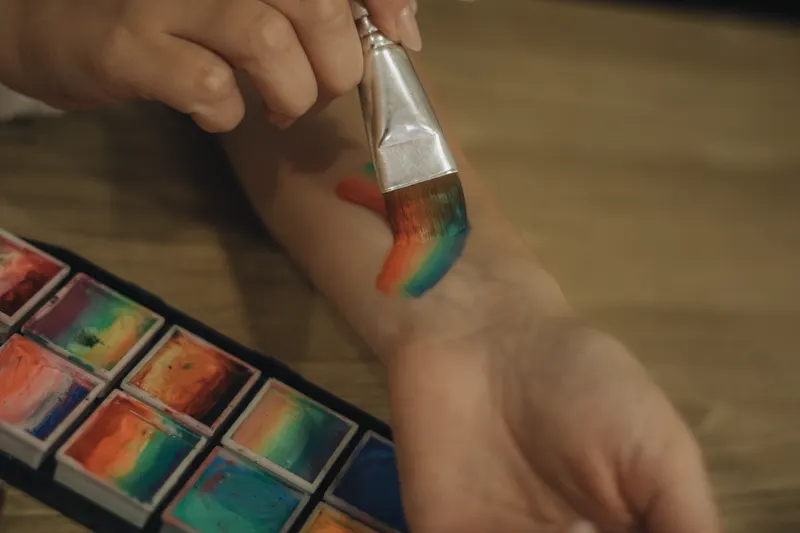
Face painting supplies checklist
Beyond paint, the essentials are sponges, brushes, water and wipes. Use a fresh sponge for each person, never shared between faces, and rinse brushes between faces in a cup of rinse water, with a second cup of clean water for activating paint. Wipes clean the face before painting and fix mistakes. A mirror, paper towels, a small towel for each painter and a table at a comfortable height make the session run smoothly.
If you’d like glitter, use only cosmetic-grade glitter made for the face, never craft glitter, and keep it away from the eyes.
Choosing safe face paint
Use only face paint made for skin, never craft paint, acrylic paint or markers. The FDA requires color additives in face paints to be approved for use in cosmetics, and you can check the colors listed on the label against its list of approved color additives. Neon and glow-in-the-dark colors are never approved for use near the eyes. Some face paints are also labelled not for use near the eyes, so read the label before painting around them.
Patch test a small amount on the arm of each person who’ll be painted 24 to 48 hours before the event, and look for redness, itching or swelling. For a party with many guests, it’s sensible to ask parents ahead of time about allergies and sensitive skin, and to have plain water and wipes on hand.
A worked example with the face paint calculator
Say 30 children are invited, about 70 percent will want painting, and one painter has two hours for simple cheek designs at about three minutes each. That’s 21 children wanting painting and room for 40 in the time, so you plan for 21 faces. With six colors, you need one cake of each, and a single cake of your main color covers those faces with room to spare. Bring 21 to 27 sponges, 42 to 53 wipes, five brushes and two water cups.
Switch to full-face designs at about ten minutes each and the picture changes: one painter can only manage about 12 faces in two hours, so either add a second painter or choose simpler designs.
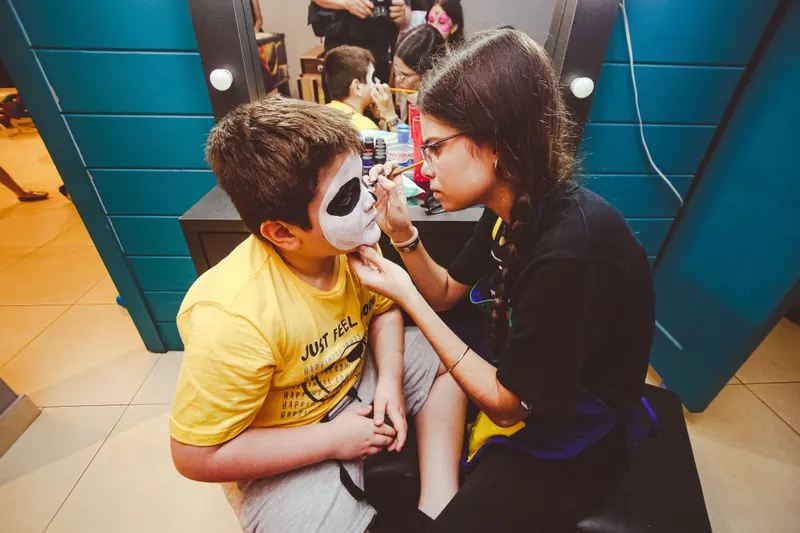
Choosing designs for a busy party
A short menu of designs keeps the line moving. Pick four to six designs at different levels, for example a heart, a star, a butterfly on the cheek, a simple animal nose and whiskers, and one bigger design for older children. Show them on a small board so guests can choose while they wait. Mixing quick and slower designs is fine, but if the line is long, steer people toward the quick ones and save full faces for the start of the session.
Ages matter too. Toddlers rarely sit still for more than a couple of minutes, so small cheek designs suit them best. Older children and adults are happy to wait for something more detailed. If you know the mix of ages, adjust the minutes per design in the calculator to match.
Taking face paint off
Most face paints made for skin come off with warm water and a gentle cleanser or a little mild soap on a soft cloth. Work gently rather than scrubbing, especially around the eyes, and follow with a little moisturizer if the skin feels dry. Some colors, especially reds and blues, can leave a faint stain for a few hours; it fades with gentle washing. Send guests home with the advice to wash before bed rather than sleeping in the paint.
How many face painters you need, and how long the line will be
The calculator also works out the line. Painters needed is the number of faces times the minutes per design, divided by the minutes you have, rounded up. For the wait, it shows two simple cases. If everyone lines up at once, which is what usually happens at the start of a party, the last person waits about one design time for every round of painting before them, and the average wait is about half that. If people drift over steadily, it shows how busy your painters would be: at or under 100 percent the line stays short, and over 100 percent it grows all session. Real parties sit somewhere between the two, so plan for the rush. A sign-up sheet with time slots, a short menu of quick designs, and a second painter for the first half hour are the easiest fixes.
Body paint for adults: how much for bigger areas
Body paint is face paint used over a larger area, so the same rules apply: use only cosmetic-grade paint made for skin, never craft or acrylic paint, and patch test first. To estimate amounts, the table scales this calculator’s full-face estimate by body surface area, using the adult rule of nines that medical teams use to estimate how much of the body an area covers. A face is roughly half of the head and neck, about 4.5 percent of the body, so both arms are about four faces’ worth of paint and a full body is over twenty.
| Area | Share of the body | Full faces of paint | Paint per layer |
|---|---|---|---|
| Both arms, with hands | 18% | about 4 | about 5 g |
| Front of the torso | 18% | about 4 | about 5 g |
| Front and back of the torso | 36% | about 8 | about 10 g |
| Both legs, with feet | 36% | about 8 | about 10 g |
| Full body, head to toe | 99% | about 22 | about 26 g |
These are rough figures for one thin, even layer. A light base color usually needs two thin layers to look solid, and detail colors add a little more. Larger bodies, thicker layers and splatter effects use more, so bring extra rather than run out halfway. Body paint often comes in larger containers than face paint cakes; check the weight on the label against the amounts here.
Planning the painting station
Set up in good light, ideally near a window or under a bright lamp, with the painter seated and the person being painted on a stool or chair at a comfortable height. Keep the paint, brushes and water on one side and clean sponges and wipes on the other, so used and clean supplies never mix. A small sign with the design choices speeds things up, and a mirror lets people see the result straight away. Keep a small bin for used sponges and wipes close by, out of reach of little hands.
Frequently asked questions
How many faces does a face paint cake do?
It depends on the design. A cake covers many small cheek designs but far fewer full faces. Change the estimate in the calculator to match your paint.
How long does face painting take per person?
Simple cheek designs take a few minutes; full faces take ten minutes or more. The calculator uses these as editable estimates.
Can I use acrylic or craft paint on skin?
No. Use only face paint made for skin with colors approved for cosmetics. Craft and acrylic paints are not made for skin.
Do I need a new sponge for every person?
Yes. A fresh sponge for each face keeps the paint and the faces clean. Brushes can be rinsed between faces.
How far ahead should I patch test face paint?
The FDA suggests 24 to 48 hours ahead, with a small amount on the arm of the person who’ll wear it. Look for redness, itching or swelling before you paint the face.
Does Reign Beauty Collective do face painting?
No. Reign Beauty Collective offers hair and makeup for weddings, photoshoots, homecoming and prom in Tampa.
Sources
The safety steps follow the FDA pages below. The supply amounts are estimates with their basis shown in the calculator, because there is no published standard for how much face paint a design uses. Body paint amounts are scaled by body surface area from the medically reviewed rule of nines article.
- Novelty Makeup, U.S. Food and Drug Administration. www.fda.gov/cosmetics/cosmetic-products/novelty-makeup (retrieved 2026-10-10)
- Halloween Safety Tips: Costumes, Candy and Colored Contact Lenses, U.S. Food and Drug Administration consumer update. www.fda.gov/consumers/consumer-updates/halloween-safety-tips-costumes-candy-and-colored-contact-lenses (retrieved 2026-10-10)
- Rule of Nines: Burns, Children, Adults, Wallace, and More, Healthline, medically reviewed by Alana Biggers, MD, MPH (July 19, 2018). www.healthline.com/health/rule-of-nines (retrieved 2026-10-11)
Last reviewed October 10, 2026 by the Reign Beauty Collective artist team, Tampa, Florida.
This page is general educational content from Reign Beauty Collective in Tampa, Florida. It is not professional, medical, or financial advice, and results vary. Please talk with a licensed professional about your own situation.