A makeup color wheel arranges colors in a circle so you can see how they relate. Colors opposite each other are complementary: layered, they cancel out, which is why green correctors take down redness and peach takes down blue under-eye shadows; side by side, they make each other look brighter. Colors next to each other are analogous and blend smoothly, which suits soft eye looks.
Makeup Color Wheel: Complementary, Analogous and Triadic Colors
Makeup artists use color relationships every day without saying the words: a copper shadow to brighten blue eyes, a green primer under redness, a lip and blush from the same family. This interactive makeup color wheel shows those relationships for any color you pick, with its name and hex code, so you can see why they work.
It explains color relationships in general. For shades chosen for your own eye color, our eyeshadow guide by eye color goes further.
Explore the makeup color wheel
Choose any of the 12 colors from the list or click the wheel. You’ll see its complement, its neighbors and a triad, each with its name and hex code, plus what that color does in makeup.
Your privacy: Everything you enter stays on your device. This page does not send, save, or share your answers, and you do not need an account or an email address. If you copy a share link, your answers are stored inside the link, so only share it with people you trust.
Use these results as a starting point, not a verdict. Lighting, your screen settings, and your own answers all shape what you see, and an in-person consultation with a trained artist is the best way to confirm what flatters you.
This page is general beauty education. It is not styling, cosmetic, dermatological, or medical advice.
How to use the makeup color wheel
Pick a color from the list, or click it on the wheel. The panel shows the color, its complement across the wheel, its two analogous neighbors and its triad, each with a name and hex code you can copy. The wheel highlights the complement and neighbors so you can see where they sit. You can move through the list with the arrow keys, and every color is written out as text as well as shown as a swatch.
Each color also has a short note on what it does in makeup: which corrector it relates to, which eye colors it brightens, which lip and cheek shades sit in its family.
Why makeup uses the painter’s color wheel
There are two common color wheels. Screens mix light, with red, green and blue primaries, and on that wheel red sits opposite cyan. Paint and makeup mix pigments, traditionally with red, yellow and blue primaries, and on that wheel red sits opposite green, orange opposite blue and yellow opposite violet. Color correcting and eyeshadow advice follow the painter’s wheel, so that’s the one shown here.
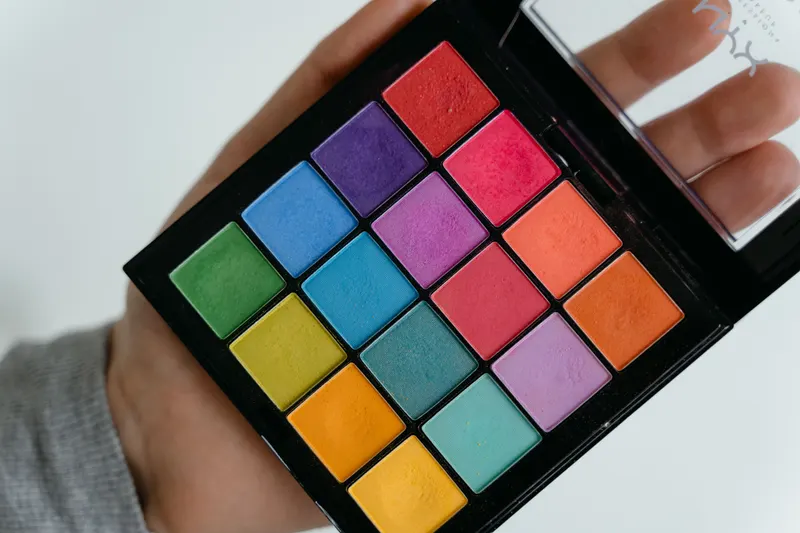
Complementary colors in makeup
Complementary colors do two opposite things depending on how you use them. Layered thinly under foundation, they cancel each other out: a sheer green over redness turns it toward neutral, and a peach or orange over blue or gray shadows under the eyes does the same. That’s the whole idea behind color correctors.
Placed side by side, complements make each other look more intense. That’s why copper and bronze shadows make blue eyes look bluer, plum and violet make green eyes look greener, and why a touch of gold beside indigo liner looks so striking. Use this when you want eyes to stand out, and use small amounts so the look stays wearable.
Analogous colors for soft, blended looks
Analogous colors sit next to each other, so they share undertones and blend without hard edges. A warm look might move from yellow-orange on the lid through orange to red-orange in the crease; a cool look might move from blue-violet to violet to red-violet. Matching lip and blush colors from neighboring families is an easy way to look put together without matching exactly.
Triadic colors for bold looks
Triadic colors are evenly spaced around the wheel, four steps apart. They’re bold and playful, so in makeup they work best with one color in charge and the other two as small accents, for example a violet lid with a tiny flick of green liner and a hint of orange on the cheek. They’re more common in editorial, festival and face paint looks than in everyday or bridal makeup.
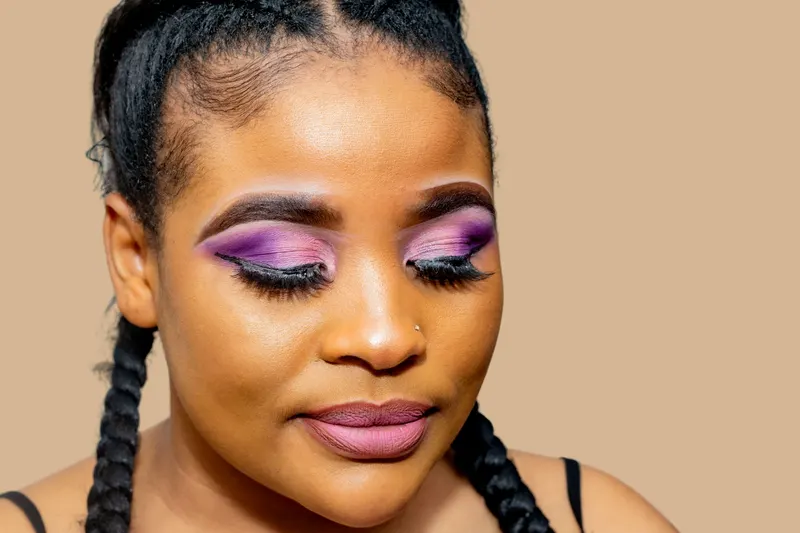
Using the makeup color wheel for blush and lips
Cheeks and lips look most natural when they come from the same part of the wheel. A coral lip with a peach blush, a berry lip with a rosy plum blush, or a warm red lip with a soft brick cheek all read as one look because the colors are neighbors. If you want contrast, keep it in the eyes and let the cheeks and lips stay in one family.
Depth matters as much as hue. A light pink and a deep berry can share a family, but they say very different things. Choose the depth that suits your skin first, then move around the wheel for variety. Our blush and lipstick color finders work out the families for your skin depth and undertone.
Color wheel tips for eyeshadow
Most wearable eye looks combine a neutral base with one color relationship. A soft, blended look uses two or three analogous shades, each a step deeper than the last, from the inner lid to the outer corner. A look that makes the eyes stand out puts a complement of the iris color near the lash line, then softens it with a neutral in the crease. Keep the brightest or most contrasting shade closest to the lashes, where it frames the eye, and blend every edge.
When in doubt, use less. A tiny amount of a complementary color along the lower lash line can change a whole look, while a full lid of the same shade can overpower it. That’s especially true in photographs, where strong color often reads brighter than it looks in the mirror.
The full makeup color wheel
| Color | Complementary | Analogous | Triadic |
|---|---|---|---|
Red #D7263D | Green #3BA55C | Red-violet #B23A7ARed-orange #E4572E | Blue #2F6FD1Yellow #F4D03F |
Red-orange #E4572E | Blue-green #1E9E8F | Red #D7263DOrange #F28C28 | Blue-violet #5B4BC4Yellow-green #A8C545 |
Orange #F28C28 | Blue #2F6FD1 | Red-orange #E4572EYellow-orange #F6B13A | Violet #8E44ADGreen #3BA55C |
Yellow-orange #F6B13A | Blue-violet #5B4BC4 | Orange #F28C28Yellow #F4D03F | Red-violet #B23A7ABlue-green #1E9E8F |
Yellow #F4D03F | Violet #8E44AD | Yellow-orange #F6B13AYellow-green #A8C545 | Red #D7263DBlue #2F6FD1 |
Yellow-green #A8C545 | Red-violet #B23A7A | Yellow #F4D03FGreen #3BA55C | Red-orange #E4572EBlue-violet #5B4BC4 |
Green #3BA55C | Red #D7263D | Yellow-green #A8C545Blue-green #1E9E8F | Orange #F28C28Violet #8E44AD |
Blue-green #1E9E8F | Red-orange #E4572E | Green #3BA55CBlue #2F6FD1 | Yellow-orange #F6B13ARed-violet #B23A7A |
Blue #2F6FD1 | Orange #F28C28 | Blue-green #1E9E8FBlue-violet #5B4BC4 | Yellow #F4D03FRed #D7263D |
Blue-violet #5B4BC4 | Yellow-orange #F6B13A | Blue #2F6FD1Violet #8E44AD | Yellow-green #A8C545Red-orange #E4572E |
Violet #8E44AD | Yellow #F4D03F | Blue-violet #5B4BC4Red-violet #B23A7A | Green #3BA55COrange #F28C28 |
Red-violet #B23A7A | Yellow-green #A8C545 | Violet #8E44ADRed #D7263D | Blue-green #1E9E8FYellow-orange #F6B13A |
Color wheel ideas for a wedding
Wedding makeup usually keeps color soft, because it has to suit a long day, many photos and every angle. The wheel still helps. Pick a lip and cheek family that sits near your flowers or bridesmaid colors, or a gentle complement of your eye color for the crease, and keep the rest neutral. A whisper of the right color photographs beautifully; a strong one can date the pictures. Try your ideas at your trial and look at the photos as well as the mirror.
Screens, skin and daylight
The wheel is a starting point. Every screen shows color a little differently, and a shade looks different again on skin, over foundation and in daylight. The hex codes here are illustrative screen colors, not product shades. When a combination catches your eye, test real products on your skin in natural light before you decide, especially for a wedding or photographs.
Your undertone also matters. Warm skin tends to suit the warmer half of the wheel, from red-orange to yellow-green, and cool skin the cooler half, from blue-green to red-violet, though most people can wear most colors in the right depth and amount.
Frequently asked questions
What is the color wheel used for in makeup?
It shows how colors relate. Artists use it to cancel discoloration with color correctors and to choose eyeshadow, blush and lip colors that work together.
What color cancels out redness?
Green, because it sits opposite red on the painter’s wheel. Apply it sheer and blend it before foundation.
What color cancels dark circles?
Peach on lighter skin and orange on medium to deep skin, because they sit opposite blue. Dark circles have different causes, so results vary.
What eyeshadow makes blue eyes stand out?
Colors near orange on the wheel, such as copper, bronze and warm brown. Our eyeshadow guide for blue eyes has more ideas.
Are the hex codes exact makeup shades?
No. They’re illustrative screen colors to show the relationships. Test real products on your skin in daylight.
Does Reign Beauty Collective use color correcting?
Yes, when it helps. Reign Beauty Collective’s artists use correctors where needed and keep them sheer so your base still looks like skin.
Sources
The color correcting notes follow the guides below, shared with our color corrector chooser. The wheel itself is standard painter’s color theory, and every hex code is an illustrative screen color.
- Your Everything Guide To Colour Correctors, Rimmel London. www.rimmellondon.com/en-za/trends-and-looks/looks/how-to-use-colour-corrector (retrieved 2026-10-10)
- Orange Colour Corrector: Uses and Application, Maybelline New York (August 14, 2026). www.maybelline.co.in/makeup-tips/face-makeup/orange-colour-corrector-uses (retrieved 2026-10-10)
Last reviewed October 10, 2026 by the Reign Beauty Collective artist team, Tampa, Florida.
This page is general educational content from Reign Beauty Collective in Tampa, Florida. It is not professional, medical, or financial advice, and results vary. Please talk with a licensed professional about your own situation.