The blush color that suits you depends on how light or deep your skin is and on your undertone. Light skin usually suits soft pinks, peaches and corals, medium skin carries roses, mauves and apricots, and deep skin shows off berries, corals and brick reds. Cool undertones lean pink and berry, warm undertones lean peach and coral, and neutral undertones can wear most families.
Blush Color Finder: The Right Blush Shades for Your Skin
This blush color finder turns two facts about your skin into two blush shade families, each with a name and a hex code. Tell it your depth and undertone, how much color you like and, if you want, your face shape. It explains why the shades suit you and where to place them.
It never names a product. Blush names and shade numbers change from line to line, but a shade family travels with you to any counter or website.
Find your blush shades
Pick your depth and undertone, then how much color you like. You’ll get two blush shade families with hex codes, why they suit you, and where to place them for your face shape. No brands, just colors.
Your privacy: Everything you enter stays on your device. This page does not send, save, or share your answers, and you do not need an account or an email address. If you copy a share link, your answers are stored inside the link, so only share it with people you trust.
Use these results as a starting point, not a verdict. Lighting, your screen settings, and your own answers all shape what you see, and an in-person consultation with a trained artist is the best way to confirm what flatters you.
This page is general beauty education. It is not styling, cosmetic, dermatological, or medical advice.
How to use the blush color finder
Pick the depth that looks closest to your cheeks in daylight, then your undertone. If you don’t know your undertone, choose “Not sure yet” and the finder shows neutral shades for your depth, which suit most people while you find out. Then say whether you like a soft or bold flush, and what the blush is for. The last question, face shape, is optional and only changes the placement advice.
Your two shades appear as soon as you choose a depth, and they update as you answer. Copy the result, print it or save a link to come back to.
Why depth matters most in a blush color finder
Blush has to show up against your skin without looking like a stripe. On light skin, the contrast is high, so a little pigment goes a long way and soft shades look most natural. Medium skin carries richer color, so roses, mauves and apricots read as a healthy flush. On deep skin, very light or pastel blushes can sit on top and look chalky, while saturated berries, corals and bricks melt in and glow.
That is why the finder starts from depth. Undertone then decides which side of the color family you land on, cooler and pinker or warmer and more golden.
| Depth | Cool | Neutral | Warm | Olive |
|---|---|---|---|---|
| Light (depths 1 to 4) | Baby pink #F2B5C4Soft cool rose #E59AAE | Soft rose #E8A3A6Light peach-pink #F3B3A0 | Soft coral #F4A58APeachy pink #F2AE96 | Warm muted rose #DE9C8FSoft apricot #EDAA85 |
| Medium (depths 5 to 8) | Mauve pink #C98699Cool rose #D07589 | Rose #CF7F86Dusty peach #DB9077 | Warm rose #D47B6BApricot #E38F62 | Terracotta rose #C8735FWarm apricot #DD8A5B |
| Deep (depths 9 to 12) | Berry #9B3B5EPlum #7C3352 | Berry red #A33A4BWarm berry #A84A55 | Coral #D9623FOrange-red #C2462C | Brick #A8462FDeep coral #C45A3A |
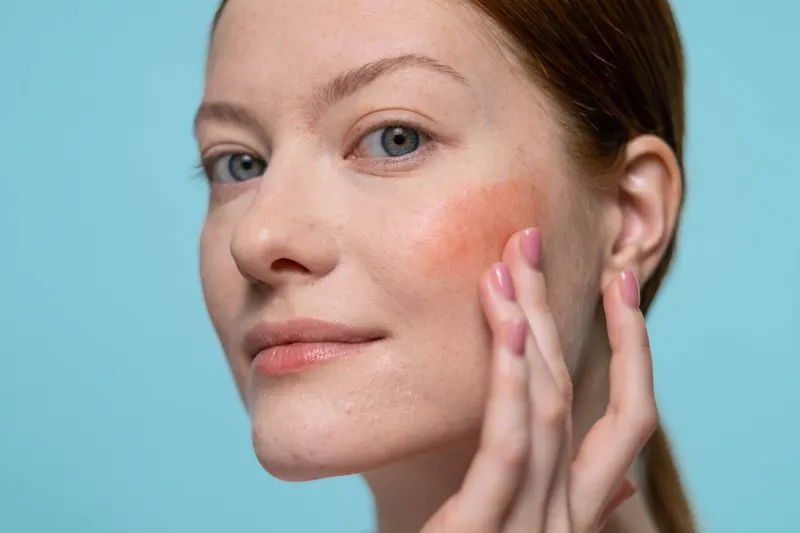
Cool, warm, neutral and olive undertones
Cool undertones usually look best in blue-leaning pinks, mauves and berries, because those shades echo the rosy cast already in the skin. Warm undertones look best in peach, coral, apricot and orange-leaning reds, while very cool pinks can turn ashy on golden skin. Neutral undertones sit in the middle and can wear most families, so depth and personal taste decide.
Olive skin has a green or gray cast alongside warmth, and many bright pinks look out of place on it. Warm shades with a slightly muted, earthy feel, such as warm rose, apricot, terracotta and brick, tend to look the most natural.
Where to place blush for your face shape
Placement changes the shape of the face more than color does. On a round face, blush along the tops of the cheekbones blended up toward the temples adds length. On a square face, keeping blush on the apples draws attention to the center. A heart-shaped face suits a soft C shape from the cheekbones toward the end of the brows. A long face looks balanced with a straight line or gentle curve that doesn’t travel too far up or down. A diamond face suits the tops of the cheekbones blended out toward the ears, and an oval face can wear blush on the apples or along the cheekbones.
If you’re not sure of your face shape, smile, tap blush on the apples and blend it back and up along the cheekbone. Keeping it above the cheekbone matters for every shape, because the hollow below is where contour goes, and blush placed there can drag the face down.
Soft or bold: how much blush to use
Start with less than you think. It’s far easier to add a second layer than to take color away, and on light skin excess blush shows quickly. Tap a little product on, step back from the mirror and look again from arm’s length. Sheer and buildable formulas, including many creams and liquids, are the easiest way to control intensity.
A bold flush works best built in thin layers rather than one heavy one, so it stays even across the cheek. If you go bolder, keep the rest of the face softer, or choose a lip that sits in the same family so the look feels planned.
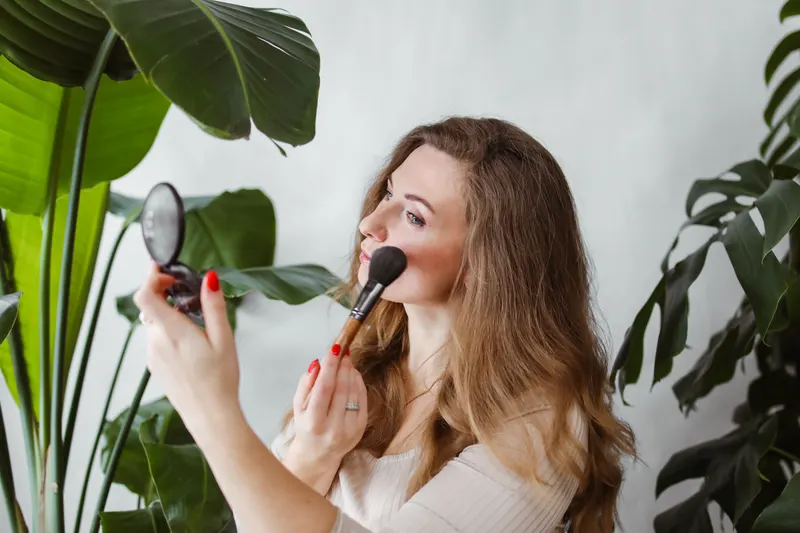
Cream, powder or liquid blush
The finder gives you colors, but texture changes how a color looks once it is on. Powder blush sits on top of the skin and suits oily or combination skin, and it is the easiest to soften with a clean brush. Cream and liquid blushes melt into the skin and look more like a natural flush, which suits dry and normal skin and most mature skin, though they need a light hand over powder foundation. Any shade family comes in all three textures, so pick the texture first and the color second. A shimmer or satin finish adds glow, and on deep skin a little shimmer can look especially luminous, while a matte finish keeps the cheeks looking soft in close-up photos.
Blush for weddings and photos
Cameras tend to flatten color, so bridal makeup usually carries a little more blush than everyday makeup. A shade that looks just right in the mirror can disappear in photos, especially in bright daylight or flash. Wear your chosen shade for a few hours, then take a phone photo with the flash on to see how much is left and how it reads.
Cream blush under a light dusting of powder blush in the same family tends to last longer than either alone, which helps on a long wedding day. If you are matching your blush to a lipstick, the lipstick color finder gives you shades from the same depth and undertone bands, so the two sit together.
Test your shades in daylight
Screens show color differently, so use the swatches as a starting point. Try the real shades on your cheek, not the back of your hand, and look in daylight near a window. The right blush looks like your own flush when you step back. If it looks like a separate patch of color, it’s either too light, too dark or placed too low.
Seasons matter too. A tan can make a light pink look faint, and in winter a deep shade can look heavier than it did in summer. Keep a softer and a richer option from your family and switch between them as your skin changes through the year.
Frequently asked questions
What color blush should I wear?
Start from your depth: soft pinks and peaches on light skin, roses and apricots on medium skin, and berries, corals and bricks on deep skin. Then lean cooler or warmer to match your undertone.
Is peach or pink blush better for me?
Pink usually suits cool undertones and peach suits warm ones. With a neutral undertone you can wear either, so choose the one that looks most like your natural flush in daylight.
What blush color suits olive skin?
Olive skin tends to look best in warm, slightly muted shades such as warm rose, apricot, terracotta or brick. Very bright or cool pinks can look out of place against the green cast.
Why does my blush disappear in photos?
Cameras and flash flatten color, so a shade that looks right in person can read paler in pictures. Build a little more color for photos, and layer a powder blush over a cream blush in the same family to make it last.
Where should blush go if I don’t know my face shape?
Smile, tap blush on the apples of your cheeks, then blend it back and up along the cheekbone. Keep it above the cheekbone rather than in the hollow below.
Can Reign Beauty Collective match my blush to my wedding look?
Yes. Reign Beauty Collective’s artists choose and test your blush at your trial, so the shade suits your skin, your dress and your lighting before the wedding day.
Sources
The shade families by depth and undertone and the placement by face shape follow the guides below. Hex codes are our own illustrations of each family.
- How to Choose the Right Blush Colour for Your Skin Tone, Maybelline New York (April 17, 2025). www.maybelline.com.au/makeup-tips/face/choose-blush-for-your-skin-tone (retrieved 2026-10-10)
- This is The Best Blush Placement for Every Face Shape, L’Oreal Paris Beauty Magazine (March 12, 2025). www.lorealparisusa.com/beauty-magazine/makeup/face-makeup/blush-by-face-shape (retrieved 2026-10-10)
Last reviewed October 10, 2026 by the Reign Beauty Collective artist team, Tampa, Florida.
This page is general educational content from Reign Beauty Collective in Tampa, Florida. It is not professional, medical, or financial advice, and results vary. Please talk with a licensed professional about your own situation.