Your best lipstick colors come from your skin depth and your undertone. A nude should echo your undertone, from pink-leaning on light skin to caramel on medium skin and chocolate on deep skin. Cool undertones suit roses, mauves, plums and blue-based reds, while warm undertones suit corals, terracottas, bricks and orange-reds.
Lipstick Color Finder: Your Nude, Everyday Color and Red
This lipstick color finder gives you three shades to start from: a nude, an everyday color and a red. Each one has a name, a hex code and the reason it suits your depth and undertone, and the finder puts the best fit for your answers first.
No brands or products appear here. Lipstick names say little about the actual color, so learning your families is the quicker way to shop any line, and to know what to ask your makeup artist for.
Find your lipstick shades
Pick your depth and undertone, then your finish and how bold you like it. You’ll get a nude, an everyday color and a red, each with a hex code and the reason it suits you. No brands, just colors.
Your privacy: Everything you enter stays on your device. This page does not send, save, or share your answers, and you do not need an account or an email address. If you copy a share link, your answers are stored inside the link, so only share it with people you trust.
Use these results as a starting point, not a verdict. Lighting, your screen settings, and your own answers all shape what you see, and an in-person consultation with a trained artist is the best way to confirm what flatters you.
This page is general beauty education. It is not styling, cosmetic, dermatological, or medical advice.
How to use the lipstick color finder
Choose the skin depth closest to your face and your undertone. If you don’t know it, pick “Not sure yet” and you’ll get neutral picks, or take the undertone finder first. Then choose the finish you like, how much color you want and the occasion. A soft, everyday answer puts your nude first. A bold answer or an evening out puts your red first. A wedding puts your everyday color first, because it shows up in photos without overpowering the rest of the look.
The result updates as you go. You can copy the three shades, print them, or save a link and send it to a friend shopping with you.
Finding a nude with the lipstick color finder
A nude lip is the hardest shade to get right, because it has to sit close to your own lip color without washing you out. The trick is undertone. On light skin, a nude with a little pink in it usually looks fresh, while a brown-leaning nude can make lips look darker than intended. On medium and olive skin, nudes with caramel, beige or slightly orange warmth tend to work. On deep skin, chocolate, rich brown and red-brown nudes look natural, while pale beige nudes can look chalky.
If your nude makes you look tired, the undertone is usually off rather than the depth. Try one a little pinker or a little warmer before you try one lighter or darker.
| Depth | Shade | Cool | Neutral | Warm | Olive |
|---|---|---|---|---|---|
| Light (depths 1 to 4) | Nude | Pink nude #D79A98 | Rosy nude #D69890 | Peach nude #DDA088 | Beige rose nude #C9917F |
| Everyday color | Rose pink #D8728E | Soft pink #DD7E8A | Coral pink #E5786A | Dusty rose #C57476 | |
| Red | Cherry red, blue-based #B3162F | Classic red #C21F2D | Coral red #D9442E | True red #B92A2A | |
| Medium (depths 5 to 8) | Nude | Mauve nude #B67C80 | Rosy beige nude #B98073 | Caramel nude #B97A5C | Beige caramel nude #B07A5E |
| Everyday color | Mauve #A8607A | Mauve rose #B0646F | Terracotta #B85A40 | Terracotta rose #AE5C4C | |
| Red | Blood red, blue-based #9E1628 | Rich true red #A81E2A | Orange-red #C7361F | Brick red #A6301F | |
| Deep (depths 9 to 12) | Nude | Rose brown #7E4A4B | Red-brown nude #7A4038 | Chocolate #6B3B2A | Warm dark brown #6A3E2C |
| Everyday color | Plum #6E2D4A | Berry #7D2E45 | Terracotta brown #8E3F2A | Brick rose #8A3C30 | |
| Red | Deep wine red #6F1424 | Dark red #7C1A22 | Red with a brown or orange tint #8C2A1A | Deep brick #7E2618 |
Your everyday color
Your everyday shade sits between a nude and a statement lip. For cool undertones it’s usually a rose, mauve or plum, depending on depth. For warm undertones it’s coral on light skin, terracotta on medium skin and a terracotta brown on deep skin. Neutral undertones can move toward pink on light skin, mauve on medium skin and berry on deep skin.
This is the shade most people reach for at weddings, brunches and in photos, because it adds color to the face without needing constant touch-ups to look intentional.
Picking a red that suits you
Almost everyone can wear red. The question is which red. Cool undertones suit blue-based reds, the kind that look a little cherry or wine. Warm undertones suit orange-based reds, from coral red on light skin to orange-red on medium skin. Depth matters as much as undertone: brighter reds read well on light skin, richer blood reds on medium skin, and deeper reds with a brown or orange tint on deep skin.
If you’re unsure, a true red that leans neither blue nor orange is the safest first try. Check it against your teeth and the whites of your eyes in daylight. Blue-based reds tend to make teeth look whiter, which is one reason they’re popular for photos.
Matte, satin, gloss or sheer
Finish changes how long a lipstick lasts and how it photographs. Matte formulas last longest and show no shine in flash, but they can feel dry, so a light balm first helps. Satin and cream formulas feel comfortable and look soft, though they wear away a little sooner. Gloss looks fresh and makes lips look fuller, but it moves and fades fastest. Sheer and tinted formulas are the most forgiving if a shade is slightly off, and the easiest to wear every day.
A lip liner close to your lip color, or close to the lipstick, helps any finish stay in place. Line, fill in lightly with the liner, then apply the lipstick on top.
How to test a lipstick shade
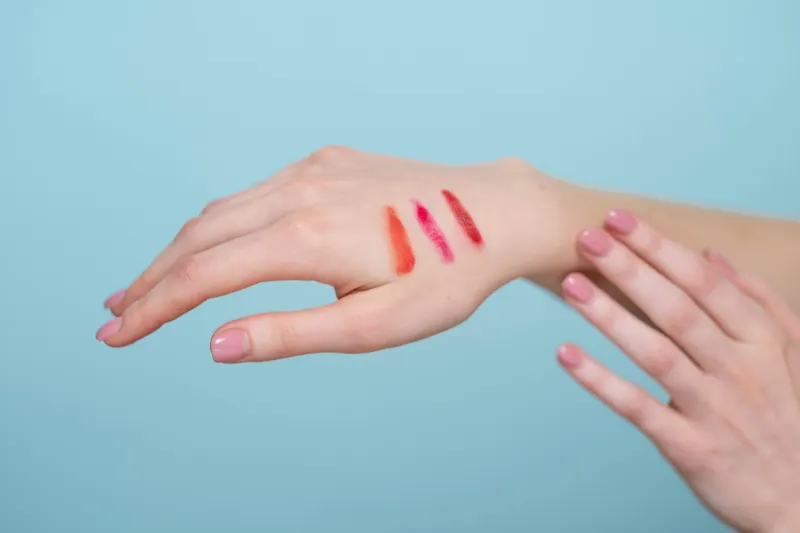
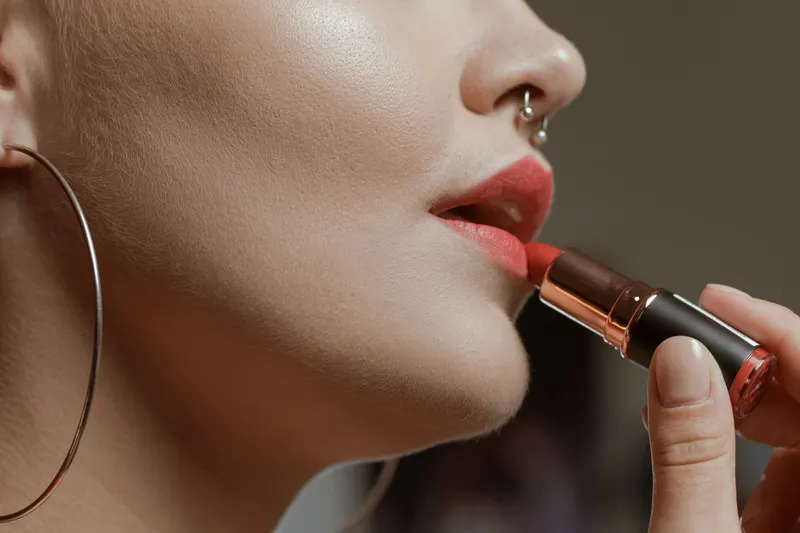
Swatching on the back of your hand shows the color in the tube, not the color on you. Your lips have their own pigment, which changes how a lipstick looks, especially sheer and nude shades. If you can, try the shade on your lips, or on a fingertip, which is closer in tone to lips than the hand is. Then look in daylight near a window and from arm’s length, the distance most people see you from.
Give it a few minutes. Some formulas darken a little as they settle, and long-wear formulas can shift as they dry. Check how the shade looks with your usual blush and eye makeup, not on a bare face, because a lip that looks bright on its own often looks just right once the rest of the face has color.
Balancing lips with the rest of your makeup
A bold lip and a bold eye compete for attention, so many looks choose one and keep the other soft. A red lip pairs well with clean, defined lashes and a soft wash of shadow. A nude lip leaves room for a smoky or shimmery eye. Your everyday color sits comfortably with almost any eye look, which is part of why it works so well for long days and events. Keeping your blush in the same family as your lipstick ties the face together, even when the shades are different strengths.
Lipstick for weddings and photos
For a wedding, choose a shade you’ve already worn for several hours, eaten and had a drink in, and photographed with the flash on. Very pale nudes can disappear in pictures, while very dark shades can look heavier on camera than in the mirror. Your everyday color is often the safest choice for the ceremony, and some brides switch to a bolder red for the reception.
Plan for touch-ups. Pack the lipstick and a liner in a small bag, and blot after meals rather than wiping. If your blush and lips sit in the same family, the look stays balanced even after a touch-up or two. The blush color finder uses the same depth and undertone bands, so the two results go together.
Frequently asked questions
What color lipstick should I wear?
Start with your undertone. Cool undertones suit roses, mauves, plums and blue-based reds, and warm undertones suit corals, terracottas and orange-reds, with deeper versions of each as your skin gets deeper.
What is the best lip color for fair skin?
Fair skin usually suits a pink-leaning nude, a soft pink or coral for every day, and a cherry or coral red. Very dark or brown-leaning shades can look heavy against fair skin.
Why does nude lipstick make me look washed out?
The nude is usually too pale or the wrong undertone for your skin. Choose one that’s close to your natural lip depth and leans pink, caramel or brown to match your undertone.
How do I know if a red is blue-based or orange-based?
Put it next to a true red. A blue-based red looks cooler, like cherry or wine, and an orange-based red looks warmer, closer to coral or brick.
Which lipstick finish lasts longest for a wedding?
Matte formulas usually last longest and photograph without shine. A lip liner underneath and a blot after meals help any finish last longer.
Does Reign Beauty Collective help brides choose a lip color?
Yes. Reign Beauty Collective’s artists test lip colors at your trial and suggest a shade for the ceremony and, if you like, a bolder one for the reception.
Sources
The nude, everyday and red families by depth and undertone follow the guide below. Hex codes are our own illustrations of each family.
- Find the Perfect Shade of Lipstick for Every Skin Tone, Faces Canada (April 4, 2022). www.facescanada.com/blogs/beauty/find-the-perfect-shade-of-lipstick-for-every-skin-tone (retrieved 2026-10-10)
- How to Choose the Right Blush Colour for Your Skin Tone, Maybelline New York (April 17, 2025). www.maybelline.com.au/makeup-tips/face/choose-blush-for-your-skin-tone (retrieved 2026-10-10)
Last reviewed October 10, 2026 by the Reign Beauty Collective artist team, Tampa, Florida.
This page is general educational content from Reign Beauty Collective in Tampa, Florida. It is not professional, medical, or financial advice, and results vary. Please talk with a licensed professional about your own situation.