The right foundation formula depends on your skin, the coverage you want and how long it has to last. Dry skin usually suits creams and hydrating liquids; oily skin usually wears matte liquids and powders longest; combination skin suits a liquid set only where it shines. For sheer coverage choose a tint, for full coverage a cream or stick, and for a very long day a long-wear liquid in thin, set layers.
Foundation Formula Chooser: Liquid, Cream, Stick, Powder or Tint
Choosing a shade gets all the attention, but the foundation formula decides how your base feels, how it looks up close and whether it’s still there at the end of the day. This chooser asks five quick questions and points you to the formula type that fits, with the reasons, a prep order for your skin and what to test before you rely on it.
It never names a brand. Every line makes several formulas, and knowing which type suits you works in any store.
Find your foundation formula
Answer five quick questions about your skin, the coverage and finish you like, how long it has to last and how much time you have. You’ll get the formula type that suits you, why, a prep order and what to test. No brands.
Your privacy: Everything you enter stays on your device. This page does not send, save, or share your answers, and you do not need an account or an email address. If you copy a share link, your answers are stored inside the link, so only share it with people you trust.
Use these results as a starting point, not a verdict. Lighting, your screen settings, and your own answers all shape what you see, and an in-person consultation with a trained artist is the best way to confirm what flatters you.
This page is general beauty education. It is not styling, cosmetic, dermatological, or medical advice.
How the foundation formula chooser works
Each answer adds or takes away points for five formula types: skin tint or serum foundation, liquid, cream, stick and powder. Your skin type and the coverage you want count the most, then finish, how long the base must last and how much time you have. The formula with the most points is your best match, and the runner-up appears too, since many people happily wear two formulas for different days.
Nothing is hidden. The scoring table further down this page lists every rule and its points, so you can see exactly why one formula came out ahead. Choose your skin and coverage to get a result; the other three questions sharpen it.
Foundation formula types explained
Skin tints and serum foundations are the sheerest. They even out tone while letting freckles and texture show, and they’re quick to apply with fingers. Liquid foundation is the most flexible: it comes in matte, natural and dewy finishes and builds from light to full coverage. Cream foundation is richer, with a cushiony feel and medium to full coverage that suits drier skin. Stick foundation is a firm cream in a stick, handy for quick targeted coverage and touch-ups. Powder foundation is light and shine-controlling, with sheer to medium coverage, and works best on oily skin.
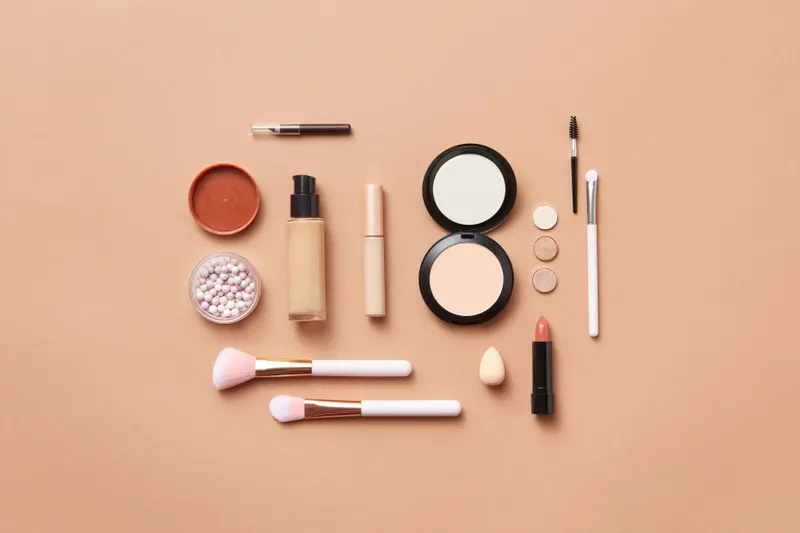
Foundation matte, natural or dewy
Finish is mostly taste, but skin type nudges it. Matte finishes control shine and usually last longest on oily and combination skin; on dry skin they can cling to flaky patches. Dewy finishes give a fresh glow and suit dry and normal skin, though on oily skin they can turn shiny within hours. A natural or satin finish sits in between and suits most people, which is why it’s the safest choice if you’re unsure.
You can also mix finishes on one face: a matte base set through the center with a dewier finish on the cheeks is a common way to handle combination skin.
Your makeup base starts before foundation
The makeup base is everything under your foundation, and it matters as much as the formula. Skin that’s cleansed and moisturized, with the moisturizer given a few minutes to settle, takes foundation more evenly. Primer is optional: a hydrating one helps dry skin, a mattifying one helps where you shine, and either can give a long day a little more grip. The chooser gives you a prep order for your skin type alongside the formula.
Thin layers are the other secret. Two thin layers, each allowed to set, look more like skin and last longer than one thick one, whatever the formula.
Coverage without a heavy face base
Full coverage doesn’t have to mean a mask. Many artists use a medium-coverage foundation all over and a concealer or a stick only where more coverage is needed: redness around the nose, marks on the chin, dark circles. The result looks more like skin and moves better through the day. If you want full coverage everywhere, a cream or stick in thin, pressed layers usually looks smoother than one heavy layer of liquid.
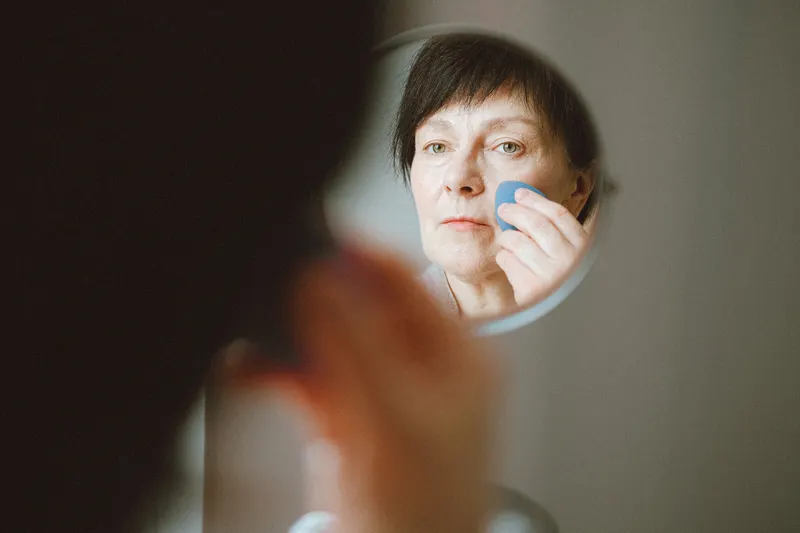
Foundation for mature skin
Skin texture changes over time, and the formula matters more than the age. If you notice foundation settling into fine lines or looking dry by the afternoon, try a more hydrating formula, such as a cream, a satin liquid or a tint, applied in thin layers with less powder, and powder only where you need it. Very matte, heavy formulas can emphasize texture on drier skin at any age.
Heat, humidity and long days
In a hot, humid climate like Tampa Bay, the same formula can behave very differently from one month to the next. Humidity and sweat break down rich creams and dewy finishes faster, while very dry indoor air can make matte formulas look flat. On a humid day, thin layers matter even more: a light liquid or powder set where you shine usually lasts longer than a heavy cream, and blotting papers lift oil without disturbing the base. Press them on gently rather than wiping, then add a touch of powder only if you need it.
For a long event outdoors, choose a long-wear formula, apply it in thin layers, set it, and plan a touch-up kit. If you’re getting ready for a wedding, tell your artist where and when photos will be taken, because a garden ceremony at noon and an air-conditioned ballroom at night ask different things of a base.
When two formulas work better than one
Many people keep two formulas: a tint or light liquid for everyday and a fuller cream, stick or long-wear liquid for events. Others mix them on the same face, using a liquid all over and a stick only where they want more coverage, or a cream base set with a little powder through the center. The chooser’s runner-up is a good candidate for your second formula, especially if the top two scored close together.
How the chooser scores each formula
| When you choose | Skin tint or serum foundation | Liquid foundation | Cream foundation | Stick foundation | Powder foundation |
|---|---|---|---|---|---|
| Your skin most days: Dry or tight | +1 | +2 | +3 | 0 | -3 |
| Your skin most days: Shiny all over by midday | 0 | +2 | -2 | -1 | +3 |
| Your skin most days: Shiny in the center, dry or normal elsewhere | 0 | +3 | 0 | +1 | +1 |
| Your skin most days: Comfortable, not shiny or Not sure | +1 | +2 | +1 | +1 | +1 |
| Coverage you want: Sheer: even tone, skin shows through | +4 | +1 | -2 | -2 | +1 |
| Coverage you want: Medium: covers redness and most marks | 0 | +3 | +2 | +1 | +1 |
| Coverage you want: Full: covers almost everything | -4 | +2 | +3 | +3 | -1 |
| Finish you like: Matte | 0 | +1 | -1 | 0 | +2 |
| Finish you like: Natural or satin | 0 | +1 | +1 | +1 | 0 |
| Finish you like: Dewy or glowy | +2 | +1 | +2 | 0 | -3 |
| How long it needs to last: 12 hours or more, like a wedding | -2 | +2 | 0 | +1 | 0 |
| Time you have for your base: Five minutes | +2 | 0 | -1 | +2 | +2 |
Testing a foundation formula before a wedding
A formula that looks perfect in the mirror can behave differently over a 12-hour day, under a photographer’s flash or in Florida humidity. Before an event, wear your full base for as long as the event lasts, check it in photos with and without flash, and look again after a few hours for creasing, patches or shine. If you’re working with a makeup artist, your trial is the time to do this, and to plan a small touch-up kit for the day.
Frequently asked questions
What is the best foundation formula for oily skin?
Matte liquids and powders usually last longest on oily skin, set with powder where you shine. Rich creams can slide by midday.
What is the best foundation formula for dry skin?
Creams and hydrating liquids usually suit dry skin best. Powder foundation can cling to dry patches.
Is stick foundation good for full coverage?
Yes. Sticks carry a lot of pigment and build easily, and they’re handy for touch-ups. Blend them well into the skin.
Do I need primer?
Not always. A primer helps for long days, dry patches or early shine, but a well-moisturized face is the most important base.
Does this chooser recommend brands?
No. It recommends a formula type and how to test it, which works with any line.
Which foundation does Reign Beauty Collective use for weddings?
Reign Beauty Collective’s artists choose airbrush or traditional foundation for your skin and the day, at no extra charge. We test the formula at your trial so there are no surprises on the morning.
Sources
Finish by skin type follows the guide below. Everything else is general makeup guidance, with the reason for each rule shown in the scoring table.
- How Do I Choose the Right Foundation?, Clarins beauty FAQ. www.clarinsusa.com/en/beauty-faq/makeup/how-do-i-choose-the-right-foundation (retrieved 2026-10-07)
- How to Identify Your Skin’s Undertones to Find the Best Foundation Match and Color Palette, Healthline, medically reviewed by Reema Patel, MPA, PA-C (updated May 29, 2024). www.healthline.com/health/beauty-skin-care/skin-undertones (retrieved 2026-10-07)
Last reviewed October 10, 2026 by the Reign Beauty Collective artist team, Tampa, Florida.
This page is general educational content from Reign Beauty Collective in Tampa, Florida. It is not professional, medical, or financial advice, and results vary. Please talk with a licensed professional about your own situation.