A face chart is a blank outline of a face that makeup artists use to plan and record a look before they apply it. Choose a full face, half face or eye close-up template, then draw where each color goes: base, contour, blush, eyeshadow, liner and lips. Save it as a PNG or print it, and bring it to your trial so you and your artist can agree on the look.
Face Chart and Makeup Face Template: Draw, Save or Print
Makeup artists have used face charts for decades to plan looks, record what they used and show a client an idea before a single product touches the skin. This free face chart gives you three original makeup face templates to draw on: a full face, a half face for practising one side, and a large eye close-up for eyeshadow and liner.
Draw with a finger, a stylus or a mouse, undo as you go, and save your chart as a PNG on your own device. Nothing is uploaded, and there are blank charts to print further down the page.
Draw on a face chart
Choose a chart, a color and a brush, then draw with your finger, a stylus or a mouse. Undo or clear as you go, and save your chart as a PNG on your device. Nothing is uploaded.
Chart
Color
Brush
Blank chart
Your privacy: Everything you enter stays on your device. This page does not send, save, or share your answers, and you do not need an account or an email address.
This page is general beauty education. It is not styling, cosmetic, dermatological, or medical advice.
How to use the face chart
Pick a chart first, then a color and a brush. The fine liner draws crisp lines for brows, liner and lip shape; the shadow brush lays down color in a medium, semi-sheer stroke; and the soft blending brush builds up a diffused wash for blush, bronzer and contour, getting deeper with every pass. The eraser removes paint without touching the outline. Undo takes back the last stroke, Clear starts again, and Save as PNG downloads the chart exactly as you see it.
The colors are makeup families rather than products: warm nude, soft rose, berry, bronze, cool taupe, plum, gold shimmer and liner black. They’re enough to map out where things go and how intense they should be, which is what a face chart is for.
What a face chart is for
A face chart turns a vague idea into a plan. Mapping a look on paper first shows you whether the blush placement balances the contour, whether the eyeshadow is too heavy next to a bold lip, and where each product goes. Artists also use charts as a record: after a trial, a chart with notes about every product and placement means the wedding-day look matches what you approved, even months later.

Choosing a makeup face template
The full face template is for planning a whole look: base, contour, blush, eyes, brows and lips together. The half face template shows one side of the face with a dashed center line, which is handy for practising symmetry or trying two ideas side by side on two printouts. The eye close-up template is large enough to plan eyeshadow placement, crease depth, liner shape and lower-lash detail, which is where most of the detail in a bridal look lives.
How to plan a bridal look on a face chart
Start with placement rather than color. Shade where contour goes with a light, soft wash, then add blush where you want warmth and lift. On the eye chart, map the lid shade, the crease shade and any deeper outer corner, then add liner and lashes last. Keep it simple: a face chart is a map, not a portrait, and a few clear marks communicate more than a fully rendered drawing.
Then write notes beside the printed chart: the occasion, the time of day, your skin type, anything you love or want to avoid, and photos you’ve saved for inspiration. Bring it to your trial. Your artist can adjust it on the day, and the final chart becomes the plan for the wedding morning.
Face chart tips from the makeup chair
Use the soft brush in several light passes rather than one heavy one, since that’s how blush and contour actually build on skin. Plan contour cooler and deeper than the blush, and keep highlight to the high points of the face. On the eye, a gradient from light at the inner lid to deeper at the outer corner reads well in photos. If you’re unsure where things go for your face shape, our face shape calculator draws blush and contour placement for each shape.
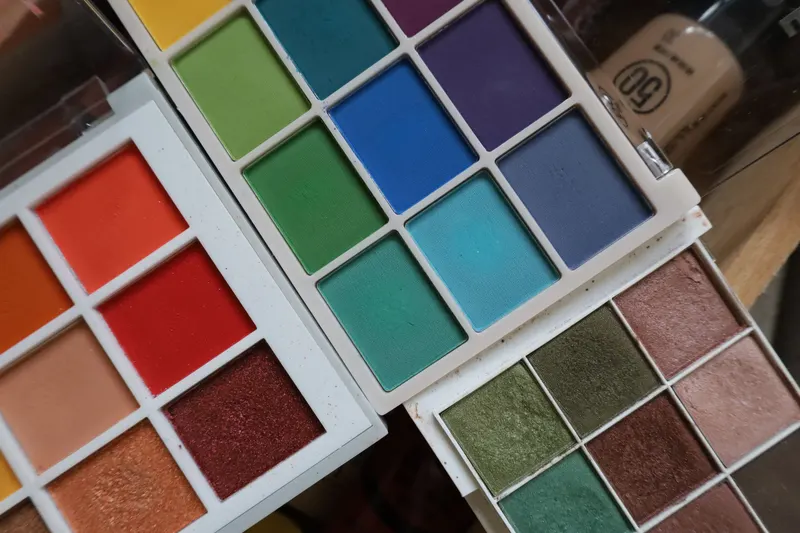
Recording products on a face chart
A face chart is most useful when it doubles as a record. Beside each area, note the product type and shade family you used, how many layers it took and the tool you applied it with. For a wedding, add the setting spray and powder you finished with, the lash style, and how the look held at the end of the trial day. Months later, that page is what lets you or your artist recreate the look exactly, even if a shade has been discontinued, because you can describe what it was and find a close match.
If you change your mind after the trial, mark the change in a different color and date it. The final chart should show only the look you’ve agreed on, so there’s no confusion on the morning.
Drawing on a phone or tablet
The chart works with touch, so you can plan a look on the sofa with a phone or tablet. A stylus gives the finest control, but a fingertip is fine for blush and shadow placement. Turn your phone to portrait so the chart fills the screen, and zoom out if you need to see the whole face. Because each stroke is recorded separately, Undo removes exactly the last one, so it’s safe to experiment. When you’re happy, save the PNG and it lands in your downloads or photos, ready to send.
Face charts for the bridal party
Face charts aren’t just for the bride. If your bridesmaids want coordinated looks, one chart for the shared base, blush and lip direction, with small notes for each person’s eye shadow, keeps everyone consistent without making them identical. Mothers and grandmothers can bring a chart too, showing what they usually wear and anything they’d like softened or skipped. On a busy wedding morning, a chart per chair saves time and keeps the artists working from the same plan.
Blank face charts to print
Prefer pencils and real products? Print these blank charts and swatch makeup straight onto the paper, which is how many artists use them. Thicker paper takes powder and cream products best, and a light spray of setting spray helps powder stay put.
Saving and sharing your chart
Save as PNG creates an image file on your device that you can send to your artist, keep with your wedding planning notes or print later. Print sends the page to your printer, including your drawing. Because nothing is uploaded, your chart stays private until you choose to share it. If you close the page, the drawing is gone, so save it first.
Frequently asked questions
What is a face chart in makeup?
A blank outline of a face used to plan and record a makeup look. Artists use them to show placement and colors before applying.
How do I use a makeup face template?
Choose a template, then mark where each product goes, starting with placement. Add notes and bring it to your artist.
Can I print the face chart?
Yes. There are blank charts to print on this page, and the print button includes your drawing.
Is my drawing uploaded anywhere?
No. Drawing happens in your browser, and Save as PNG creates the file on your own device.
Can I swatch real makeup on a printed face chart?
Yes, that’s how many artists use them. Thicker paper holds powder and cream products best.
Does Reign Beauty Collective use face charts?
Yes. Our artists plan and record your look at your trial, so the wedding-day makeup matches what you approved.
Sources
Last reviewed October 11, 2026 by the Reign Beauty Collective artist team, Tampa, Florida.
This page is general educational content from Reign Beauty Collective in Tampa, Florida. It is not professional, medical, or financial advice, and results vary. Please talk with a licensed professional about your own situation.