The right color corrector sits opposite the color you want to hide on the color wheel. For dark circles that look blue or purple, that means peach on light skin, orange on medium to deep skin and red-orange on deep skin. Green tones down redness, and lavender lifts a sallow, yellowish cast. Apply a thin layer only where the color is, then cover it with concealer in your own shade.
What Color Corrector for Dark Circles, Redness and Dark Marks?
What color corrector for dark circles, redness or dark marks? It depends on two things: the color you are trying to hide and the depth of your skin. This chooser asks about both and tells you which corrector family to look for, why it works, and how to layer it under concealer so it disappears.
It also tells you when a corrector isn’t worth the extra layer, and what makeup simply cannot change. That part matters, because many under-eye shadows aren’t a color at all.
Choose your color corrector
Tell us what you want to even out and how deep your skin is. You’ll get the corrector color family to look for, why it works, how to layer it under concealer, and when you can skip it. No brands, just colors.
Your privacy: Everything you enter stays on your device. This page does not send, save, or share your answers, and you do not need an account or an email address. If you copy a share link, your answers are stored inside the link, so only share it with people you trust.
Use these results as a starting point, not a verdict. Lighting, your screen settings, and your own answers all shape what you see, and an in-person consultation with a trained artist is the best way to confirm what flatters you.
This page is general beauty education. It is not styling, cosmetic, dermatological, or medical advice.
How to use the color corrector chooser
Start with what you want to even out. If it’s under-eye darkness, the chooser asks what it looks like in daylight, because blue or purple darkness, brown darkness and a shadow from a hollow each need something different. Then say how noticeable it is, pick the depth closest to your skin and your undertone if you know it. Your result appears as you answer, and you can copy it, print it or save a link.
The chooser covers six concerns: under-eye darkness, general redness, red blemishes, dark marks or patches, visible veins and dullness. If you have more than one, run it once for each. Most people only need one or two correctors, used in small areas.
Your skin depth matters more here than in most makeup choices. The same under-eye darkness can need a pale pinkish peach on one person and a rich orange on another, simply because the corrector has to be deep enough to balance the color without turning gray, and light enough that it hides under concealer. If you’re between two depths, pick the lighter one first and go deeper only if the darkness still shows. Undertone fine-tunes the result: cool skin often blends a pinker peach more easily, and warm or olive skin usually prefers a more golden one.
What color corrector for dark circles on your skin depth
Under-eye darkness usually has a blue, purple or gray cast. On the color wheel, orange sits opposite blue, so the peach and orange family is the classic choice. Depth decides how strong it should be. A strong orange on fair skin shows through concealer, while a pale peach on deep skin can look ashy and gray. That is why the chooser moves from a pinker peach on fair skin to peach, then orange, then red-orange as skin gets deeper.
Brown under-eye darkness is different. It usually comes from extra pigment rather than veins showing through, and it tends to respond to peach on lighter skin and orange on deeper skin. The table below shows the families side by side for every concern.
| Concern | Fair to light (depths 1 to 3) | Light to medium (depths 4 to 6) | Medium to deep (depths 7 to 9) | Deep (depths 10 to 12) |
|---|---|---|---|---|
| Under-eye darkness | Salmon or pink-peach | Peach | Orange | Red-orange |
| Redness around the nose, cheeks or chin | Green | Green | Green | Green |
| Red blemishes or spots | Green | Green | Green | Green |
| Dark marks or patches | Peach | Peach | Orange | Red-orange |
| Visible blue or purple veins | Yellow | Peach | Orange | Orange |
| Dullness or a sallow, yellowish cast | Lavender | Lavender | Orange | Orange |
| Under-eye darkness that looks brown | Peach | Peach | Orange | Orange |
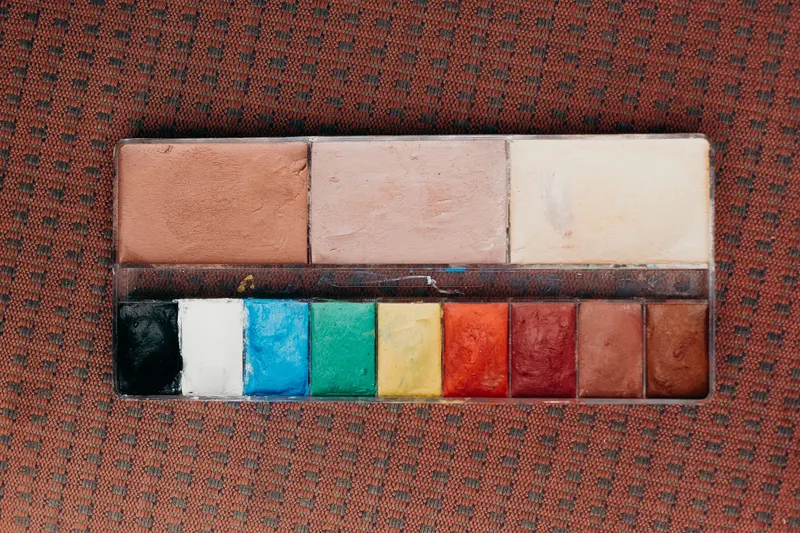
What color corrector for dark circles from shadows, veins or pigment
Dermatologists describe dark circles as having different causes. Some come from pigment in the skin, some from veins showing through very thin skin, and some from shadows cast by hollows under the eyes or by puffiness. A corrector can only balance a color. It can soften pigment and vein tones, but it cannot do anything about a shadow, because there is no color there to cancel.
Here’s a simple check. Stand facing a window and tilt your chin up slightly so the light fills the area under your eyes. If the darkness fades a lot, it is mostly shadow. In that case skip the corrector and place a little concealer, matched to your skin or a touch brighter, only in the deepest part of the hollow. If the darkness stays, it is color, and the chooser’s corrector suggestion is the place to start.
What cancels out purple, red and yellow tones
The color wheel explains almost every corrector. Colors that sit opposite each other balance each other out when they are layered thinly. Green sits opposite red, so it tones down redness around the nose, across the cheeks and on blemishes. Yellow sits opposite purple, so a yellow or soft peach corrector calms purple veins on fair skin. Lavender sits opposite yellow, so it lifts skin that looks sallow or a little yellow, often around the eyes, brows and mouth.
Dark marks left behind after a breakout are usually brown, so they follow the same peach to orange family as brown under-eye darkness. On deep skin, dullness often looks ashy rather than yellow, and warmth from a sheer orange tends to help more than lavender.
How to layer a color corrector under concealer
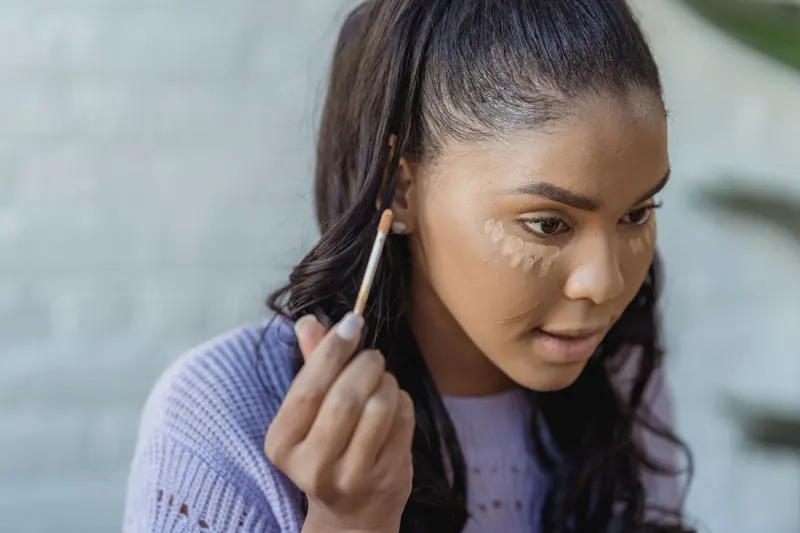
Start with moisturized skin, especially under the eyes, because corrector skips and creases on dry patches. Apply the thinnest layer you can, only where the color is. Tap it in with a fingertip, a small brush or a damp sponge rather than rubbing. Give it a few seconds to set so it doesn’t mix into the next layer.
Then tap concealer or foundation in your own shade on top. Press instead of wiping so the corrector stays where you put it. Finish with a light dusting of powder, using very little under the eyes. If you can see the corrector color through your concealer, you used too much or your concealer is a little too light, so take some away or go a touch deeper on top.
When you don’t need a color corrector
A corrector adds a layer, and every layer adds weight. If the color you want to hide is faint, try concealer alone first, and add a corrector only if the color still shows through. Faint pinkness often disappears under a concealer with a little yellow in it, without any green at all.
It also helps to know what makeup cannot do. It changes how color looks on the surface, but not the skin underneath, and no corrector can fill a hollow or flatten puffiness. A sudden or lasting change in your skin color, darkness under only one eye, or a patch that grows or changes is worth showing to a doctor before you think about covering it.
Color correcting for wedding photos
Corrector that looks invisible in the mirror can show in flash photos as a slightly colored patch, usually because the layer was too thick. Before a wedding, try the exact layers at your trial and take a phone photo with the flash on. Check the under-eye area and around the nose, where correctors are used most.
For a long day, the order matters as much as the shade. Corrector, then concealer, then a light set lasts longer than a heavy single layer of concealer, and it is easier to touch up. If you’re getting ready with a makeup artist, tell them what you usually correct so they can plan for it.
Pack a tiny amount of your concealer for touch-ups rather than your corrector. By the evening, a light press of concealer over any spot where color has crept back is usually all you need, and adding more corrector over a worn layer tends to look patchy in photos.
Frequently asked questions
What color corrector is best for dark circles?
For blue or purple circles, peach suits light skin, orange suits medium to deep skin and red-orange suits deep skin. For brown circles, peach on lighter skin and orange on deeper skin is the usual starting point.
What color cancels out purple under the eyes?
Yellow sits opposite purple on the color wheel, so a yellow or soft peach corrector works on fair skin. On medium and deep skin, peach or orange is usually better, because yellow can look ashy there.
Do I put color corrector before or after foundation?
Most people apply corrector first, then foundation or concealer on top. Some artists prefer to apply foundation first and correct only where color still shows, which uses less product, so try both and see which looks smoother on you.
Why does my color corrector show through my concealer?
Usually the corrector layer is too thick, or the concealer on top is a little too light. Use less corrector, let it set for a few seconds, and press a concealer in your exact shade over it.
Can I use concealer instead of a corrector?
Yes, often. If the color is faint, concealer alone may be all you need, and a corrector only helps when the color still shows through it.
Do Reign Beauty Collective artists use color correctors?
Yes. Reign Beauty Collective’s artists carry correctors for every skin depth and use them only where they’re needed, so the base stays light while under-eye darkness and redness are evened out.
Sources
The color pairings and the layering method follow the makeup guides below, and the causes of dark circles follow the dermatology review. Where a rule rests on the color wheel alone, the reason says so.
- Your Everything Guide To Colour Correctors, Rimmel London. www.rimmellondon.com/en-za/trends-and-looks/looks/how-to-use-colour-corrector (retrieved 2026-10-10)
- Orange Colour Corrector: Uses and Application, Maybelline New York (August 14, 2026). www.maybelline.co.in/makeup-tips/face-makeup/orange-colour-corrector-uses (retrieved 2026-10-10)
- Treatments of Infra-Orbital Dark Circles by Various Etiologies, Park KY, Kwon HJ, Youn CS, Seo SJ, Kim MN. Annals of Dermatology, 2018;30(5):522-528. pmc.ncbi.nlm.nih.gov/articles/PMC7992473 (retrieved 2026-10-10)
Last reviewed October 10, 2026 by the Reign Beauty Collective artist team, Tampa, Florida.
This page is general educational content from Reign Beauty Collective in Tampa, Florida. It is not professional, medical, or financial advice, and results vary. Please talk with a licensed professional about your own situation.