Your undertone is the color that sits beneath the surface of your skin, and it’s usually described as cool, warm, neutral or olive. You can find it by comparing a few simple checks in daylight, such as how white and cream fabric look against your face, which jewelry flatters you and which foundation shades look natural. When the checks disagree, the foundation and fabric checks are the most useful ones to trust.
Undertone Finder: Are You Warm, Cool, Neutral or Olive?
This undertone finder walks you through seven quick checks, scores each answer in the open, and tells you whether your result is a strong match or a possible one. It also shows olive as its own result, because olive is the undertone people most often miss.
You don’t need a photo, an account or any makeup on. Grab a white towel, something cream or ivory, and a window with natural light, and you’ll have an answer in a couple of minutes.
Find your undertone
Seven quick checks, best done in daylight with no makeup on. “Not sure” is always an option. You’ll see your closest undertone, how strongly your checks agree, and what to do if they don’t.
Your privacy: Everything you enter stays on your device. This page does not send, save, or share your answers, and you do not need an account or an email address. If you copy a share link, your answers are stored inside the link, so only share it with people you trust.
Use these results as a starting point, not a verdict. Lighting, your screen settings, and your own answers all shape what you see, and an in-person consultation with a trained artist is the best way to confirm what flatters you.
This page is general beauty education. It is not styling, cosmetic, dermatological, or medical advice.
Sun protection matters for every skin tone.
How to use the undertone finder
Do the checks in daylight if you can, near a window but out of direct sun, with clean, bare skin. Warm indoor bulbs make almost everyone look golden, and cool office lighting can make skin look pink or gray, so lighting changes the answer more than most people expect. If you’re unsure about any question, choose “Not sure”. It counts as answered but adds no points, which is far better than guessing.
The finder adds up points for cool, warm, neutral and olive. Some checks count for more than others. Which foundation shades have looked natural on you carries the most weight, because it’s the closest thing to the real job your undertone does. The sun question and the hair and eye question count the least, because they are only loose hints. Every point value is listed in the table further down, so nothing is hidden.
What your undertone is, and what it isn’t
Undertone is different from skin tone. Skin tone, often called depth, is how light or deep your skin is, and it can shift a little with the seasons. Undertone is the cast beneath the surface, and it tends to stay the same as your skin tans or fades. Any depth can have any undertone, so very fair skin can be warm and very deep skin can be cool.
Cool undertones lean pink, rosy or slightly blue. Warm undertones lean golden, peachy or yellow. Neutral undertones sit in between, without a strong pull either way. Olive undertones have a muted green, gray or green-gold cast, and they often get mistaken for neutral or warm. That mix-up is the most common reason someone says nothing in the foundation aisle ever matches.
The skin undertone test, check by check
The vein check looks at the veins on your inner wrist in daylight. Blue or purple veins often go with a cool undertone, green veins with warm or olive, and a mix with neutral. It’s the best-known test, but it’s also the least reliable, because veins can be hard to read on deeper skin and lighting changes what you see. That’s why it carries fewer points here than the fabric and foundation checks.
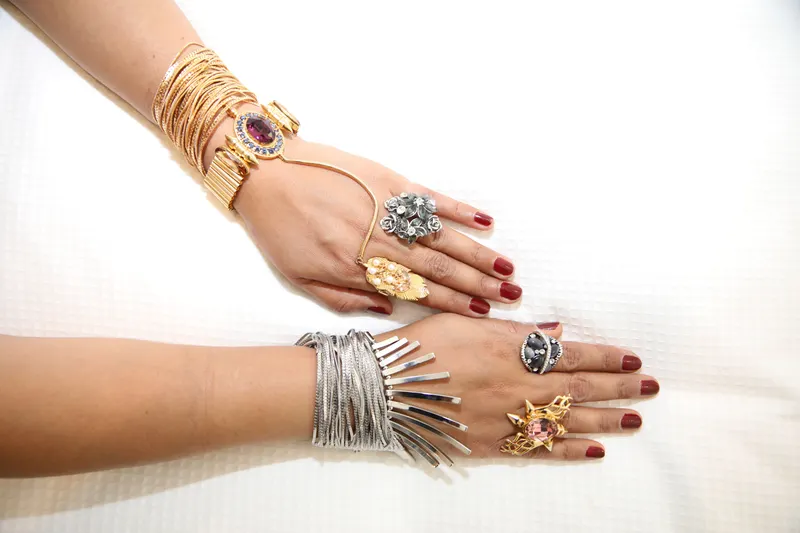
The jewelry check asks which metal looks best against your skin. Silver, platinum and white gold tend to flatter cooler undertones, yellow gold tends to flatter warm and olive skin, and if both look lovely, neutral is likely. The fabric check works the same way. Hold bright white and a soft cream or ivory near your face. Bright white tends to suit cool skin, cream tends to suit warm skin, and if both make you look a little dull or gray, that’s a common sign of olive.
The foundation check is the strongest of all. If pink-labelled shades have always looked natural, you likely lean cool. If golden shades disappear into your skin, you likely lean warm. If most shades look either too pink or too orange, or seem to turn gray after a while, olive is a strong possibility.
| Question | Answer | Cool | Warm | Neutral | Olive |
|---|---|---|---|---|---|
| In daylight, what color do the veins on your inner wrist look? | Mostly blue or purple | 2 | 0 | 0 | 0 |
| Mostly green | 0 | 2 | 0 | 1 | |
| A mix of blue and green | 0 | 0 | 2 | 0 | |
| Hard to see, or close to my skin color | 0 | 0 | 1 | 1 | |
| Not sure | 0 | 0 | 0 | 0 | |
| Which jewelry looks best against your skin? | Silver, platinum or white gold | 2 | 0 | 0 | 0 |
| Rose gold | 1 | 0 | 1 | 0 | |
| Yellow gold | 0 | 2 | 0 | 1 | |
| Both gold and silver look good | 0 | 0 | 2 | 0 | |
| Not sure | 0 | 0 | 0 | 0 | |
| Hold bright white and cream fabric near your face in daylight. Which looks better? | Bright white looks crisper | 2 | 0 | 0 | 0 |
| Cream or ivory looks kinder | 0 | 2 | 0 | 0 | |
| Both look fine | 0 | 0 | 2 | 0 | |
| Both make me look a little dull or gray | 0 | 0 | 0 | 2 | |
| Not sure | 0 | 0 | 0 | 0 | |
| When you’ve tried foundation, which shades looked most natural? | Pink or rosy shades | 3 | 0 | 0 | 0 |
| Golden or yellow shades | 0 | 3 | 0 | 0 | |
| Shades in between pink and golden | 0 | 0 | 3 | 0 | |
| Most look too pink, too orange, or turn gray | 0 | 0 | 0 | 3 | |
| I haven’t really tried foundation | 0 | 0 | 0 | 0 | |
| After time in the sun, how does your skin usually change? | It turns pink or red before it tans, if it tans | 1 | 0 | 0 | 0 |
| It turns golden or tan fairly easily | 0 | 1 | 0 | 1 | |
| It gets deeper with a greenish or grayish cast | 0 | 0 | 0 | 2 | |
| It changes very little, or it’s hard to tell | 0 | 0 | 1 | 0 | |
| Not sure | 0 | 0 | 0 | 0 | |
| Which colors tend to look best on you? | Jewel tones and blue-based reds, like sapphire, emerald and berry | 2 | 0 | 0 | 0 |
| Golden and earthy colors, like rust, mustard, coral and camel | 0 | 2 | 0 | 0 | |
| Muted greens, deep golds and warm browns, while bright pastels wash me out | 0 | 1 | 0 | 2 | |
| Most colors, as long as they aren’t too extreme | 0 | 0 | 2 | 0 | |
| Not sure | 0 | 0 | 0 | 0 | |
| Which best describes your natural hair and eye color? | Ash, cool brown or black hair, and blue, gray or cool brown eyes | 1 | 0 | 0 | 0 |
| Golden, red, copper or warm brown hair, and warm brown, hazel or amber eyes | 0 | 1 | 0 | 0 | |
| A mix, or neither stands out | 0 | 0 | 1 | 0 | |
| Not sure | 0 | 0 | 0 | 0 |
Am I warm or cool toned? Reading your result
Your result shows the undertone with the most points, the next closest one, and a label of strong match, possible match or too close to call. A strong match means most of your checks pointed the same way and the winner is clearly ahead. A possible match means the checks were more mixed, so take the result as the family to try first rather than a final answer.
If your result says too close to call, the finder shows both undertones. That’s a useful answer, not a failure. It often means you’re neutral with a slight lean, or olive with warm qualities, and it tells you to swatch shades from both families side by side.
When the checks in the undertone finder disagree
Most pages give you three tests and leave you on your own when they point in different directions. That happens all the time. Your veins might look blue while gold jewelry flatters you, or bright white might look great while golden foundations match. When that happens, the finder lists exactly which checks disagreed and what each one pointed to.
Here’s how to break the tie. Trust the checks that involve your face in daylight, which are the fabric and foundation checks, over the vein check. Then do a real swatch test. Choose one foundation shade from each of the two undertone families at your depth, swatch them side by side along your jaw, wait a few minutes for them to settle, and step back from the mirror. The one that seems to vanish into your skin is your answer, whatever the quiz said.
How to find your undertone in real life
The quiz narrows things down, but your skin in daylight has the final say. Try it with no makeup on and a clean face, because moisturizer and redness can tint what you see. Look at your jaw and neck rather than your cheeks, since cheeks often have more natural flush, and compare in two kinds of light, such as a window in the morning and a bright room in the evening.
Keep the season in mind as well. A summer tan can make warm shades look right in July and too orange in January, even though your undertone hasn’t changed. If you’re choosing makeup for an event months away, test again closer to the date. Sun protection matters for every skin tone, so think of the sun question in the finder as a description of how your skin usually behaves, not as advice to tan.
Mistakes that throw off an undertone test
The most common mistake is testing under warm indoor bulbs, which push everyone toward warm. The second is relying on one check alone, especially the vein check. The third is confusing redness or flushing with a cool undertone. Redness on the cheeks or around the nose is surface color, not undertone, which is why the jaw and neck are better places to look.
Another easy mistake is mixing up undertone with your favorite colors. You might love wearing black or cobalt even if you’re warm, and that’s completely fine. Undertone helps with foundation, concealer and the colors closest to your face, but it should never stop you from wearing what you love. Personal preference matters more than any chart.
Using your undertone for makeup and hair
Undertone is most useful for base makeup. Foundation and concealer ranges are often labelled with a letter such as C, N, W or O, so knowing your undertone cuts the shades worth swatching from dozens to a handful. Pair it with your depth on our skin tone chart and you’ll have a strong starting point.
It also guides blush and lip color. Cool undertones often suit rose and berry, warm undertones often suit peach and coral, neutral undertones can wear soft versions of both, and olive undertones often suit terracotta, brick and rosewood. For hair color, ash and cool browns often sit well next to cool skin, while honey, copper and golden browns often flatter warm skin. For the full picture with hair and eyes included, the seasonal color analysis quiz takes your undertone a step further.
Frequently asked questions
How do I know if I’m warm or cool toned?
Compare bright white and cream fabric near your face in daylight, and notice whether silver or gold jewelry looks better. If cream and gold win and golden foundations look natural, you probably lean warm, and if bright white and silver win, you probably lean cool.
Is the vein test accurate?
It’s a loose hint at best. Veins can be hard to read on deeper skin and lighting changes what you see, so the finder gives it fewer points than the fabric and foundation checks.
What does an olive undertone look like?
Olive skin has a muted green, gray or green-gold cast beneath the surface. A common sign is that most foundations look either too pink or too orange, or seem to turn gray as they settle.
Can my undertone change?
Your undertone usually stays the same, while your depth can shift with sun and seasons. A tan can make your skin read warmer for a while, which is why it helps to test again before a big event.
What if my result says too close to call?
That usually means you’re neutral with a slight lean, or olive with warm qualities. Swatch one shade from each of the two families on your jaw in daylight and keep the one that disappears into your skin.
Can Reign Beauty Collective help me find my foundation shade?
Yes. Reign Beauty Collective’s artists match foundation to your depth and undertone at your trial, mixing shades when needed, so you can share your result with us beforehand as a starting point.
Sources
Each check and what it suggests follows the medically reviewed guide below. The point values are our own and are all shown in the scoring table on this page.
- How to Identify Your Skin’s Undertones to Find the Best Foundation Match and Color Palette, Healthline, medically reviewed by Reema Patel, MPA, PA-C (updated May 29, 2024). www.healthline.com/health/beauty-skin-care/skin-undertones (retrieved 2026-10-07)
- How to Read a Munsell Color Chart, Munsell Color. munsell.com/about-munsell-color/how-color-notation-works/how-to-read-color-chart (retrieved 2026-10-06)
Last reviewed October 7, 2026 by the Reign Beauty Collective artist team, Tampa, Florida.
This page is general educational content from Reign Beauty Collective in Tampa, Florida. It is not professional, medical, or financial advice, and results vary. Please talk with a licensed professional about your own situation.