Quick Answer
Airbrush foundation is a thin, liquid foundation made to be sprayed onto the skin with an airbrush machine, which mists tiny droplets in light, even layers. Compared with traditional foundation applied by brush or sponge, it usually feels lighter, builds coverage in sheer layers, and is often chosen for long, warm days and close up photography. The term is also used loosely for regular foundations that promise an airbrushed finish, so check which one is meant.
Airbrush makeup has been a bridal favorite for years, and airbrush foundation is the heart of it. Brides often hear that it lasts longer, looks more flawless in photos, and feels weightless, but they also hear it can look cakey, doesn’t suit dry skin, or is just a marketing word. The truth sits somewhere in between, and it depends a lot on the products, the artist, and your skin.
One quick clarification first. The phrase gets used in two ways. It can mean foundation that’s actually applied with an airbrush machine, which is what this article is about. It can also be used in the name of regular foundations that promise a smooth, airbrushed look, like the one we review in should you buy Charlotte Tilbury Airbrush Flawless Longwear Foundation. As a Tampa bridal team that offers airbrush makeup, here’s our honest take on how machine applied airbrush foundation works, who it suits, and what to expect.
What Airbrush Foundation Is
Airbrush foundation is a very fluid formula designed to pass through the fine nozzle of an airbrush gun. A small compressor pushes air through the gun, which turns the foundation into a fine mist that settles on the skin in thin, even layers. Because the droplets are so small and the layers so thin, the artist can build coverage gradually, adding more only where it’s needed.
Formulas vary. Some are water based, some silicone based, and some alcohol based, and each behaves a little differently in terms of finish, wear, and how it feels on the skin. Products and technique differ from artist to artist, so it’s always worth asking your makeup artist what they use and why. Airbrush makeup for faces is different from hobby or art airbrush products, which should never be used on skin.
Airbrush Foundation Versus Traditional Foundation
Finish is the first difference. Airbrush foundation tends to look smooth and even without visible brush strokes or sponge texture, which many people describe as a soft focus effect. Traditional foundation can look just as beautiful, and it offers more choice of textures, from dewy to velvety matte. Coverage works differently too. With airbrush, coverage is built in fine layers, so light to medium coverage can look very natural. Traditional foundation can cover more in a single layer and is often easier to spot correct.
Wear is where airbrush gets most of its reputation. Many airbrush formulas are designed for long wear, and because the layers are thin, there’s less product to slide or crease. In our experience, many brides find airbrush holds up well through a long, humid day. That said, a well chosen traditional foundation with good prep can also last beautifully. Feel is subjective, but many brides say airbrush feels lighter on the skin.
Who Airbrush Foundation Suits
Airbrush often suits brides with normal, combination, or oily skin who want a lightweight, long wearing finish, especially for outdoor ceremonies, summer weddings, and long days in Florida heat. It’s also popular with brides who don’t usually wear much makeup and dislike the feel of heavier foundation. Because it builds in thin layers, it can be a good fit for anyone who wants a natural look in person and a polished look on camera.
Very dry or flaky skin needs extra care. Airbrush can catch on dry patches, so good skin prep and a hydrating base make a big difference, and some brides with very dry skin prefer a hydrating traditional foundation. Textured skin can wear airbrush well, since the fine mist doesn’t drag across the surface, but it’s a cosmetic finish only and won’t change the skin underneath. If you have a skin condition or sensitive skin, ask your artist about the formula and patch test it beforehand.
The Gap Most Guides Miss: Airbrush Versus An Airbrushed Finish Product
Many articles mix up two very different things. Machine applied airbrush foundation is sprayed on by a trained artist with professional equipment. Foundations with airbrush in the name are regular liquids, sticks, or powders, applied with a brush, sponge, or fingers, that aim for a similar smooth look. Both can be excellent, but they’re not interchangeable, and comparing reviews of one with the other leads to confusion.
If you’re researching for your wedding, check which one a review is talking about. If you’re booking professional airbrush makeup, ask your artist what brand and formula type they use, whether they can adjust the finish from matte to more radiant, and how they’ll handle touch ups. If you prefer a softer, skin like look, our guide to sheer glow foundation covers a different approach.
What To Expect At A Bridal Airbrush Appointment
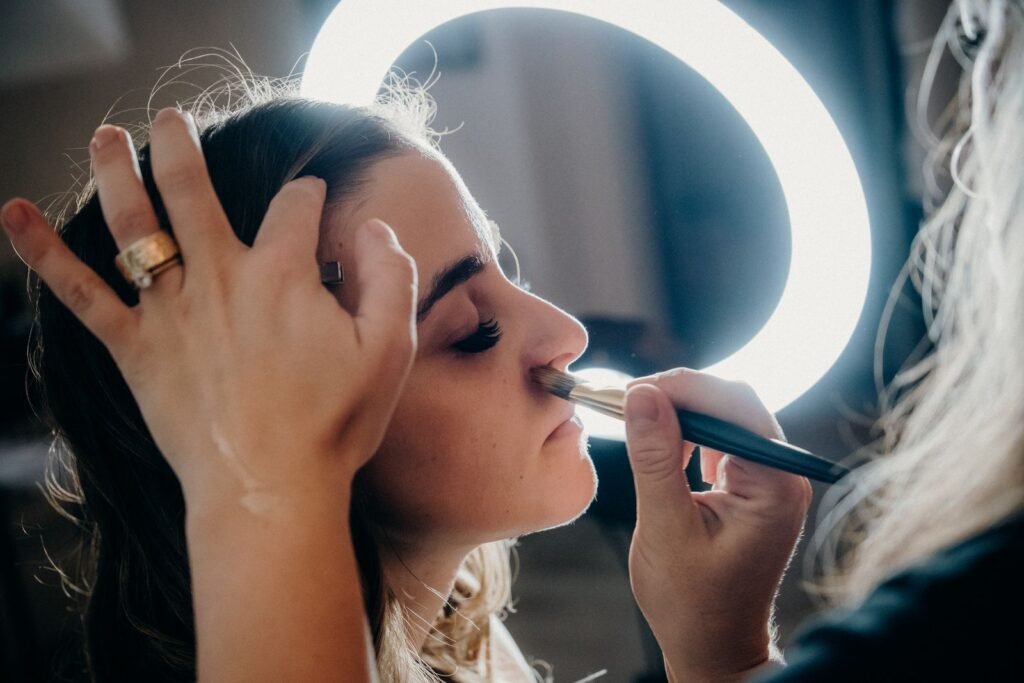
Every artist works a little differently, but the general process looks similar. Your artist will prep your skin with suitable skincare and, often, a primer. They’ll choose or mix a foundation shade to match your skin, then mist it on in light passes, holding the airbrush a few inches from your face and moving constantly. Most people find it feels cool and slightly ticklish, and you’ll usually be asked to close your eyes and breathe gently while the area around your eyes is done.
After foundation, the artist may airbrush concealer, blush, bronzer, or highlighter, or switch to traditional products for certain steps, then finish the eyes, brows, lashes, and lips by hand. The whole process often takes a similar amount of time to traditional makeup. Testing it at your bridal trial is the best way to see how it looks and feels on you.
Is Airbrush Foundation Worth It
Airbrush services are often priced a little higher than traditional makeup, reflecting the equipment, products, and skill involved, though pricing varies between artists. Whether it’s worth it depends on your priorities. If you want a lightweight feel, long wear in heat, and a smooth finish in close up photos, many brides find it’s well worth it. If you prefer a dewy, skin like finish or have very dry skin, traditional foundation may suit you just as well or better.
Touch ups are worth planning for. You won’t carry an airbrush machine in your clutch, so your artist will usually suggest blotting papers and a pressed powder for the day. The best way to decide is to try it at your trial, wear it for several hours, and look at photos taken in daylight and with flash.
Airbrush Foundation For Bridal Parties And Family
Airbrush isn’t just for brides. Many bridesmaids, mothers of the bride and groom, and other family members choose it too, especially for summer weddings and long photo sessions. It’s often a good fit for anyone who doesn’t usually wear foundation, because it feels light and doesn’t need a lot of product to look polished on camera.
Mature skin can also wear airbrush beautifully. Thin layers are less likely to settle into fine lines than heavy foundation, and the artist can keep coverage light where it’s not needed. As always, prep matters, and a hydrating base helps keep the finish soft. If your bridal party includes people with sensitive skin or allergies, let your artist know ahead of time so they can plan products and patch tests. Mixing airbrush and traditional makeup within the same bridal party is common, so everyone can choose what feels best.
Ready To Book?
Curious whether airbrush or traditional makeup suits you? Reign Beauty Collective’s Tampa artists offer both and will test them on your skin at your trial, so you can see the difference in person and in photos before your wedding. Book your trial and tell us about your skin type.
Frequently Asked Questions
Is airbrush foundation better than regular foundation?
Not always, it’s different. Airbrush often feels lighter and lasts well, while traditional foundation offers more finish options, so the best choice depends on your skin and preferences.
Does airbrush foundation look cakey?
Applied well in thin layers, it usually looks smooth rather than cakey. Problems tend to come from too many layers or very dry skin that hasn’t been prepped.
Can I use airbrush foundation if I have dry skin?
Many people with dry skin wear it happily with good prep and a hydrating base. Some with very dry skin prefer a hydrating traditional foundation instead.
How long does airbrush makeup last?
Many brides find it lasts through a long wedding day, but wear depends on skin type, the weather, and the products used. Blotting papers and powder help with touch ups.
Does Reign Beauty Collective offer airbrush makeup?
Yes. Reign Beauty Collective offers airbrush and traditional bridal makeup, and we’re happy to test both at your trial so you can choose with confidence.