Quick Answer
Setting spray forms a light, flexible film over finished makeup, helping it resist smudging, fading, and transfer throughout the day. Many artists find it also melds powder and cream products together for a more cohesive finish rather than a layered look. It is genuinely useful for most looks meant to last several hours, though a very short, low-key occasion may not strictly require it.
Setting spray has become a near-default step in most makeup routines, but it’s worth understanding what does setting spray do before deciding it belongs in yours. As a Tampa bridal makeup team that sets client makeup for full event days constantly, here’s a clear, honest answer.
It’s easy to assume every finishing mist on the market does the same basic job, but formulas genuinely vary enough in performance that the specific one chosen for a given event can be the difference between makeup that survives a twelve-hour wedding day and makeup that needs constant touch-ups by the third hour.
The General Function Of Setting Spray
Most setting sprays work through fine polymer particles suspended in a light mist. Once sprayed, the liquid carrier evaporates and the polymers merge into a thin, flexible film over the makeup, which is what actually resists sweat, humidity, and light touching throughout the day.
Beyond just holding makeup in place, many people find a good setting spray also melds separately applied products, foundation, powder, blush, into a single cohesive layer, softening the visible transitions between them rather than leaving each product looking distinct.
Mattifying Versus Dewy Setting Sprays
Not every setting spray delivers the same finish. Mattifying formulas typically include oil-absorbing ingredients that reduce shine, suited to oily skin or a full-coverage matte look. Dewy formulas lean into a fresh, hydrated glow, often preferred for a soft bridal or natural look where a flat matte finish would look less alive in photos.
Choosing the wrong type for your skin or intended finish is a genuine mismatch worth avoiding. A mattifying spray on already-dry skin can look flat and accentuate texture, while a dewy spray on very oily skin can add unwanted shine by midday.
What’s Actually In A Setting Spray Formula
Reading past the marketing language on a setting spray label is worth doing at least once, since the ingredient list explains a lot about why formulas perform so differently. The polymer that forms the actual holding film is usually listed under a name like acrylates copolymer or a similar film-forming agent, and it’s genuinely the ingredient doing the heavy lifting rather than whatever fragrance or skincare-sounding extract is featured on the front of the bottle.
Alcohol content varies a lot between formulas too. A higher-alcohol mist tends to dry faster and can feel more mattifying, while alcohol-free formulas usually feel gentler and are often marketed toward drier or more sensitive skin, though they can take a few extra seconds longer to fully set. Neither is objectively better, it’s really about matching the drying speed and feel to your own skin and the finish you’re going for.
Setting Spray And Tampa’s Heat And Humidity
Florida weather puts a genuinely different demand on setting spray than a drier climate does. Outdoor ceremonies in Tampa’s heat and humidity mean makeup is fighting sweat and ambient moisture literally from the first hour, not just by evening, which is exactly the kind of stress-test a light powder finish alone tends to lose quickly.
For a humid outdoor event specifically, a formula with a stronger, faster-drying film tends to outperform a lighter, more finishing-mist-style spray, even if that same lighter formula would be perfectly fine for an air-conditioned indoor reception. This is part of why we don’t default to one product for every bride, an August ceremony at an outdoor Tampa venue and a January indoor reception genuinely call for different setting approaches.
How And When To Apply It In A Routine
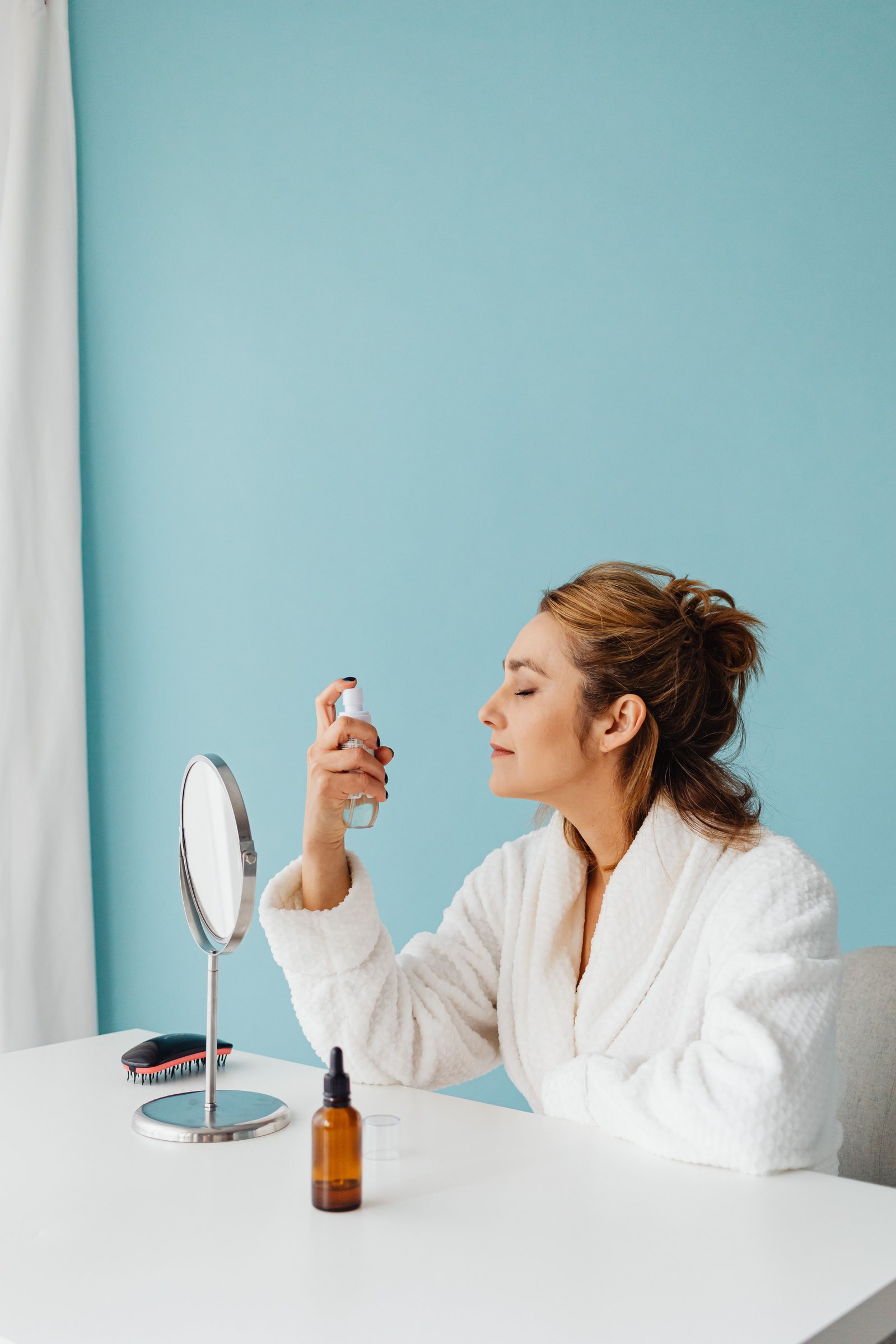
Setting spray goes on as the final step, after all other makeup is complete, held roughly eight to ten inches from the face and applied in a light, even mist rather than a heavy, concentrated spray. Many artists find an X or T motion across the face gives more even coverage than spraying straight on from one angle.
Letting the spray air dry for a few seconds before touching the face, rather than immediately patting it, helps the polymer film set properly without disturbing the makeup underneath.
Layering Setting Spray With Setting Powder
Setting spray and setting powder aren’t competing products, they genuinely do different jobs, and most long-wear routines use both rather than treating one as a replacement for the other. Powder absorbs oil and mattifies specific areas right after foundation is applied, giving the spray a properly prepped surface to form its film over rather than misting directly onto a still-wet cream or liquid base.
Using both in the correct order, powder first to set individual products, then spray at the very end to seal the entire finished face, gives noticeably better results than either product used alone, particularly for a face that needs to hold through several hours of a demanding event.
Is It Truly Necessary, Or Optional?
For a short, low-key occasion with minimal makeup, setting spray is genuinely optional. For any event lasting several hours, especially one involving photography, dancing, humidity, or emotional moments like a wedding ceremony, it becomes a lot more valuable, since that’s exactly the kind of stress-test a light powder finish alone often can’t survive.
It’s worth thinking about it less as a single yes-or-no decision and more as a question of how many hours and what kind of stress your makeup actually needs to survive. A quick coffee-shop engagement session might genuinely be fine without it, while a full wedding day that runs from a morning getting-ready session through a late-night reception is a very different equation, one where even a naturally low-maintenance bride benefits from the extra hold.
Common Mistakes People Make With Setting Spray
Spraying too close to the face, which can create visible droplets that disturb makeup rather than seal it, is the most common mistake. Choosing a formula mismatched to skin type is another. Skipping it entirely for a long, demanding event day, assuming powder alone will hold up, is a third misstep worth avoiding.
A fourth mistake worth naming is fanning or blowing on freshly sprayed makeup to speed up drying. It feels like a harmless shortcut, but moving air across a setting spray that hasn’t finished forming its film can actually disturb the very layer that’s supposed to be locking everything in place. A few still seconds of patience does more for longevity than any amount of fanning.
Refreshing Setting Spray During A Long Event Day
A second light mist partway through a long event, after a quick blot of any shine and before any touch-up powder, can genuinely extend the life of the original application rather than needing a full reapplication. This works best as a light refresh rather than a heavy second coat, since the goal is topping off the existing film, not layering on an entirely new one.
Keeping a travel-size bottle in a bridal party’s emergency kit, alongside blotting papers and a small touch-up brush, is a genuinely practical habit for any event expected to run long, especially one with an outdoor portion where Tampa’s heat adds an extra layer of demand on top of everything else the day already asks of your makeup.
How Reign Beauty Collective Sets Makeup For All-Day Wear
We choose a setting spray formula based on your skin type and how many hours your makeup needs to hold, never defaulting to one product for every bride. If you want specific product reviews, our companion guides, The Truth About Mattifying Setting Spray and A Makeup Artist’s Guide To Yummy Skin Setting Spray, cover two real options in depth.
Ready To Book?
Want makeup that survives your whole wedding day, not just the first hour? Reign Beauty Collective builds a full setting routine around your skin during a trial in Tampa, FL. Take a look at our Price List, then Book Online to check availability.
Frequently Asked Questions
Is setting spray really necessary, or just a marketing add-on?
For a short, casual look, it’s genuinely optional. For any longer event, especially one with photography or heat involved, many artists find it makes a real, visible difference in how makeup holds up.
Does setting spray feel sticky on skin?
A quality formula, applied lightly and given a moment to dry, typically feels weightless rather than sticky. Overspraying or using too heavy a formula for your skin type is usually what causes a tacky feel.
How is setting spray different from just using powder?
Powder absorbs oil and mattifies on contact, while setting spray creates a flexible film that helps everything underneath resist smudging and transfer. Many people use both together for the most complete hold.
Which type should I choose for oily skin?
A mattifying formula typically works better for oily skin, since it helps control shine on top of the oil-absorbing work your powder is already doing. Reign Beauty Collective can recommend a specific formula during your trial.
Can setting spray fix makeup that’s already starting to fade?
It works best applied to freshly finished makeup rather than as a rescue step for makeup that has already broken down. For a midday refresh, a light touch-up first, then a fresh mist of setting spray, tends to work better.