Quick Answer
The bridal skincare routine that tends to serve brides best is a consistent, gentle one started months before the wedding, not something new tried the week of. Sticking with habits your skin already knows, like regular hydration and gentle exfoliation, gives your skin time to settle into a steady baseline that makeup can work with predictably. Anything new, whether a product or a professional treatment, is safest tried well in advance, with a licensed dermatologist or esthetician brought in for any specific skin concern rather than experimenting on your own close to the big day.
A good bridal skincare routine isn’t about chasing a dramatic transformation right before the wedding. It’s about giving your skin a stable, well-cared-for foundation that your makeup artist can work with confidently on the day itself. If you’re wondering where to even start, the honest answer is simpler and less overwhelming than most bridal beauty content makes it sound. A lot of wedding planning content leans toward long lists of treatments and products, but in our experience, consistency and timing matter far more than any single addition to your routine.
Why Starting Months In Advance Matters More Than Trying Something New
The biggest mistake we see brides make isn’t neglecting their skin, it’s trying too much, too close to the wedding. Skin needs time to adjust to any change, and a routine that looks great on paper can cause unexpected reactions, breakouts, or sensitivity if it’s introduced without enough runway before the big day. Starting a consistent, gentle routine several months out gives your skin time to settle into a predictable baseline, which is exactly what your makeup artist needs to plan a look that applies smoothly and photographs well.
Many brides find it helpful to think of this less as a countdown to a specific result and more as simply taking good care of their skin the way they would at any other time, just with a bit more consistency and a bit more attention. That mindset alone tends to lead to better outcomes than treating the months before the wedding like a crash course in skincare. It also tends to lower the pressure considerably, since a routine built around consistency rather than a deadline gives you room to have an off week without feeling like you’ve derailed your entire plan.
General Habits That Support How Makeup Applies And Wears
Consistent hydration, both from what you drink and from a moisturizer suited to your skin, tends to support a smoother makeup application, since well-hydrated skin generally accepts a base more evenly than dry, flaky skin does. Gentle exfoliation, done at a frequency your skin already tolerates well, can also help keep texture consistent, which matters for how foundation sits throughout a long wedding day. This is especially worth thinking about in Florida, where heat and humidity already ask a lot of your skin, and a consistent, well-hydrated baseline tends to hold up better across a full outdoor ceremony and reception than skin that’s been left inconsistent leading up to the day.
Beyond that, the basics matter more than most brides expect: consistent sleep, a stable routine you already know agrees with your skin, and general stress management all show up in how skin looks and feels leading up to the wedding. Many clients notice that these unglamorous, ordinary habits do more for their overall complexion than any single product change ever could. Wedding planning itself can be genuinely stressful, and stress has a way of showing up on skin in ways that no product alone can fully counter, which is one more reason a calm, sustainable routine tends to serve brides better than an intense, last-minute push.
What To Avoid Trying For The First Time Close To The Wedding
Any new product, treatment, or service you haven’t already tried and tolerated well should stay off the schedule in the weeks immediately before your wedding. Skin can react unpredictably to something new, and there simply isn’t enough time to recover from an unexpected reaction that close to the day. This applies to facials, at-home products, and anything else you haven’t already tested well in advance.
In our experience, the brides who feel most confident on their wedding day are the ones who stuck with what they already knew worked, rather than the ones who tried something new hoping for a last-minute improvement. If a specific concern comes up close to the wedding, the safest step is reaching out to a licensed dermatologist or esthetician directly, rather than trying to solve it with a new product on your own. This same principle applies to hair and nail appointments too. A brand new salon or service you’ve never tried before is a bigger gamble the closer it gets to the wedding, simply because there’s less time to fix anything that doesn’t turn out the way you hoped.
How Skin Prep Connects To Your Trial Makeup Application
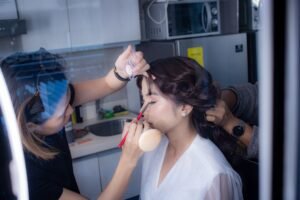
Your makeup trial is genuinely useful for more than just approving a look, it’s also a real test of how your skin and your planned makeup work together. If foundation is sitting unevenly, catching on dry patches, or needing more product than expected to look smooth, that’s valuable information well before the wedding, not something you want to discover for the first time on the day itself.
Many clients notice that their trial gives them a much clearer sense of how their current routine is actually working, sometimes prompting a small, gentle adjustment with plenty of time before the wedding to settle in. This is exactly why we recommend scheduling your trial early enough that there’s still time to make any small changes, rather than booking it as the very last thing before the wedding. A trial scheduled a few months out, rather than the week of, gives you the benefit of that feedback without any of the pressure of trying to fix something at the last minute.
When To See A Dermatologist Or Esthetician Instead
This article is meant to cover general habits, not specific treatment. If you’re dealing with a persistent skin concern, whether that’s acne, sensitivity, or anything else you’re hoping to address before the wedding, a licensed dermatologist or esthetician is the right professional to guide you, not a general skincare guide. They can properly evaluate your skin and recommend an approach suited to your specific situation, which is something no article can responsibly do on your behalf.
Booking that kind of appointment early, several months before the wedding rather than a few weeks out, gives you and your provider enough time to see real results and make adjustments if needed. It’s one of the most valuable steps a bride with a specific concern can take, and it’s worth prioritizing over trying to solve the issue with products alone.
What To Expect When You Book Your Trial With Reign Beauty Collective
Reign Beauty Collective is a licensed, published on-location hair and makeup team based in Tampa, Florida, serving brides throughout Tampa, St. Petersburg, Clearwater, Sarasota, Orlando, Miami, and beyond, with the ability to travel worldwide. At your trial, we take the time to see how your skin and your makeup work together, and we’re always happy to talk through general timing and habits, while leaving any specific skin concerns to the licensed professionals best equipped to address them.
Our Ultimate Wedding Glow-Up Guide covers the bigger picture of feeling prepared and confident leading up to the wedding, and our Why Your Bridal Hair And Makeup Trial Matters guide goes deeper into what your trial is actually for. You can browse real finished looks on our gallery page and see current pricing on our Price List.
Ready To Book?
If you’d like to talk through your bridal skincare routine and how it fits into your overall wedding beauty plan, Reign Beauty Collective would love to connect at a trial. Based in Tampa, FL and available throughout the Tampa Bay area, Orlando, Miami, and beyond, we take the time to see how your skin and makeup work together well before the wedding day. Take a look at our Price List to see current pricing, then Book Online to check availability.
Frequently Asked Questions
I’m worried about breaking out close to the wedding, what should I do?
Sticking closely to your established, gentle routine and avoiding anything new in the weeks before the wedding is the safest general approach. If breakouts are a persistent concern rather than an occasional one, a licensed dermatologist can properly evaluate your skin and recommend an approach suited to you specifically.
How far in advance should I actually start a new skincare routine before my wedding?
Many brides find several months out is a comfortable window, since it gives your skin time to adjust and settle into a predictable baseline before the wedding. Starting far in advance also leaves room to notice and address anything that doesn’t agree with your skin, without the pressure of a close deadline.
Should I see a dermatologist before my wedding even if I don’t have a specific concern?
It’s not necessary for everyone, but if you’ve been considering it or have a concern you’ve been putting off, the months before a wedding are a genuinely good time to finally book that appointment. A licensed professional can evaluate your skin properly and advise you far better than any general guide.
Will my makeup look bad if my skin isn’t perfect on the wedding day?
Not at all. Many clients notice that a skilled makeup artist can create a beautiful, photo-ready finish on a wide range of skin conditions, and a trial is exactly where any specific texture or concern can be discussed and planned for ahead of time. Reign Beauty Collective works with real skin, not an idealized version of it, at every trial and wedding.
Can my makeup artist recommend specific skincare products or treatments for me?
A makeup artist can speak to general habits that support how makeup applies and wears, but specific product recommendations or treatment for a skin concern should come from a licensed dermatologist or esthetician. This article, and any conversation at your trial, is meant as general guidance rather than a substitute for that kind of professional advice.