“Fungal acne” is the popular name for breakouts linked to Malassezia, a yeast that lives on everyone’s skin and feeds on oils. A fungal acne checker compares an ingredient list with reference lists of oils, esters and fatty acids the yeast may use. Those lists are partly lab research and partly convention, so a flag is not a verdict, and only a doctor can tell what’s causing your breakouts.
Fungal Acne Checker: Ingredients, Evidence and What It Means
Paste any ingredient list and this fungal acne checker shows which ingredients our reference list flags as possible food for Malassezia yeast, why, and how strong the evidence is for each flag: published lab research, a review article, or clinical convention that’s still debated. You can filter by evidence level, and it tells you how much of the list it recognized.
It never names products and it can’t tell whether you have this condition. It shows the reasoning behind each flag so you can see which ones rest on research and which rest on habit.
Check an ingredient list against our Malassezia reference list
Paste any ingredient list. You’ll see which ingredients reference lists flag as possible food for Malassezia yeast, how strong the evidence is for each flag, how far up the list it sits and how much of the list we recognized. It can’t tell you what’s causing your breakouts; only a doctor can.
Safety first: Education, not medical advice. A flag means an ingredient appears on a reference list, not that a product will or will not suit your skin. Concentration, the full formula, and your own skin all matter, and a result with no flags is not a safety guarantee. If you have breakouts that worry you or do not improve, ask a dermatologist.
“Copy link with my list” puts your ingredient list inside the link, so anyone you send it to can read it.
Your privacy: Everything you enter stays on your device. This page does not send, save, or share your answers, and you do not need an account or an email address.
This page is general beauty education. It is not styling, cosmetic, dermatological, or medical advice.
How the fungal acne checker works
The checker splits your list into single ingredients, tidies up spelling and symbols, and matches each one exactly against our reference list, including common alternative names. Each recognized ingredient gets one of three answers: flagged, not flagged, or no flag either way when the sources disagree. Every answer shows its evidence level and a one-line reason.
Use the evidence filter to change what counts. With all three levels ticked you see everything reference lists commonly flag. Untick clinical convention and you see only flags with lab research or a review behind them, which is a much shorter list. Anything hidden by your filter is still shown in the table, marked as hidden, so nothing disappears silently.
What “fungal acne” really is
The medical name is Malassezia folliculitis, or Pityrosporum folliculitis. It happens when Malassezia yeast, a normal part of everyone’s skin, overgrows inside hair follicles and causes itchy, similar-looking small bumps, often on the chest, back, shoulders and sometimes the face. It isn’t acne, although it can look like it, and the two can happen together.
A published review describes it as more common in heat and humidity, with heavy sweating, and after antibiotics or steroids. The same review notes that occlusive products such as makeup, lotion or sunscreen may play a part in flares, which is why people with this condition look closely at ingredient lists.
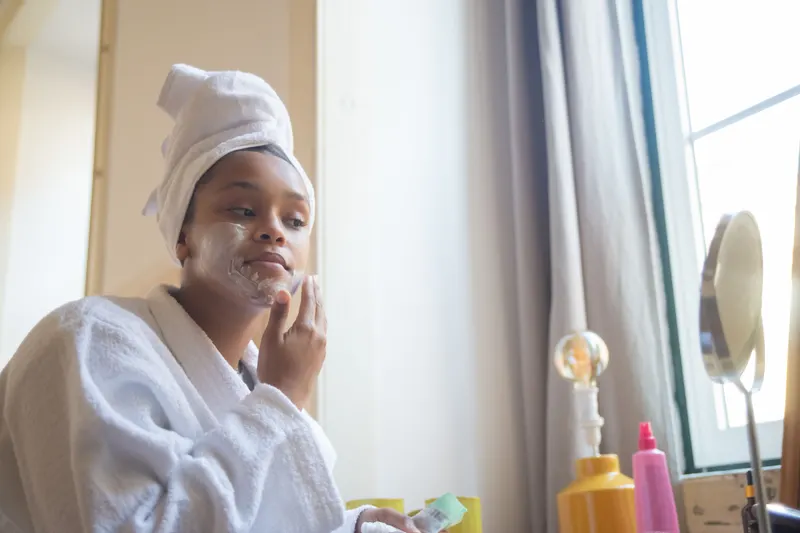
Why oils and fatty acids get flagged
Malassezia can’t make its own fatty acids. Its genome appears to lack the gene for the enzyme that builds them, so it lives on fats from the skin, using fat-splitting enzymes called lipases to break skin oils down into fatty acids. In the lab it needs fatty acids added to grow; a review notes that standard culture medium lacks the 12 to 14 carbon fatty acids it needs.
That’s the reasoning behind reference lists: if the yeast feeds on fatty acids and the oils and esters that contain them, ingredients made from those may feed it on skin too. It’s a sensible starting point, but most of it hasn’t been tested on skin, ingredient by ingredient.
What the fungal acne checker flags: research or convention
Published research on our list covers polysorbates (Tweens) and polyethoxylated castor oil. Labs use them in standard tests to identify Malassezia species precisely because some species grow on them. That’s real evidence of use, but it comes from lab plates, not from skin.
Review article flags are free fatty acids of 12 carbons or more, which reviews describe as what the yeast needs, plus the opposite case: ingredients that aren’t fats at all, such as water, glycerin and most preservatives, which aren’t flagged.
Clinical convention, debated covers most plant oils and butters, esters, lanolin and fatty acid salts, flagged because they contain fatty acid chains, and shorter-chain oils such as caprylic and capric triglycerides, squalane, mineral oil and silicones, commonly listed as unlikely to feed the yeast. For waxes and fatty alcohol ethers, lists disagree, so we don’t flag them either way.
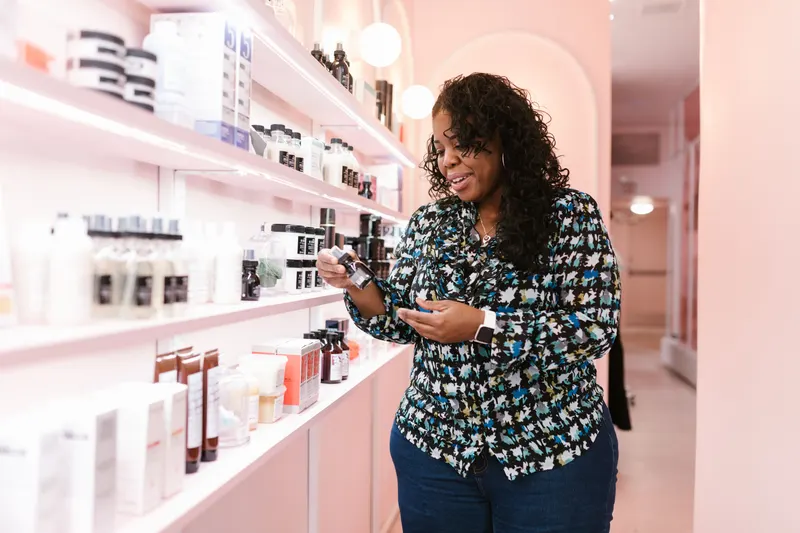
Using a fungal acne ingredient checker well
Read the first five ingredients most closely. In the United States, ingredients are listed from most to least down to 1 percent, after which they can appear in any order, so a flagged oil near the top matters more than one at the end. The checker points these out.
Look at coverage too. If we recognized only part of a list, the rest is simply unknown. Fragrance can hide many ingredients, so no list can check it. And remember that one product is only part of the picture: sweat, heat, tight clothing and how long products stay on the skin all count.
Why reference lists disagree
If you compare a few fungal acne lists online, you’ll find they don’t match. One flags all esters, another only some; one lists squalane as fine, another warns about it; waxes and fatty alcohols move from list to list. That’s because most entries are reasoned from chemistry rather than tested, and different people draw the line in different places.
Our reference list doesn’t hide that. Where we found lab research, we say so and cite it. Where a flag is convention, the table says “clinical convention, debated”, and where lists disagree and we found no study, we don’t flag the ingredient either way. You can also turn off the convention flags entirely and see only what has research behind it.
Reading results for makeup and wedding prep
Foundation, primer, concealer and setting spray can all contain oils, esters and emulsifiers, and they sit on the skin for many hours on a wedding day, often in heat and under a veil or hair. If you’ve been told you have Malassezia folliculitis, it’s worth running your base products through the checker a few weeks before the day and talking any concerns through with your dermatologist.
Then wear the full look for a whole day at your trial, so you know how your skin feels under it well before the morning itself. Small changes, like a lighter moisturizer or a different primer, are much easier to make with time to spare.
When to see a doctor
Only a doctor can tell whether bumps are Malassezia folliculitis, acne or something else, usually by looking at them and, if needed, checking a sample under a microscope. See a dermatologist if bumps itch, keep coming back, spread, or haven’t improved with changes to your routine, and before starting anything new for them.
Bring your checker results if they help the conversation, but let your doctor decide what to use. Ingredient lists are one clue, not an answer.
Frequently asked questions
What does a fungal acne checker do?
It compares an ingredient list with a reference list of ingredients that may feed Malassezia yeast, and shows the evidence for each flag. It can’t tell whether you have the condition.
What does “fungal acne safe” mean?
It’s an informal label people use for products with no ingredients from these reference lists. It isn’t a regulated term, and the lists themselves are partly convention.
Is fungal acne really a fungus?
It’s linked to Malassezia, a yeast, which is a type of fungus. The medical name is Malassezia folliculitis, and it’s different from acne.
Is squalane or MCT oil flagged?
No. Squalane has no fatty acid chain, and caprylic and capric triglycerides are shorter than the fatty acids the yeast needs in the lab. Both are clinical convention, not tested results.
Is my ingredient list stored anywhere?
No. The check runs on your device. Your list only leaves it if you press “Copy link with my list” and send that link to someone.
Can Reign Beauty Collective work around ingredients I avoid?
Yes. Tell your artist at your trial which ingredients or products you avoid, and we’ll plan your makeup around them.
Sources
The lipid dependence of Malassezia, the role of its fat-splitting enzymes and the clinical picture come from the papers below. The lab growth tests behind our published research flags are the Tween and castor oil tests. Everything labelled clinical convention is what reference lists commonly say, not a tested result.
- Malassezia (Pityrosporum) Folliculitis, Rubenstein RM, Malerich SA. Journal of Clinical and Aesthetic Dermatology, 2014;7(3):37-41. pmc.ncbi.nlm.nih.gov/articles/PMC3970831 (retrieved 2026-10-10)
- Dandruff-associated Malassezia genomes reveal convergent and divergent virulence traits shared with plant and human fungal pathogens, Xu J, et al. Proceedings of the National Academy of Sciences, 2007;104(47):18730-18735. pmc.ncbi.nlm.nih.gov/articles/PMC2141845 (retrieved 2026-10-10)
- Identification of Malassezia Species Isolated From Patients With Pityriasis Versicolor in Sari, Iran, 2012, Afshar P, Ghasemi M, Kalhori S. Jundishapur Journal of Microbiology, 2013;6(6):e8581. brieflands.com/journals/jjm/articles/18625 (retrieved 2026-10-10)
- Revised culture-based system for identification of Malassezia species, Kaneko T, et al. Journal of Clinical Microbiology, 2007;45(11):3737-3742. pmc.ncbi.nlm.nih.gov/articles/PMC2168522 (retrieved 2026-10-10)
- Cosmetics Labeling Guide, U.S. Food and Drug Administration (content current as of February 25, 2022). www.fda.gov/cosmetics/cosmetics-labeling-regulations/cosmetics-labeling-guide (retrieved 2026-10-10)
Last reviewed October 10, 2026 by the Reign Beauty Collective artist team, Tampa, Florida.
This page is general educational content from Reign Beauty Collective in Tampa, Florida. It is not professional, medical, or financial advice, and results vary. Please talk with a licensed professional about your own situation.