Airbrush foundation is sprayed on in fine, thin layers with a small compressor, for a light, even finish that holds up well to heat and tears and looks smooth in close-up photos. Traditional makeup is applied by hand and offers more formulas, creamier textures and easier touch-ups. Dry skin usually suits traditional; oily skin, long hot days and HD photos often suit airbrush. A skilled artist matters more than the method.
Airbrush Foundation or Traditional? A Chooser for Your Skin and Day
Airbrush foundation has a reputation as the wedding-day upgrade, but it isn’t the right choice for everyone. Some skin looks better with a creamy foundation pressed in by hand, and some people simply don’t enjoy a cool mist near their face. This chooser weighs your skin, your photos, your day, the coverage you want, your budget and how you feel about the technique, then shows which method suits you and why.
You’ll also see the honest trade-offs of both, so you can talk it through with your artist. This page is about makeup only, not hobby or art airbrushing.
Airbrush or traditional makeup?
Answer six quick questions about your skin, your photos, your day, the coverage you want, budget and how you feel about the technique. You’ll see which method suits you, why, the honest trade-offs of both and how to prepare. No brands.
Your privacy: Everything you enter stays on your device. This page does not send, save, or share your answers, and you do not need an account or an email address. If you copy a share link, your answers are stored inside the link, so only share it with people you trust.
Do a patch test before using any new adhesive, glue, or cosmetic, especially near your eyes, and stop using it if your skin or eyes feel irritated. Talk with a licensed professional or a doctor about allergies, eye conditions, or skin concerns.
Use these results as a starting point, not a verdict. Lighting, your screen settings, and your own answers all shape what you see, and an in-person consultation with a trained artist is the best way to confirm what flatters you.
This page is general beauty education. It is not styling, cosmetic, dermatological, or medical advice.
How the airbrush foundation chooser works
Each answer adds or takes away points for airbrush and traditional makeup, and every rule is listed with its reason in the scoring table further down the page. Your skin counts the most, because it decides how each formula sits and wears. Then come your photos, how long and how hot your day is, the coverage you want, your budget and your comfort with the technique. Two answers are enough for a result, and all six give the best one.
When the scores are level or only one point apart, the chooser says so plainly rather than pretending one method is clearly better. That happens more often than you might expect, because for many people both methods work well, and the artist’s skill makes the bigger difference.
What airbrush makeup is
Airbrush makeup uses a small compressor and a pen-like airbrush gun to spray liquid foundation onto the skin in a fine mist. The artist builds coverage in thin, even passes, so the finish looks smooth without a thick layer. Airbrush foundations are thinner than most traditional ones and usually come in water-based, silicone-based or alcohol-based formulas. Silicone formulas tend to be the most water-resistant, which is why airbrush is popular for long, emotional days in warm weather.
The same machine can also apply blush, bronzer and highlighter, though many artists still use brushes for those. Eye makeup, brows and lips are almost always done by hand.
What traditional makeup is
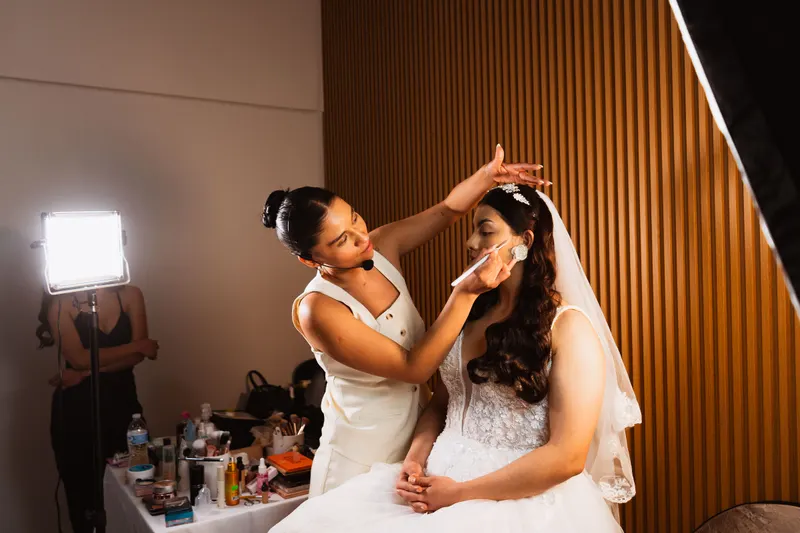
Traditional makeup means foundation applied by hand with a brush, a damp sponge or fingertips, in liquid, cream, stick or powder form. It offers the widest range of formulas, finishes and shades, from sheer skin tints to full-coverage creams, so an artist can choose exactly what suits your skin. It’s easy to place coverage precisely, such as heavier concealer over a blemish and a sheer layer elsewhere, and you can carry the same product to touch up during the day.
Airbrush foundation and your skin type
Dry skin is where traditional makeup has the clearest edge. Airbrush formulas are less creamy, and thin sprayed layers can catch on dry patches and flaky texture. A hydrating, hand-applied foundation usually looks more like healthy skin. Oily and combination skin can wear either with good prep, and water-resistant airbrush layers often hold up well to shine through a long day.
Easily irritated skin needs a little more care. Some airbrush foundations contain alcohol, which can sting or dry sensitive skin, and hand-applied formulas offer more gentle choices. Whichever method you lean toward, patch test the foundation your artist plans to use, or ask them to. Fine lines often look softer under thin airbrush layers, which are less likely to settle into creases, as long as the skin is well moisturized; a light, creamy foundation applied with a damp sponge works well too.
Airbrush makeup for photos and video
Close-up professional photos and video show texture and heavy layers more than the mirror does. Thin, even airbrush layers tend to look smooth and skin-like on camera, which is a big part of why the method became popular for weddings and photoshoots. That said, a skilled artist using thin layers of a good traditional foundation can photograph beautifully too. For phone photos and in person, the difference between the two methods is much smaller.
How long each one lasts
Longevity depends on prep, layering and setting more than on the tool. For a few hours indoors, either method is plenty, and a hand-applied base is simpler to touch up. For a twelve-hour wedding day, or a day outdoors in heat and humidity, water-resistant airbrush formulas have the edge through tears, hugs, dancing and sweat. Traditional makeup can last just as long with a long-wear formula, thin layers, powder where you shine and a good setting spray, which is how most artists build it for weddings.

Coverage: light, medium or full
For light coverage, airbrush lays down a sheer, even veil that lets skin show through. For medium coverage, both methods do well. For full coverage over blemishes, scars, redness or a tattoo, hand-applied foundation and concealer let the artist build coverage exactly where it’s needed. Airbrush can build full coverage too, but it takes more passes, and many artists combine the two, spot-concealing by hand before or after the airbrush layer.
Cost and touch-ups
Many artists charge more for airbrush makeup because of the equipment and formulas, so it’s worth asking whether there’s a difference before you decide. Some teams include both methods at the same price. Touch-ups are the other practical difference. You won’t have an airbrush machine with you during the day, so ask your artist which powder or cream concealer to carry for blotting and small fixes. With traditional makeup, you can usually carry the same foundation or concealer your artist used.
How the chooser scores airbrush and traditional makeup
| When you choose | Airbrush makeup | Traditional makeup |
|---|---|---|
| Your skin most days: Dry or flaky | -2 | +3 |
| Your skin most days: Shiny all over by midday | +2 | +1 |
| Your skin most days: Shiny in the center | +1 | +1 |
| Your skin most days: Comfortable | +1 | +1 |
| Your skin most days: Easily irritated | -1 | +2 |
| Your skin most days: Fine lines are my main concern | +2 | +1 |
| Photos and video: Professional close-ups or video | +2 | 0 |
| Your day: A few hours indoors | 0 | +2 |
| Your day: 12 hours or more, like a wedding | +2 | +1 |
| Your day: Outdoors in heat and humidity | +2 | +1 |
| Coverage you want: Light, skin showing through | +2 | 0 |
| Coverage you want: Full, over blemishes, scars or a tattoo | +1 | +2 |
| Budget: Keeping costs down | 0 | +2 |
| How you feel about the technique: I want it to feel weightless | +2 | 0 |
| How you feel about the technique: I’d rather not have spray near my face | -2 | +4 |
Ask your artist which they do best
The method matters less than the hands using it. An artist who works with airbrush every day will get better results with it than one who owns a machine but rarely uses it, and the same is true the other way round. Ask which method they use most, look at photos of their work in both, and if you’re undecided, try both at your trial. Wear the trial look for the rest of the day, take photos in daylight and with flash, and check how your skin feels in the evening. That tells you more than any comparison chart.
If you’d rather not have spray near your face, say so; a good artist won’t push you toward airbrush. And if your skin is dry or easily irritated, mention it early so your artist can plan the right foundation and prep.
Frequently asked questions
Is airbrush makeup better than traditional makeup?
Not always. Airbrush suits oily skin, long hot days and close-up photos; traditional usually suits dry skin and is easier to touch up.
Does airbrush makeup last longer?
Water-resistant airbrush formulas often hold up better to tears and heat. Well-prepped, well-set traditional makeup can last a full day too.
Is airbrush makeup good for dry skin?
It can look flaky on dry patches, because the formulas are less creamy. A hydrating, hand-applied foundation is usually a better fit.
Can airbrush makeup cover acne or a tattoo?
It can build coverage in several passes. For full coverage, many artists also spot-conceal by hand.
Does airbrush makeup cost more?
Many artists charge more because of the equipment. Ask first, because some include both methods at the same price.
Does Reign Beauty Collective do airbrush makeup?
Yes. Our artists offer airbrush or traditional foundation at no extra charge and choose what suits your skin.
Sources
Last reviewed October 11, 2026 by the Reign Beauty Collective artist team, Tampa, Florida.
This page is general educational content from Reign Beauty Collective in Tampa, Florida. It is not professional, medical, or financial advice, and results vary. Please talk with a licensed professional about your own situation.