Quick Answer
Airbrush makeup is applied using a small handheld gun connected to an air compressor, which mixes liquid foundation with pressurized air to release it as an ultra-fine mist onto the skin, building sheer, buildable coverage in thin layers rather than one thick application. The technique typically costs more than traditional makeup because it requires specialized equipment, dedicated airbrush-formulated products, and more technical training to execute well, not because the products themselves are inherently more expensive per ounce. In our experience, the finish tends to look noticeably more natural in photos, which is a big part of why it’s become a bridal favorite.
You’ve probably heard the term “airbrush makeup” thrown around, especially around wedding season, without a clear sense of what actually makes it different from regular foundation application, or why it tends to cost more than a traditional makeup service. That confusion is completely understandable, since airbrush makeup looks deceptively simple in photos even though the technique behind it is genuinely different from brush or sponge application. As a Tampa-based team that offers airbrush makeup as part of our bridal and event services, here’s a clear, honest explanation of how it actually works.
How Airbrush Makeup Actually Works
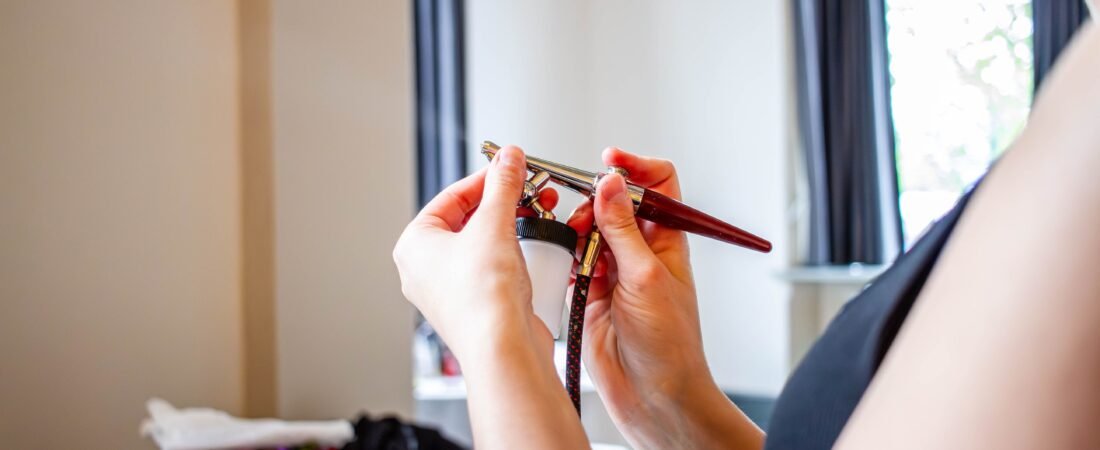
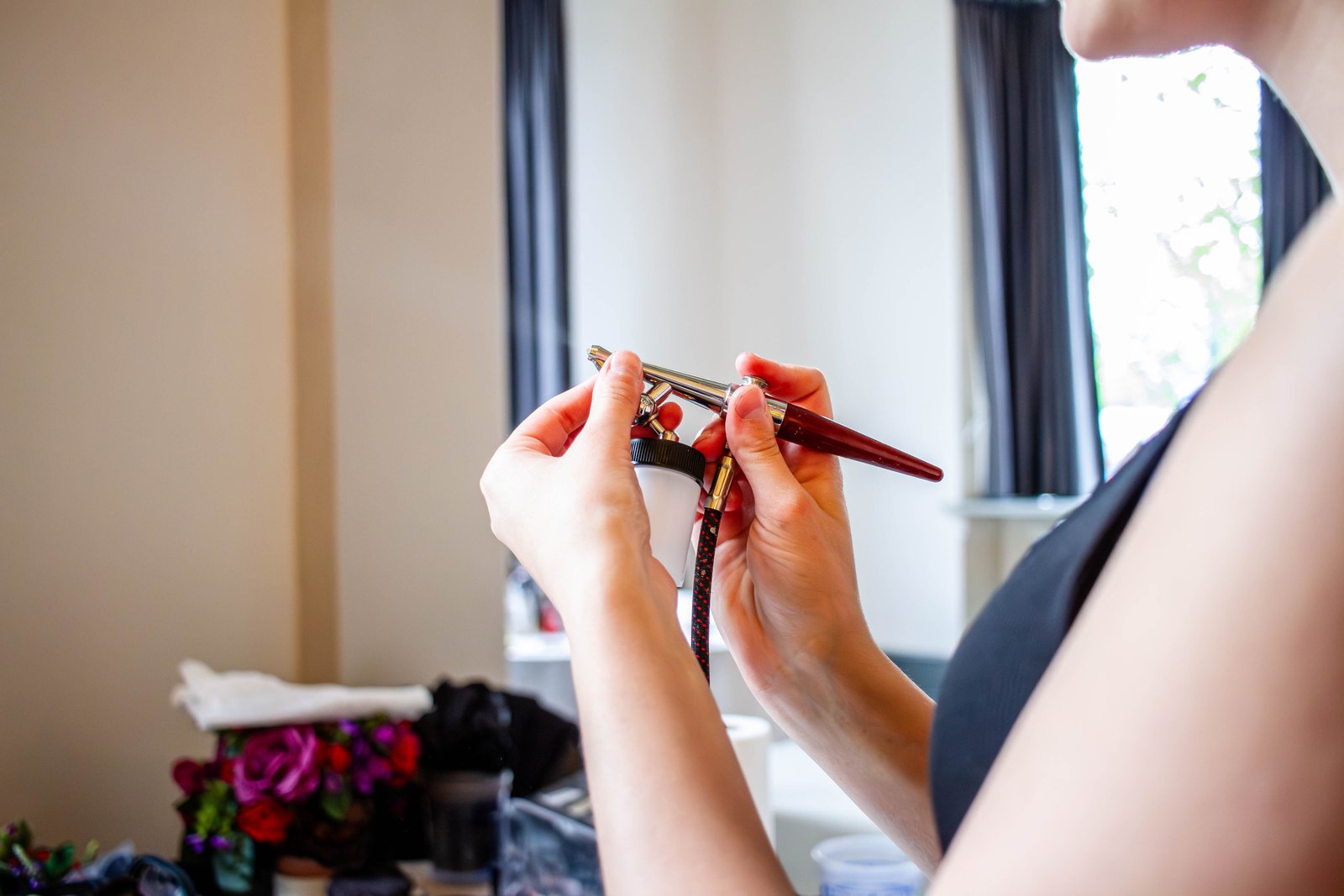
An airbrush system uses a small compressor to generate a steady stream of air, which travels through a hose into a trigger-controlled handheld gun. Liquid foundation formulated specifically for airbrush use is loaded into the gun, and as the trigger is pressed, air and product mix together and release as an extremely fine mist onto the skin. That mist lands as thousands of tiny droplets rather than one solid layer, which is the core mechanical difference from applying foundation with a brush, sponge, or fingers.
Because the mist is so fine, coverage builds gradually and evenly in thin layers rather than all at once, which is part of why airbrush application tends to look more like skin and less like a product sitting on top of skin. Only liquid, airbrush-specific foundation formulas work properly through the gun, since regular thicker foundations can clog the fine nozzle, which is one reason airbrush isn’t simply a faster way to apply your existing foundation, it genuinely requires its own dedicated products built for the equipment.
The type of airbrush system used also affects the final result more than most people realize. Professional dual-action guns, the kind used in a bridal or event setting, let the artist control air and product flow independently with a single trigger, pressing down for air only and pulling back to release product, which allows for precise, controlled layering across different areas of the face. Simpler single-action systems, more common in consumer or at-home kits, release air and product together at a fixed ratio, offering less control over exactly how much product lands in a given pass. That difference in equipment is a big part of why a professional airbrush application generally looks more polished and even than a DIY attempt with a lower-tier consumer gun, even when using a similar foundation formula.
The Finish And Feel Of Airbrush Makeup On Skin
Because coverage is built in such fine, thin layers, airbrush foundation tends to feel noticeably lighter on the skin than a heavier traditional foundation applying the same level of coverage, which is one of the qualities clients mention most often after trying it for the first time. The mist also settles into fine lines and texture differently than a thicker product would, generally sitting more smoothly on top rather than pooling into creases, which is part of why the technique has such a strong reputation for a smooth, blurred finish.
That said, “airbrush” doesn’t automatically mean flawless for every skin type or concern. Very dry or textured skin still benefits from proper skin prep before application, since a fine mist applied over unprepped, flaky skin will simply highlight that texture rather than hide it. The technique works best as part of a full routine that includes proper prep, not as a shortcut that skips skincare steps entirely.
Why Airbrush Tends To Last Longer And Photograph Differently
Many airbrush foundation formulas are silicone-based, which makes them more water- and sweat-resistant than typical traditional foundations, contributing to noticeably longer wear through a long event day involving heat, dancing, or emotional moments. Many clients find airbrush makeup can genuinely last several hours longer than traditional makeup under similar conditions, which is a meaningful practical advantage for anything as long and eventful as a wedding day.
On camera specifically, the ultra-fine mist application tends to reflect light more evenly than a thicker product layer, which is part of why airbrush has such a strong reputation in photography and video work particularly. A traditional foundation applied thickly can sometimes catch flash photography in a way that emphasizes texture or creates a slightly heavier look on camera than in person, while airbrush’s thinner, more even layers generally translate more consistently between how it looks in person and how it reads through a lens.
Who Tends To Be A Good Fit For Airbrush Makeup
Airbrush tends to suit anyone prioritizing a long-wear, photo-ready finish for a major event, since the combination of longevity and camera performance genuinely earns its reputation for those specific priorities. It’s also a strong option for anyone who finds traditional foundation feels heavy on their skin, since the buildable, thin-layer application can achieve real coverage without the weightier feel some heavier traditional formulas have.
It’s a less essential choice for someone prioritizing a very matte, heavy-coverage finish for something like a bold editorial look, where a traditional cream or stick foundation may achieve that specific density more directly. It’s genuinely a matter of matching the technique to the priority, longevity and a natural photo finish versus maximum single-layer density, rather than one option being universally better than the other.
Skin type is worth considering too, though it’s less of a hard rule than people assume. Oily and combination skin generally does very well with airbrush, since the lightweight, buildable layers don’t add the extra weight that can make oil production more noticeable later in the day. Florida’s heat and humidity make this especially relevant for weddings here, since a heavier traditional foundation can start to feel uncomfortable or shift more visibly over a long outdoor ceremony and reception. Very dry skin can still wear airbrush successfully, it just benefits from a more hydrating prep routine beforehand so the fine mist has a smooth, well-moisturized base to settle onto rather than clinging to dry patches.
Common Misconceptions About Airbrush Makeup
The most common misconception is that airbrush automatically means heavier or cakier coverage, when the opposite is generally true. Because it’s applied in thin, buildable layers, airbrush typically achieves a lighter overall feel than an equivalent level of coverage from a traditional heavy foundation, though coverage can still be built up further in specific areas if more is needed.
Another misconception is that airbrush makeup is unsafe for sensitive skin because of the equipment involved. The technique itself doesn’t inherently increase sensitivity risk any more than any foundation application would, since the equipment simply changes how the product is delivered to the skin, not the ingredients themselves; anyone with known sensitivities should review the specific product’s ingredient list the same way they would with any new foundation, airbrush or traditional.
There’s also a persistent misconception that airbrush is simply a marked-up version of a service that could be achieved just as well with a good brush and a skilled artist, with the price difference explained purely by novelty. In practice, the cost reflects real, ongoing expense on the artist’s side, the equipment itself, airbrush-specific foundation formulas that tend to cost more per bottle than standard drugstore or professional brush-applied lines, and the additional training time required to apply it evenly, since the technique has a real learning curve distinct from brush or sponge work. A third misconception is that airbrush can’t achieve full, glam-level coverage for someone who wants a more dramatic finished look; because coverage builds in layers, it’s entirely possible to build up to a fuller coverage result, it simply takes more passes than a single swipe of a heavier traditional product would.
What To Expect When You Book Airbrush Makeup With Reign Beauty Collective
Airbrush makeup is one of our core offerings for bridal and event work across Tampa, St. Petersburg, Clearwater, Sarasota, Orlando, Miami, and beyond. We use professional-grade equipment and airbrush-specific foundation formulas matched to your exact skin tone during your trial, so your finished look holds up beautifully in person and in every photo. If you’re weighing airbrush against traditional application specifically, our companion guides, Airbrush Vs Traditional Makeup: Which Should You Choose and What Is Airbrush Makeup, Really, go deeper into the side-by-side comparison.
Ready To Book?
If you’re considering airbrush makeup for your wedding or event, Reign Beauty Collective would love to help you experience the difference firsthand. Based in Tampa, FL, our artists bring professional airbrush equipment and formulas matched to your exact skin tone. Take a look at our Price List, then Book Online to check availability.
Frequently Asked Questions
Does airbrush makeup look heavy or unnatural?
Generally no, and it’s actually the opposite of most people’s expectations. Because it’s applied in thin, buildable layers of fine mist, airbrush tends to look lighter and more natural in photos than an equivalent amount of coverage from a traditional heavy foundation.
Is airbrush makeup safe for sensitive skin?
The application method itself doesn’t inherently increase sensitivity risk, since it’s the product ingredients that matter most, not the delivery method. Reviewing the ingredient list of the specific airbrush foundation being used is the same precaution worth taking with any new product.
Is airbrush makeup worth the extra cost?
For a long event day where longevity and camera performance matter, many clients find it genuinely worth the investment. The higher cost reflects specialized equipment and training, not simply pricier ingredients, so it’s less about the product itself and more about the skill and tools behind the application.
How long does airbrush makeup actually last?
Many airbrush formulas are silicone-based and more water- and sweat-resistant than typical traditional foundation, which contributes to longer wear through a full event day involving heat, dancing, or emotional moments, though individual results vary by skin type and conditions.
Can airbrush makeup cover blemishes or discoloration well?
Yes, coverage builds gradually in layers, so more product can be added to specific areas needing extra coverage while keeping the rest of the face lighter, giving a buildable result rather than one fixed level of coverage across the whole face.
Does Reign Beauty Collective offer airbrush makeup?
Yes, airbrush makeup is one of our core bridal and event beauty offerings across the Tampa Bay area and beyond, using professional equipment and formulas matched to your exact skin tone during a trial appointment.