Quick Answer
The right way to apply make up setting spray is to shake the bottle, close your eyes and mouth, hold the bottle roughly eight to twelve inches from your face, and mist in an X shape followed by a T shape so the whole face gets an even, fine layer. Let it dry completely without touching your face. For long wear, many artists also mist lightly between makeup layers, not just at the end.
Make up setting spray is only as good as the way you use it. We’ve seen the same spray make one person’s makeup last all night and leave another person’s foundation looking wet and patchy, and the difference usually comes down to technique. As a Tampa bridal hair and makeup team, we apply setting spray on nearly every wedding face, so we’ve learned what actually works in heat, humidity, and hours of photos.
This is a step by step technique guide. We’ll cover the right distance and motion, common mistakes, where setting spray fits in a full makeup routine, and how to touch up through a long event. We’ll also share the “sponge press” method many artists use when a spray alone isn’t enough.
The Right Distance And Technique For Make Up Setting Spray
Start by shaking the bottle, especially if the formula separates. Then close your eyes and mouth and hold your breath for a moment. Hold the bottle about an arm’s length away, roughly eight to twelve inches, and do a test spray into the air first to make sure the nozzle gives a fine mist rather than a jet.
Mist in an X shape across the face, then a T shape across the forehead and down the center. This pattern covers the outer face and the center evenly without soaking one area. Two or three passes is usually plenty. Then leave it alone. Let the spray dry naturally for about a minute before touching your face, putting on glasses, or pulling a dress over your head.
If your spray comes out in droplets rather than a mist, move farther away, or try a different bottle. Some sprays are simply better at misting than others, and a fine mist makes a big difference to the final finish.
Timing matters too. Wait until your foundation and concealer have had a minute to settle before the first mist, since spraying over very wet liquid layers can make them slide. And if you’re getting dressed after makeup, as most brides do, let the final mist dry completely before stepping into your gown. A light tissue or a clean scarf held over the face while the dress goes over your head protects both the makeup and the fabric.
Common Make Up Setting Spray Application Mistakes
Spraying too close is the biggest mistake. Holding the bottle a few inches from your face concentrates the spray in one spot, creating wet patches that can move foundation or leave spots in powder. Over spraying is the second. Soaking your face doesn’t make makeup last longer and can make it look wet or cause separation.
Uneven coverage is a third mistake. Focusing only on the center of the face leaves the hairline and jaw less set, which is where makeup often fades first. The X and T pattern helps. Touching your face before the spray dries is a fourth, since it can leave fingerprints. And finally, spraying over oily skin without blotting first traps shine rather than setting makeup.
Setting Spray Order In A Full Makeup Routine
Setting spray can go in several places. A light mist after skincare and primer can help foundation grip and look smoother. A mist after foundation and concealer, before powder, can help cream layers bond. A mist after powder, bronzer, and blush melts powder into the skin so it looks less dry. And a final mist at the very end locks everything together.
You don’t need all of those. Many people are happy with just a final mist. For long wear, though, a mist before powder and a mist at the end tends to work well, especially with contour and blush. If you use cream contour or blush, mist lightly before setting with powder so the layers blend. If you use powder contour, apply it after your base is set, then mist at the end.
The Sponge Press Method For Extra Hold
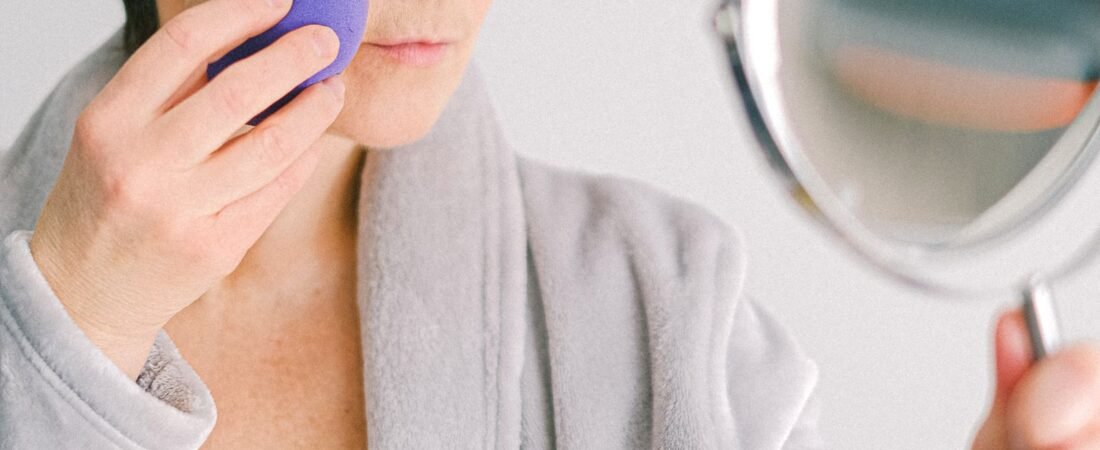
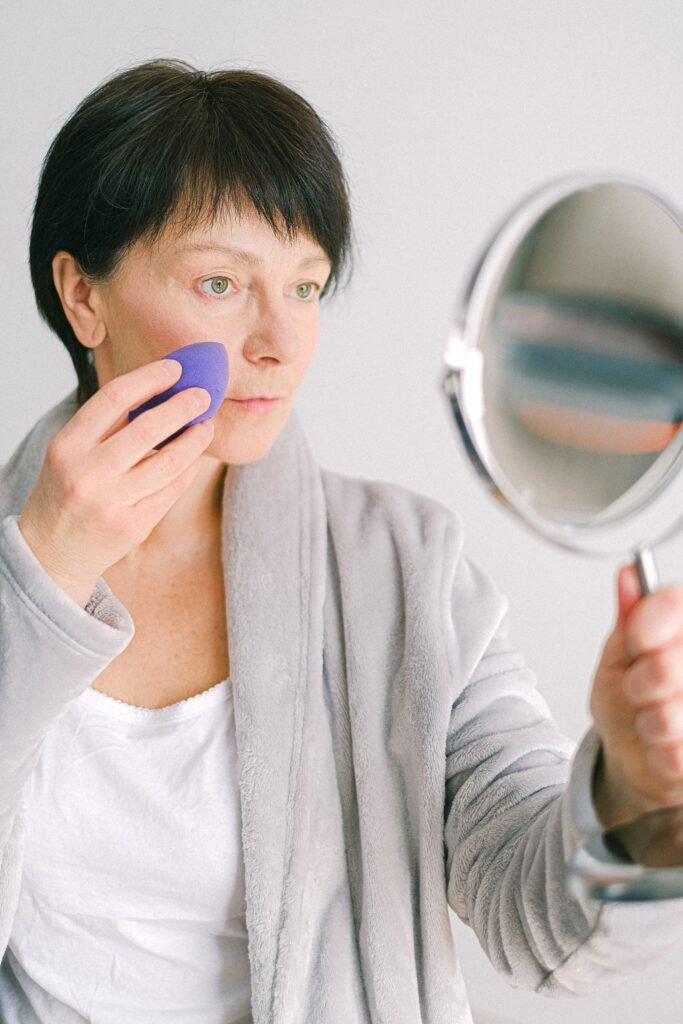
This is the technique most guides skip. When a spray alone isn’t enough, many artists mist a clean makeup sponge with setting spray until it’s damp but not dripping, then gently press it over the face after powder. This pushes the powder and foundation together, removes excess powder, and gives a smooth, skin like finish that lasts longer.
It’s especially useful in humid weather and on oily skin in the T zone. Press, don’t swipe, so you don’t move makeup around. Then finish with a final light mist. This method is one reason professional makeup often looks less powdery and holds better in photos.
Touch Up Technique Through A Long Event
Blot first. Press a blotting paper on shiny areas like the forehead, nose, and chin to lift oil without disturbing makeup. Then, if needed, press a small amount of powder only where shine returns. Finish with a light mist from a distance to melt the powder back into the skin.
Keep a travel size spray, blotting papers, a small powder, and your lipstick in a bridesmaid’s bag. The two most useful touch up moments at a wedding are after the ceremony, before portraits, and after dinner, before the dancing. Resist the urge to mist over and over through the day. Each extra layer adds a little more product and moisture, and by the evening that buildup can make makeup look heavier rather than fresher. One or two thoughtful touch ups usually beat a dozen quick sprays. Our bridal makeup service includes a touch up plan, and we test your routine at your hair and makeup trial.
Make Up Setting Spray With Different Makeup Looks
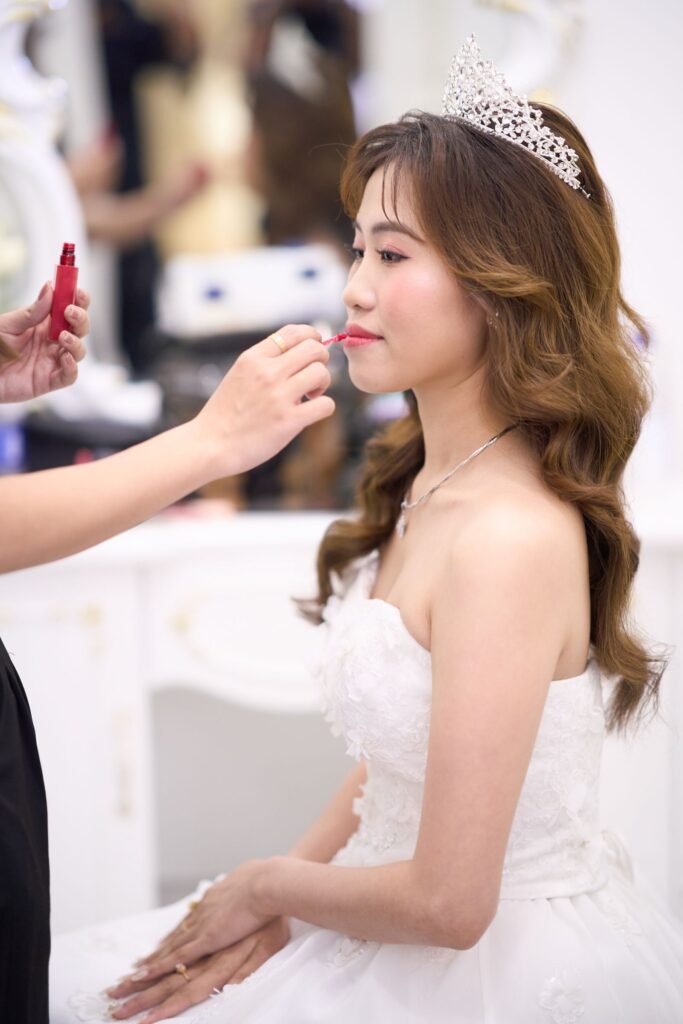
Technique shifts a little depending on the look. For a natural, glowy bridal look, use fewer layers of powder and a lighter touch with spray, focusing the final mist on the center of the face where you want radiance. A dewy or hydrating spray often suits this look best, with a matte spray only through the T zone if you get shiny.
For full glam with contour, highlight, and a smoky eye, setting spray does more work. Mist after your base, again after powder products, and once more at the end. Keep the bottle a little farther away near the eyes to avoid disturbing eyeshadow, and let everything dry fully before adding lashes.
For mature skin, go light on powder and use a hydrating spray to keep the finish soft. For oily skin in summer, the sponge press method and a matte spray usually give the most staying power. Whatever the look, the goal is the same: makeup that looks like skin and holds up through hours of photos.
Caring For Your Spray Bottle
It sounds minor, but a clogged or dirty nozzle is one of the most common reasons a setting spray suddenly starts spitting droplets. Wipe the nozzle after use, keep the cap on, and store the bottle upright at room temperature, away from bathroom steam, direct sun, and hot cars. If a spray changes smell, color, or texture, replace it. Most makeup products have a limited shelf life once opened, and a fresh bottle before a big event is always a good idea.
Choosing The Right Make Up Setting Spray For Your Technique
Technique works best with the right formula. Matte sprays suit oily skin and humid weather, hydrating sprays suit dry and mature skin, and long wear sprays suit long events. Our guides to choosing the best setting spray and hydrating setting spray cover the options in detail. If you have sensitive skin, see our honest look at whether setting spray is good for your skin.
If you’re choosing airbrush makeup, your artist may use a lighter hand with setting spray, since airbrush foundation is applied in very thin, long wearing layers.
Ready To Book?
Want makeup that looks fresh in every photo from ceremony to send off? Reign Beauty Collective’s Tampa team sets every bridal look with pro technique, then hands your bridesmaid a simple touch up plan. Check availability for your date and tell us about your skin when you book.
Frequently Asked Questions
How far away should I hold setting spray?
Roughly an arm’s length, about eight to twelve inches, works well for most sprays. Test the mist in the air first to make sure it’s fine, not a jet.
Should I spray before or after powder?
Both can work. Many artists mist before powder to help layers bond, then again at the end to melt powder into the skin.
Why does my setting spray leave wet spots?
You may be spraying too close or too much, or the nozzle may not mist finely. Move farther away and use fewer, lighter passes.
Can I use setting spray to touch up makeup?
Yes, but blot shine first. A light mist after blotting and a touch of powder refreshes makeup without making it look wet.
Does Reign Beauty Collective use the sponge press method?
Often, especially for oily skin or humid outdoor weddings. It’s one of the ways the Reign Beauty Collective team helps makeup last all day.