Quick Answer
Choosing between airbrush vs traditional makeup mostly comes down to your skin type, your wedding setting, and how you plan to touch up during the day. Airbrush tends to be lighter, longer-wearing, and better suited to normal or combination skin, while traditional makeup offers more hydration, easier hand-blending, and simpler touch-ups on your own throughout the reception. Neither one is universally better, and many brides find the honest answer only becomes clear after trying both at a trial.
Once you understand roughly what each option involves, the real question becomes airbrush vs traditional makeup, and which one actually fits you. This is a genuinely personal decision, not one with a single correct answer, and in our experience the brides who feel best about their choice are the ones who compare the two honestly rather than picking whichever one sounds more premium. This guide walks through how each method looks in photos and in person, how each holds up through a long Florida wedding day, how each tends to feel on different skin types, and a practical way to land on the right answer for your own wedding.
A Quick Refresher On How Each Method Is Applied
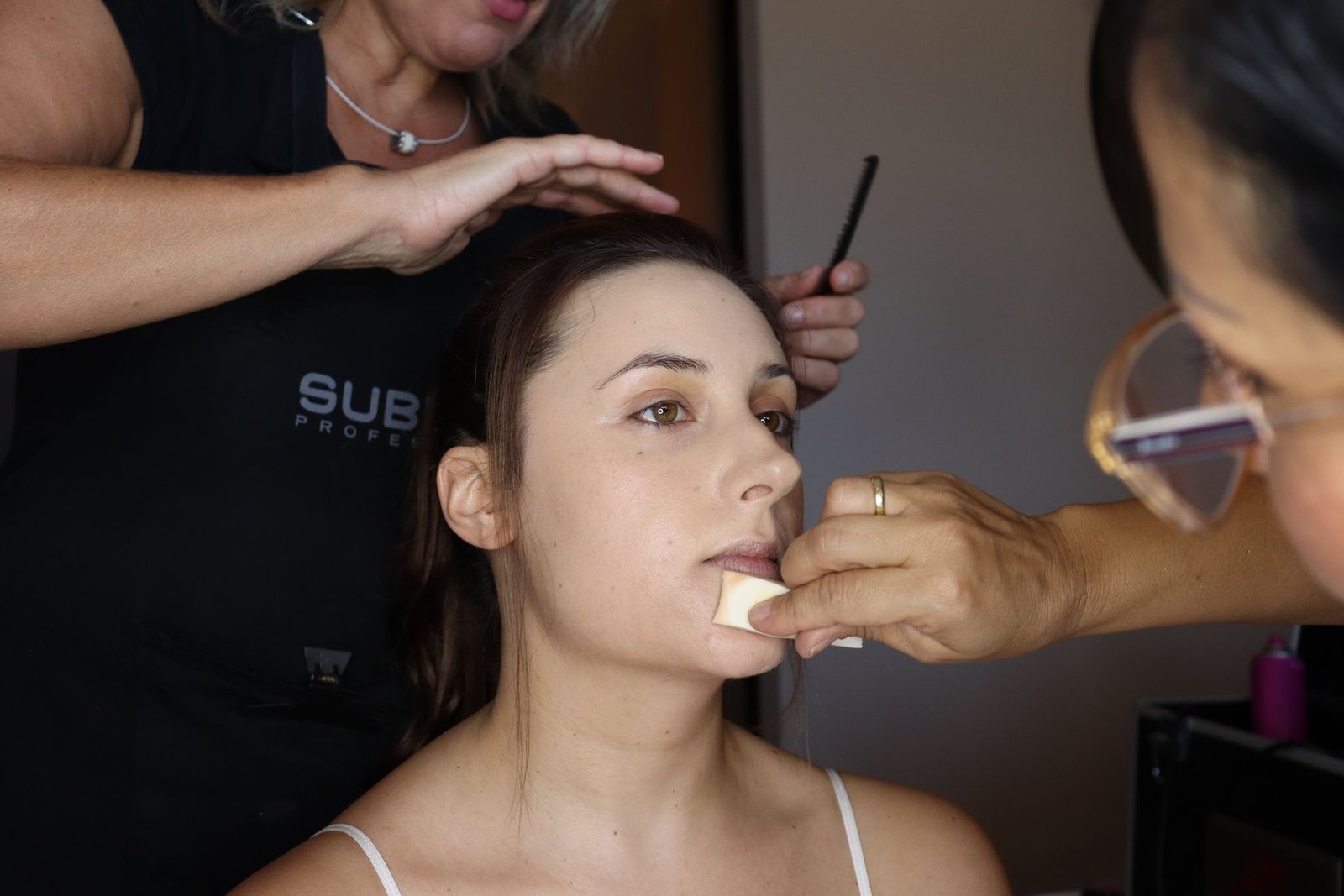
Airbrush makeup is misted onto the skin through a small handheld tool connected to a compressor, building coverage in thin, layered passes rather than one thick application. Traditional makeup is applied by hand with a brush, sponge, or fingers, using liquid, cream, or powder formulas that an artist blends directly onto the skin.
Both methods can achieve full coverage, and both can be built up gradually rather than applied heavily all at once. The real differences show up less in what each method can technically do, and more in how each one wears, feels, and photographs across a full wedding day, which is what the rest of this comparison focuses on.
It’s also worth knowing that the two aren’t mutually exclusive. Plenty of experienced artists use a hybrid approach, airbrush for overall base coverage and traditional products by hand for contour, concealer under the eyes, or a final setting layer. If neither option on its own sounds like exactly what you want, it’s worth asking your artist whether a blended approach might be the better fit for your skin and your day.
Comparing Coverage And Finish In Photos And In Person
Airbrush tends to produce a soft, matte to semi-matte finish that many brides describe as photographing with a smoothed, almost filtered quality, without looking heavily made up in person. Traditional makeup, especially with modern cream and liquid formulas, can achieve a similarly natural finish, but it depends more on the specific products and the artist’s blending technique than on the application method alone.
In person, up close, traditional makeup applied by a skilled hand can look every bit as seamless as airbrush, since a brush or sponge allows an artist to feather and blend edges in a way a spray simply can’t replicate. Many brides find the visible difference between the two is smaller than they expected once both are applied well, and the bigger differences tend to show up later in the day, in how each one holds up rather than how each one looks fresh out of the chair.
Contouring and definition are another point worth comparing directly. Traditional cream and powder products give an artist more room to sculpt a strong contour or a dramatic eye look by hand, which is part of why full glam looks are still often built with at least some traditional products even on an airbrush base. Airbrush can absolutely contour too, but it takes a practiced hand to layer it precisely, and many artists find traditional products simply give them finer control for the boldest, most sculpted looks.
Comparing Longevity In Florida Heat And Humidity
This is where the two methods tend to separate the most, especially for a Florida wedding. Airbrush formulas are generally more water and sweat resistant, which many brides find reassuring for an outdoor ceremony, a humid reception tent, or hours of dancing. Traditional makeup, when set properly with the right powder and setting spray, can also hold up impressively well through a long day, but it typically needs a bit more help from setting products to get there.
It’s worth being honest that “airbrush lasts longer” isn’t an absolute rule, it’s a general tendency. A poorly set traditional look can wear worse than a well-set airbrush look, and a rushed or over-layered airbrush application can have its own issues with wear. In our experience, technique and proper setting matter just as much as which method you choose, which is part of why working with an experienced artist matters more than the airbrush versus traditional decision on its own.
Comparing Skin Considerations For Different Skin Types
Normal to combination skin tends to work well with either method, which means skin type often isn’t the deciding factor for a lot of brides. Very dry skin often does better with traditional application, since traditional formulas tend to be more hydrating and blendable, while airbrush formula can sometimes cling to dry or flaky areas rather than smoothing over them.
Mature skin with visible fine lines or texture also tends to lean traditional for similar reasons, since airbrush can settle into texture rather than softening it, though this varies quite a bit from person to person and skin to skin. If you have known sensitivities or a history of reactions to certain products, it’s worth mentioning that directly to your artist and asking about a patch test, since individual skin reactions vary and neither method is automatically safer for every skin concern.
Skin that’s more on the oily side often does well with airbrush, since many formulas are designed with a matte finish that can help control shine through the day, though a traditional artist experienced with oily skin can achieve a similarly controlled finish with the right primer and setting products. Rather than trying to diagnose your own skin type from a list like this, describing your skin honestly to your artist, including how it tends to behave by the end of a normal day, gives them far more to work with than a general category label ever could.
How To Decide Which Is Right For Your Wedding Day
Beyond skin type and finish, there’s a practical, logistical factor that most comparisons skip entirely, and it’s a genuinely useful one to think through: how you’ll handle touch-ups during your own reception. Traditional makeup is easy to touch up yourself with a compact, a bit of powder, or a lipstick you’re already carrying in a small bag. Airbrush touch-ups, on the other hand, generally require the actual airbrush equipment to blend seamlessly with the rest of your face, which means you can’t simply freshen it up yourself between the ceremony and the reception the way you could with traditional products.
If you know you’ll want to be able to do small touch-ups yourself throughout a long evening, that’s worth weighing alongside skin type and finish. Some brides solve this by having their artist do a light traditional touch-up kit to carry, even with an airbrush base, which is worth asking about directly. Beyond that, think honestly about your skin type, your venue and season, and how much you personally value the lightest possible feel versus the most familiar, hand-blended application, and let a trial settle any remaining uncertainty.
It also helps to think about who else is getting ready with you. If you have a larger bridal party booking hair and makeup together, ask your artist how application time compares between the two methods for a group, since that can affect how early everyone needs to start on the wedding morning. There’s no wrong answer here, only the one that fits your skin, your day, and your own preferences best.
What To Expect When You Book With Reign Beauty Collective
Reign Beauty Collective is a licensed, published on-location bridal beauty team based in Tampa, Florida, serving brides throughout Tampa, St. Petersburg, Clearwater, Sarasota, Orlando, Miami, and beyond, with the ability to travel worldwide. We offer both airbrush and traditional application, and we’ll walk through your skin, your venue, and your day-of plans with you during a consultation so you’re not guessing between the two on your own.
If you’re still getting oriented to what airbrush makeup actually involves, our What Is Airbrush Makeup, Really guide is a good place to start, and our Complete Guide To Bridal Makeup covers bridal makeup planning more broadly. You can see current pricing on our Price List and browse real finished looks on our gallery page.
Ready To Book?
Still deciding between airbrush and traditional makeup for your wedding day? Reign Beauty Collective, based in Tampa, FL and available throughout the Tampa Bay area, Orlando, Miami, and beyond, offers both, and a trial is the easiest way to see which one feels right for you. Take a look at our Price List to see current pricing, then Book Online to check availability.
Frequently Asked Questions
Is airbrush really worth the extra cost over traditional makeup?
For many brides, yes, especially if longevity through a long Florida day and a lightweight feel matter most to you. That said, plenty of brides get a beautiful, long-lasting result with traditional application instead, so it comes down to your priorities rather than one method being objectively better.
Can traditional makeup actually last just as long as airbrush?
With the right products and proper setting, traditional makeup can hold up impressively well through a full wedding day. Many brides find the gap between the two narrows quite a bit once traditional makeup is set and finished by an experienced artist.
Does either option work if I have very oily or very dry skin?
Airbrush tends to suit normal to combination skin best, while traditional application often works better for very dry or very oily skin because it can be adjusted and blended by hand. Reign Beauty Collective can help you figure out which fits your specific skin during a consultation.
Can I touch up my own makeup during the reception with either option?
Traditional makeup is easy to touch up yourself with powder or lipstick you’re already carrying. Airbrush touch-ups generally need the actual equipment to blend seamlessly, so it’s worth asking your artist about a light touch-up kit if that matters to you.
What if I try one at my trial and don’t like it, can I switch?
Yes, that’s exactly what a trial is for, and most artists are glad to test the other method if the first one doesn’t feel right. It’s much easier to make that call weeks before the wedding than to second-guess it on the day itself.