Quick Answer
Airbrush makeup is a technique where foundation and other products are misted onto the skin through a small handheld tool powered by compressed air, rather than blended on with a brush or sponge. It builds coverage in thin, buildable layers, which many brides find gives a lightweight, natural-looking finish that holds up well through a full wedding day. It generally costs more than traditional application, and it is not automatically the right choice for every skin type or every bride.
So what is airbrush makeup, actually? You’ve probably seen it listed on nearly every bridal makeup artist’s pricing menu and portfolio, usually with no real explanation attached, just the word sitting there next to a higher price tag than “traditional.” In our experience, most brides have a vague sense that it’s some kind of spray-on makeup, and not much more than that. This guide walks through exactly how airbrush makeup works, what it actually feels like on your skin, why it tends to last longer and photograph differently, and who tends to be a good fit for it versus who might be happier with a traditional application instead.
How Airbrush Makeup Actually Works
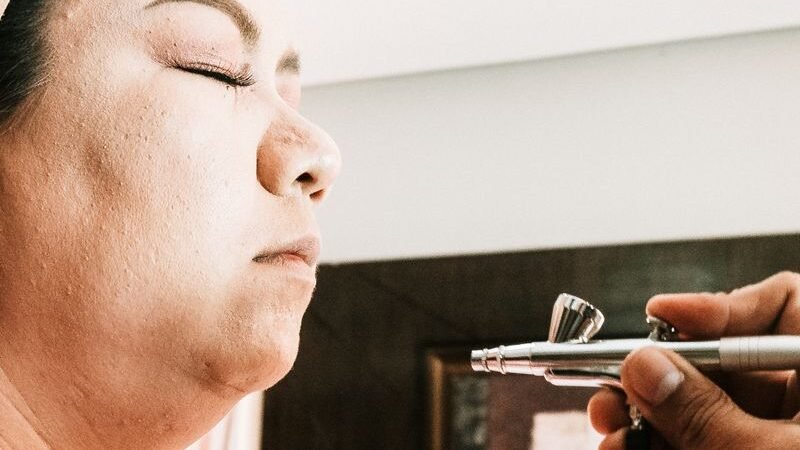
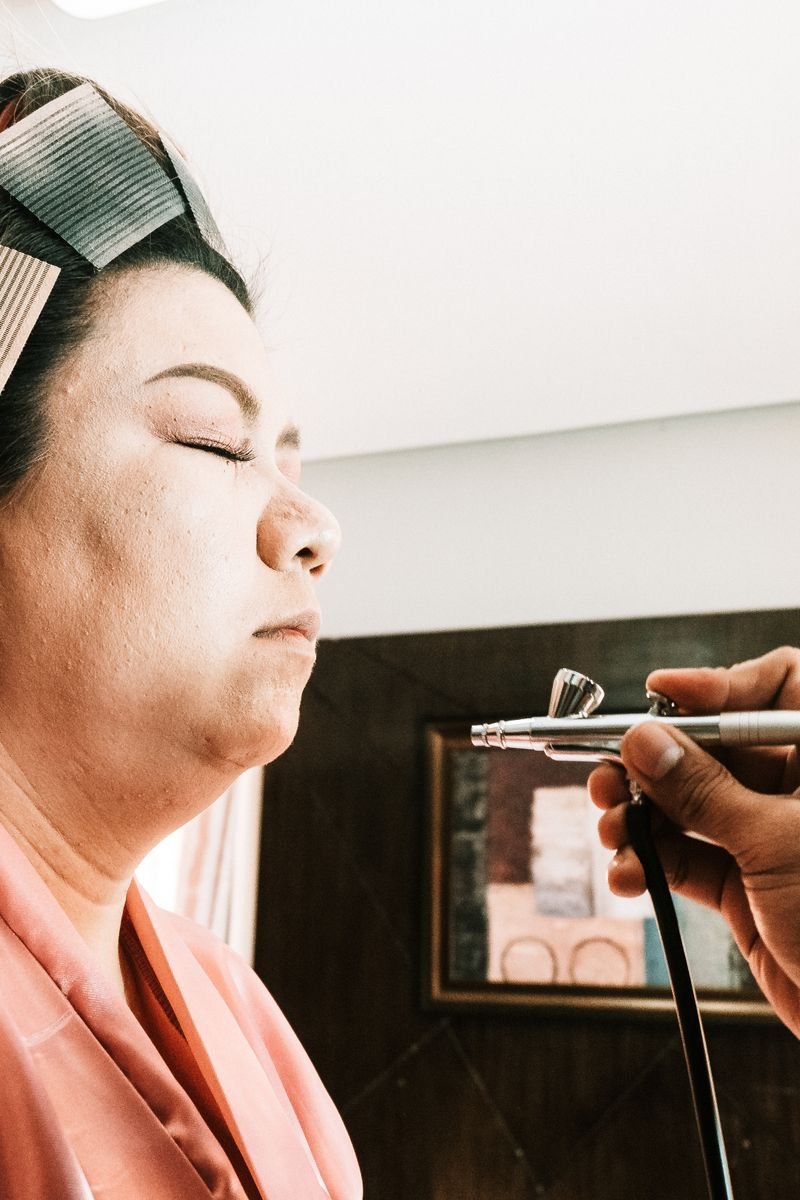
Airbrush makeup gets its name from the tool that applies it. A small handheld airbrush gun, connected to a compressor, mists specially formulated liquid foundation onto the skin in a fine, even spray, rather than being pressed or blended in with a brush, sponge, or fingers. The artist moves the gun in light, overlapping passes across the face, building coverage gradually with each layer instead of applying one thick coat all at once.
Because each pass is so thin, an artist has a lot of control over exactly how much coverage goes where. Areas that need a bit more, like around blemishes or redness, can get an extra light pass, while the rest of the face stays sheer. This is part of why airbrush makeup is often described as buildable rather than heavy, the product itself is doing less work per layer, so it takes several thin layers to reach full coverage rather than one dense application.
The formulas used in an airbrush gun are also genuinely different from traditional liquid or cream foundation, thinner in consistency so they can pass through the airbrush mechanism without clogging it. Many airbrush lines are silicone or water based, chosen specifically because they dry down quickly and sit close to the skin rather than sitting heavily on top of it.
What It Actually Feels Like On Your Skin
One of the most common assumptions we hear is that airbrush makeup must feel heavy or look unnatural, almost like a mask, simply because it’s sprayed on rather than applied by hand. In practice, most clients notice the opposite. Because the layers are so thin and the product itself is lightweight, many brides say they can barely feel it on their skin once the application is finished, more like a second skin than a layer of product sitting on top of it.
The “cakey” look people worry about is much more often a product or technique issue than something inherent to airbrushing itself. Applying too many passes in one area, using a formula that isn’t suited to a client’s skin type, or not setting the finished look properly can all lead to a heavier appearance, but that’s true of traditional makeup applied too heavily as well. A skilled artist adjusts the number of passes and the specific formula to the individual, which is a big part of why experience with airbrush technique matters as much as the tool itself.
Up close, a well-applied airbrush look tends to have a soft, almost airbrushed-photo quality to it in real life, not just in the finished photographs. Pores and fine texture are softened rather than filled in with heavy product, which is part of why the finish tends to read as smooth without looking obviously “done” to someone standing close to you at the altar.
Why Airbrush Makeup Tends To Last Longer And Photograph Differently
Longevity is one of the biggest reasons airbrush makeup shows up so often in bridal pricing menus specifically, rather than everyday makeup menus. Because the formula sits close to the skin in thin, layered passes rather than as one thick coat, it tends to resist transferring onto fabric, tissues, and pillows the way heavier traditional formulas sometimes can. Many brides find this especially reassuring for a Florida wedding, where heat, humidity, tears, hugs, and hours of dancing all put makeup to the test over a single very long day.
Camera performance is the other major factor. Many airbrush formulas are matte or semi-matte and designed specifically to avoid the flashback some traditional products can produce under flash photography, where certain ingredients reflect light back at the camera and create an unwanted white or grey cast. That doesn’t mean traditional makeup can’t photograph beautifully too, it absolutely can in the right hands, but airbrush was originally developed for film and television precisely because of how consistently it reads on camera, and that heritage is part of why it became popular for wedding photography as well.
Who Tends To Be A Good Fit For Airbrush Makeup
Brides with normal to combination skin, or skin without significant texture or dryness, are often the ones who feel happiest with an airbrush finish, since the thin formula has less trouble sitting evenly. It also tends to appeal to brides who specifically want a lightweight, barely-there feel, or who already know they’ll be photographed extensively throughout a long day and want a finish built with longevity as a top priority.
Traditional application, on the other hand, often makes more sense for brides with very dry skin, since traditional formulas tend to be more hydrating and blendable by hand. It also tends to suit brides with more visible fine lines, texture, or mature skin, since airbrush formula can sometimes settle into those areas and draw more attention to them rather than smoothing them away. And some brides simply prefer the feel of a brush or sponge being used on their skin, or want an artist to have more room to hand-blend and customize in real time, which traditional application allows more naturally.
None of this is a strict rule, and plenty of skilled artists blend the two approaches, using airbrush for overall coverage and traditional products by hand for contour, concealer, or finishing touches. In our experience, the honest answer to which one is right for you usually comes down to your specific skin and preferences, which is exactly what a trial is for.
Common Misconceptions About Airbrush Makeup
Beyond the “heavy or unnatural” myth already covered, one misconception we hear surprisingly often has nothing to do with the finish at all, it’s a question about hygiene. Brides sometimes assume an airbrush gun is used straight from one client to the next without being cleaned in between, which understandably makes them uneasy. A professional artist thoroughly cleans and sanitizes the airbrush equipment between every single client, and any cup, nozzle, or component that touches product should be cleaned or disposed of as part of standard practice, not treated as optional. It’s a completely fair question to ask any artist you’re considering, and a confident, specific answer is a good sign you’re working with someone experienced.
Another common misconception is that airbrush makeup is a completely different, mysterious category of makeup rather than a different application method for many of the same ingredients used in traditional formulas. And some brides assume airbrush is always more expensive purely because it sounds more technical, when in reality the added cost usually reflects the specialized equipment, additional training, and often longer setup and cleaning time involved, not an arbitrary upcharge.
What To Expect When You Book Airbrush Makeup With Reign Beauty Collective
Reign Beauty Collective is a licensed, published on-location bridal beauty team based in Tampa, Florida, serving brides throughout Tampa, St. Petersburg, Clearwater, Sarasota, Orlando, Miami, and beyond, with the ability to travel worldwide. Airbrush makeup is one of the services we offer as part of a full bridal hair and makeup booking, and we’ll talk through your skin type, your wedding day timeline, and your Florida venue during your consultation to help you decide whether airbrush or traditional application is the better fit for you.
If you’re weighing airbrush against traditional application more directly, our Airbrush Vs Traditional Makeup guide breaks down that comparison in more depth, and our Complete Guide To Bridal Makeup is a good starting point if you’re still exploring bridal makeup styles more broadly. You can see current pricing on our Price List and browse real finished looks on our gallery page.
Ready To Book?
If you’re deciding whether airbrush makeup is right for your wedding day, Reign Beauty Collective would love to talk it through with you. Based in Tampa, FL and available throughout the Tampa Bay area, Orlando, Miami, and beyond, we help brides choose the application method that genuinely suits their skin and their day. Take a look at our Price List to see current pricing, then Book Online to check availability.
Frequently Asked Questions
I’m worried airbrush makeup will look cakey or unnatural, is that a real risk?
It can happen, but it’s usually a result of too many passes or the wrong formula for your skin rather than something inherent to airbrushing itself. Many brides find that a well-applied airbrush look actually feels lighter than they expected, and a trial is the best way to see how it looks on you specifically.
Is airbrush makeup safe for sensitive skin?
Airbrush formulas vary, and some are gentler than others, so it’s worth mentioning any sensitivities to your artist ahead of time. Reign Beauty Collective recommends a consultation or patch test if you have known sensitivities, since individual skin reactions vary and we don’t want to guess on your wedding day.
Is airbrush makeup actually worth the extra cost?
For many brides, yes, especially if longevity through a long Florida wedding day and consistent photography are top priorities. That said, it’s not automatically the better choice for everyone, and plenty of brides get a beautiful, long-lasting result with traditional application instead.
How is the airbrush gun cleaned between clients?
A professional artist thoroughly cleans and sanitizes the airbrush gun and any product cups or components between every client, the same way any professional beauty tool should be maintained. It’s a completely fair question to ask any artist directly before booking.
Will airbrush makeup work with my skin type?
It tends to work especially well on normal to combination skin, while very dry or heavily textured skin sometimes does better with traditional application instead. Your artist can help you figure out which approach suits your skin during a consultation or trial.